


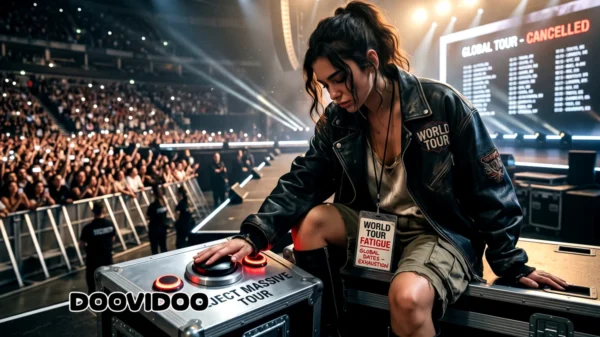





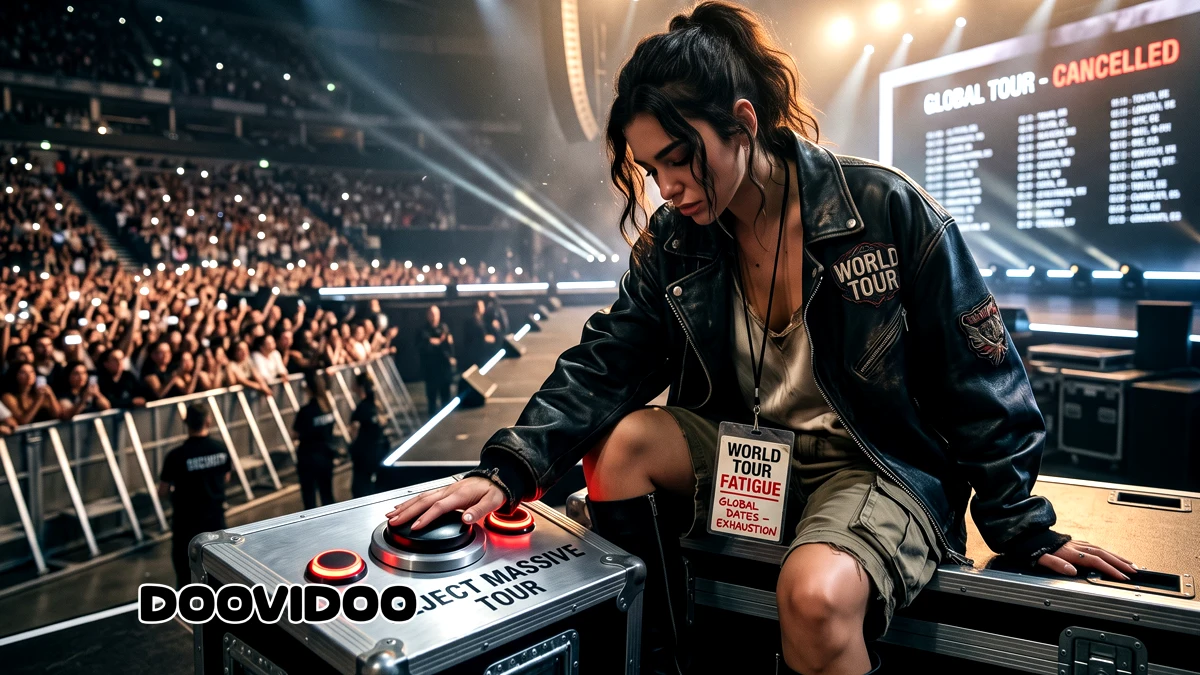
“World Tour Fatigue” is no longer a public relations excuse. It is a labor, physical, mental, and environmental crisis inside the music industry. For decades, the massive tour worked as the ultimate proof of success. The artist who filled stadiums for months proved power, reach, and stamina. Today, that same structure looks like a machine that consumes bodies.
Justin Bieber canceled dates on his Justice World Tour after health problems and exhaustion. Shawn Mendes canceled his Wonder World Tour after seven shows to prioritize his mental health. Lewis Capaldi canceled dates and stepped away from the stage to care for his mental and physical health. Colter Wall canceled his 2026 tour and announced an indefinite break for mental health. Ariana Grande returned to the stage in 2026, but described her Eternal Sunshine Tour as a last push before a long pause from music.
The list keeps growing. The industry celebrates record revenue. Artists talk about collapse.
The thesis is simple. The twentieth-century tour model has collapsed under the demands of the twenty-first century. The industry is burning through talent faster than it can care for it.
The Massive Tour as a Factory
A modern world tour no longer looks like a series of concerts. It looks like a mobile company. Hundreds of people, trucks, planes, hotels, rehearsals, screens, lights, security, choreography, wardrobe, press, brands, social media content, meet and greets, merch sales, recordings, and daily adjustments.
The artist appears at the center, but does not control the whole machine. Each city demands performance. Each night demands voice, body, and emotional presence. Each show must feel like the first, even when it is number 78 on the tour.
“World Tour Fatigue” begins in that repetition. The public buys an unrepeatable night. The artist lives an extreme routine. The difference between both experiences creates brutal tension.
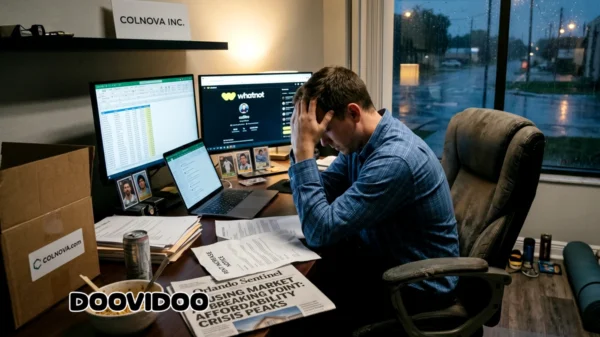
Your ticket demands a complete experience. The artist delivers that experience while dealing with jet lag, isolation, vocal pressure, family distance, irregular diet, broken sleep, and public surveillance. The show lasts two hours. The tour lasts months. Sometimes years.
The business grows while the body pays.
Mental Health Behind Success
Mental health has stopped being a side issue. In live music, it now works as an operational limit. MusiCares and Amber Health launched Headlining Mental Health: A Tour Study to examine real risks and support among touring professionals. That type of research shows that the industry already recognizes the problem.
The known figures raise concern. Studies cited by music health resources have pointed to high rates of anxiety, depression, and suicide risk among touring professionals. This is not about individual weakness. It is about working conditions that mix emotional pressure, public exposure, constant travel, and lack of stability.
Shawn Mendes sent a strong signal when he canceled his tour. He said he was not ready for the difficulty of returning to touring after the pandemic pause. Later, he described that decision as one of the hardest and most necessary of his life. That case broke an old narrative: the young, successful, beloved artist does not always have the energy to sustain the machine.
Justin Bieber faced another dimension. His Ramsay Hunt syndrome diagnosis affected his face and his ability to perform. After returning to the stage, exhaustion forced him to stop again. The tour demanded continuity. The body said stop.
Lewis Capaldi showed another scene. At Glastonbury 2023, the crowd helped him sing while he struggled with symptoms linked to Tourette syndrome. The image moved people. It also felt hard to watch. Months of pressure, physical health, and anxiety ended in front of thousands of people. His later pause confirmed an uncomfortable truth. Applause does not cure exhaustion.
The Economy That Does Not Allow Rest
Streaming reduced the economic weight of recorded music for many artists. Touring became the main source of income. That pressure affects superstars and mid-level musicians. Live Nation reported 25.2 billion dollars in revenue in 2025 and attendance of 159 million fans. Live music is growing. That expansion turns touring into a financial engine.
But growth does not spread with equal force. For artists below stadium level, the equation is difficult. Santigold canceled her Holified tour in 2022 and spoke about physical, mental, spiritual, and economic challenges. Her message was direct: she could not keep sacrificing herself for an unsustainable industry.
The same system that sells success also raises costs. Transportation, fuel, hotels, insurance, crew salaries, equipment rental, visas, production, and promotion keep rising. A sold tour does not always guarantee a healthy margin. A tour that looks successful online does not always pay the emotional cost.
The industry pushes artists to tour because touring concentrates money, visibility, and consumption. The artist tours to sustain a career, pay a team, feed a brand, and remain part of the conversation. Stopping looks like failure. Continuing without health is failure too.
The human cost gets trapped between both options.
Two Years in Motion
The 24-month tour model works badly for the body. You change cities before you understand where you are. You eat late. You sleep on broken schedules. You live in similar rooms. You talk to many people and still feel isolated. You repeat intense emotions by contract.
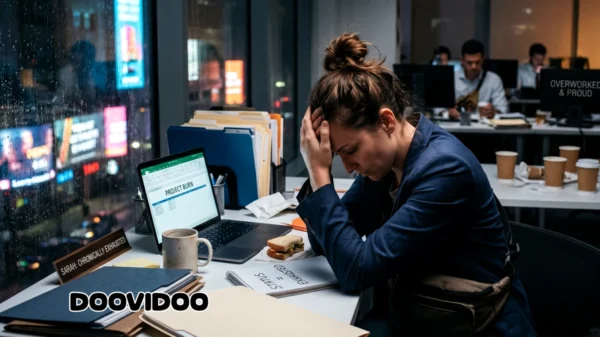
The stage demands euphoria. Daily life inside a tour often leads to emptiness. That distance wears people down. The artist must show gratitude every night, sell happiness, protect the voice, and act as a symbol. Behind the show, there is often a tired person who does not know how to come down from that intensity.
Social media adds pressure. Before, a bad night stayed inside the venue. Today, it circulates in seconds. A missed note, a sad face, a strange phrase, an absence, or a cancellation feeds clips, comments, and headlines. The artist does not rest even away from the stage. Their body works even when they stay silent.
“World Tour Fatigue” does not come from one show. It comes from a life programmed with no margin.
The Planet Pays Too
The massive tour wears down the artist and the planet. Planes, trucks, hotels, energy, stage sets, merchandise, food, waste, and fan travel form a chain of environmental impact. REVERB has stated that audience travel represents the biggest climate challenge in concerts. Billboard reported that fan travel creates far more emissions than artist travel, crew travel, hotels, and equipment combined.
That figure changes the conversation. The problem does not live only in the private jet or the production trucks. It lives in millions of trips to major venues, often in individual cars and short flights.
Some artists try to reduce the damage. Alok has spoken about touring with more environmental awareness, offsetting emissions, and giving up a private plane. Coldplay has made tour sustainability central to its public message. But the deeper problem remains intact: the industry sells global physical presence as the standard of success.
If every major artist must cross continents to validate a musical era, the environmental cost will not shrink. It will shift, get offset, or get hidden. The model will remain heavy.
The Residency as a Partial Exit
Residencies in one city offer an alternative. Less travel. Fixed production. Lower logistical strain. More vocal control. Less travel pressure. Las Vegas understood that logic for years. Adele chose a residency before a long tour. Her case shows that the future of live music might move toward concentrated shows and reduced movement.
The problem is access. A residency reduces artist travel, but forces fans to travel. That transfers part of the environmental and economic cost to the public. It also leaves out people without money for flights, hotels, and tickets.
Another exit includes shorter tours, regional blocks, required breaks, limits on consecutive dates, mental health teams on tour, fair crew wages, permanent vocal care, cleaner transportation, and planning with less pressure.
The industry needs to redesign the calendar, not dress up exhaustion.
The Myth of the Invincible Artist
The public helped build the myth of the invincible artist. We want them to sing the same every night. We want them to visit our city. We want them not to cancel. We want them to post content. We want closeness. We want excellence.
That desire does not make the fan guilty. You buy a ticket and expect respect. But music consumption culture needs to mature. A cancellation for health is not an automatic betrayal. A pause is not lack of gratitude. An artist who decides not to tour for years is not abandoning the public. They are defending their life.
The industry trained fans to see access as a right. If you listen to an artist every day, you feel that part of their time belongs to you. That relationship breaks when the artist’s body demands a limit.
The problem is not loving a show. The problem is demanding that another body sustain your emotion without rest.
Talent as an Exhaustible Resource
Music treats its talent as a renewable resource. When one artist falls, another takes the space. When one artist cancels, the calendar continues. When one voice breaks, the platform offers another song. That digital abundance hides a human loss.
The artist is not an app. They do not update their system overnight. They do not return to 100 percent after a short break. Mental health does not obey arena contracts. The voice does not respond to marketing campaigns. The body does not understand pre-sales.
“World Tour Fatigue” forces us to look at the cost behind the millions earned. Live Nation celebrates record attendance. Fans celebrate full stadiums. Media outlets celebrate figures. But a successful tour also leaves exhausted bodies, strained relationships, tired crews, and high emissions.
Commercial success is no longer enough as proof of cultural health.
The New Contract Between Artist and Industry
The future of touring must begin with a different contract. Fewer consecutive dates. More breaks. Less obligation to cover every market. More regional residencies. More clinical support. More transparency around conditions. More respect for medical cancellations. More investment in low-carbon transportation. Less worship of records.
Major artists already have the power to demand changes. Mid-level artists need structures that do not punish them for stopping. Fans need fair prices and more human expectations. Companies must stop selling mental health as a campaign while their calendars squeeze talent.
Ariana Grande calling her 2026 tour a last push for a while points toward that new border. A star who decides to limit exposure does not show weakness. She shows control.
The music industry must accept an uncomfortable truth. Not every success deserves to be repeated at the same pace. Not every tour should last two years. Not every demand should be answered. Not every market needs a date. Not every pause damages a career.
“World Tour Fatigue” is not the end of live music. It is the end of an industrial fantasy. The fantasy that an artist can endure any schedule if ticket sales respond.
The public will keep wanting concerts. Artists will keep needing stages. But the massive tour must change. If it does not change, it will keep offering unforgettable nights in exchange for broken lives away from the spotlight.
Applause does not compensate for collapse. The tour of the future will have to measure success another way. Fewer cities. More care. Fewer records. More life.
Sources used: ABC News reported that Justin Bieber canceled dates on his Justice World Tour to prioritize his health after Ramsay Hunt syndrome and later exhaustion.
ABC News reported that Shawn Mendes canceled the rest of his Wonder World Tour to care for his mental health, and People later reported that Mendes described that decision as one of the hardest and most necessary of his life.
The Guardian reported that Lewis Capaldi canceled his dates and took an indefinite pause to address the effects of Tourette syndrome and his mental health.
People reported that Colter Wall canceled the rest of his 2026 tour and announced an indefinite break to care for his mental health.
Billboard reported that Ariana Grande described her 2026 Eternal Sunshine Tour as a “last hurrah” before a long pause from music.
Live Nation reported revenue of 25.2 billion dollars in 2025 and attendance of 159 million fans, while MusiCares and Amber Health launched Headlining Mental Health: A Tour Study to examine mental health among touring professionals.
REVERB stated that audience travel is the biggest climate challenge in concerts, and Billboard reported that fan travel creates far more emissions than artist travel, crew, hotels, and equipment combined.