










The artist as global CEO defines the new economy of fame. The musician no longer enters the market with a song, an album, and a tour. The musician enters with a company, a beauty line, a liquor brand, a fashion firm, a digital platform, a production company, a foundation, an investment deal, and a community ready to buy.
Music no longer sits at the center in every case. Often, it works as the entry point. The song attracts attention. Attention feeds a personal brand. The personal brand sells products. The product creates more margin than a streaming play.
Rihanna understood this before most artists. Her last studio album arrived in 2016. Since then, her name has kept growing outside the music calendar. Fenty Beauty turned a pop career into a global beauty business. Savage X Fenty extended the same logic into lingerie, body image, inclusion, and direct commerce. Rihanna no longer needs to release music every year to maintain cultural value. Her company speaks for her.
Jay-Z followed another path. He moved from rapper to architect of assets. Roc Nation, Tidal, Armand de Brignac, D’Ussé, technology investments, sports, and corporate deals turned him into a figure who operates closer to capital than to the recording studio. Music created authority. Business turned it into wealth.
J Balvin represents a Latin version of this shift. His music took him to global scale. Then came fashion, design, wellness, commercial collaborations, investment in the creator economy, and OYE, a bilingual emotional wellness app. The artist no longer sells isolated songs. He sells a way of life.
The purist artist is dead. Fame now works as an e-commerce platform where the song acts as the ad, not the final product.
Music as a Starting Point
For decades, the goal was simple. Record, get radio play, sell albums, fill concerts, and sustain a career. Side businesses existed, but they revolved around music. Merch, tours, licensing, sponsorships, and public appearances supported the catalog.
Today, the order has changed. The song creates visibility. That visibility becomes data, audience, identity, and commercial trust. The artist no longer expects the album to pay for everything. The artist builds an economy around their name.
Streaming accelerated this transition. IFPI reported that global recorded music revenue reached 31.7 billion dollars in 2025. Streaming represented close to 70 percent of that revenue. The scale is huge. Even so, a streaming song distributes money between platforms, labels, publishers, managers, producers, songwriters, and artists. The direct margin does not always match the musician’s cultural influence.
A physical beauty product, premium bottle, clothing line, or subscription app offers another logic. The artist controls the story more directly. The brand captures data. The margin grows. The community buys something tangible. Fame depends less on a platform algorithm.
That is why music works as audience acquisition. Each single feeds a customer base. Each video strengthens an aesthetic. Each tour activates products. Each interview reinforces brand values.
The song opens the door. The company collects at the register.
Rihanna and Beauty as Empire
Rihanna turned Fenty Beauty into the central example of the artist as global CEO. The brand began with a clear promise: expand access to makeup shades for skin tones the industry had treated as secondary. The message was direct and profitable.
Forbes estimated in 2021 that Fenty Beauty was worth 2.8 billion dollars. Reuters reported in 2025 that the brand generated around 450 million dollars in net sales during 2024 and that its valuation sat between 1 billion and 2 billion dollars during a review of LVMH’s stake. The exact figure changes with the market, but the signal does not change. Rihanna gained more business power through beauty than through recorded music.
Fenty did not succeed because Rihanna placed her name on a package. It succeeded because it turned a real criticism of the beauty industry into a product. Many consumers did not see themselves at the traditional makeup counter. Fenty answered with a wide shade range, a global campaign, and a clear image of inclusion.
Music helped build trust. The product sustained the business.
That model changed the central question of fame. Before, the public asked when the next album would arrive. Now it asks what the next category will be. Beauty, skin, hair, clothing, fragrance, maternity, luxury, wellness. The artist becomes a parent company.
Jay-Z and Capital as Language
Jay-Z did not sell a lifestyle fantasy. He sold a reading of power. His career taught that rap was not a final destination, but a vehicle toward ownership.
Tidal worked as an attempt to control music distribution. Square, now Block, bought a majority stake in Tidal for 297 million dollars in 2021. The deal connected music, digital payments, and the creator economy. It was not a simple streaming business. It was a statement about who captures value between artist and audience.
In drinks, Jay-Z showed another route. He sold 50 percent of Armand de Brignac to LVMH in 2021. Then Bacardi bought most of his stake in D’Ussé in 2023, after a valuation dispute. Bloomberg Law reported that the deal pointed to a figure close to 750 million dollars.
The point is not luxury by itself. The point is ownership. Jay-Z understood that a premium brand scales differently from an album. A song ages inside platforms. A premium bottle circulates in clubs, dinners, gifts, hotels, and status.
In his case, music no longer advertises a record. It advertises a business philosophy: no one gains real power while staying hired talent.
J Balvin and the Emotional Brand
J Balvin built his expansion from another place. His global career began in reggaeton, but his brand moves through fashion, color, design, mental health, and Latin culture.
OYE, his bilingual wellness app, launched in 2022 as a project tied to emotional health, creativity, and daily practices. TechCrunch reported that the app includes wellness exercises, emotional check-ins, and content in English and Spanish. Balvin did not sell an album with that idea. He sold a tool tied to his public history with anxiety and depression.
He has also moved his image toward design, brands, and the creator economy. His collaboration with Miller Lite supported Latino entrepreneurs with funds for small businesses. Architectural Digest showed his homes in Colombia, designed with the firm 5 Sólidos, with a minimalist and Japanese-inspired aesthetic that contrasts with the visual intensity of his videos. Housing, fashion, wellness, and music form one identity strategy.
Balvin does not abandon music. He uses it as the emotional center of a wider brand.
The Purist Artist Loses Ground
The purist artist defended a clear border. Music first. Business second. That figure still exists, but it has lost cultural dominance. The current economy rewards the artist who turns attention into commercial infrastructure.
The public has changed too. People no longer consume the musician in isolation. They follow routines, buy clothes, imitate personal care, visit pop-ups, share collaborations, and evaluate investments. The artist’s life becomes a catalog.
That change has a clear logic. Attention is money. Every fan who plays a song also represents a possible buyer of perfume, tequila, makeup, memberships, shirts, courses, apps, or VIP experiences. Fame is measured less by the hit and more by conversion rate.
The question “where did the music go” feels uncomfortable because it has a cold answer. It went into the sales funnel. It became the ad. It became the cultural signal that directs traffic toward higher-margin businesses.
When a song works, it does not end on the charts. It starts moving inventory.
The Song as Jingle for the Personal Brand
Pop music has always had a relationship with commerce. The current difference lies in integration. Before, a brand hired a song to sell a product. Now the artist creates the product and the song directs attention toward it.
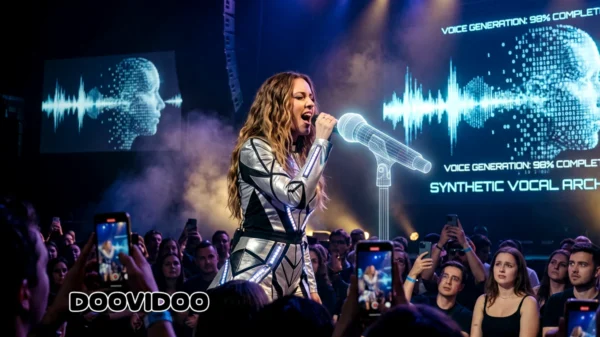
The song becomes a jingle without losing aesthetic ambition. It still moves people. It still accompanies lives. It still forms memory. But it also works inside a sales structure. The music release activates campaigns, interviews, drops, limited editions, social content, ads, and collaborations.
The fan listens and buys inside the same flow.
This model favors artists with a clear identity. Rihanna sells inclusion and desire. Jay-Z sells ownership and power. J Balvin sells color, emotional health, and global Latin identity. Beyoncé sells creative control and legacy. Selena Gomez sells accessible beauty and mental health conversation. Each successful artist defines a territory. Then they monetize it.
Music is no longer enough. The brand needs a system.
The Risk of Emptying the Work
The shift from musician to global CEO brings benefits. It creates autonomy. It diversifies income. It reduces dependence on labels and platforms. It creates companies. It creates jobs. It allows artists from historically underestimated groups to enter sectors where they once lacked control.
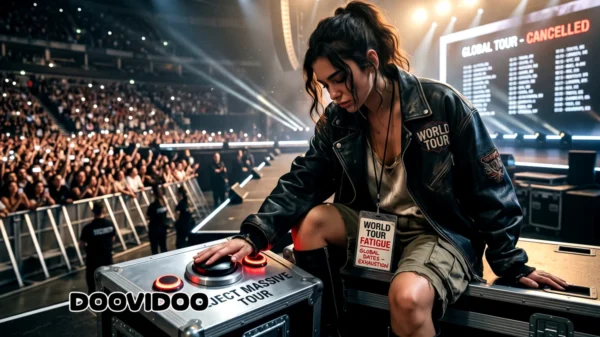
But it also carries a cost. The work risks becoming promotional content. The album stops being a creative event and becomes a campaign activation. The tour becomes a mobile store. The interview becomes a pitch. The fan receives more products than songs.
When everything communicates brand, musical silence also communicates strategy. Rihanna proves this. The lack of an album no longer destroys her presence because her empire sustains the conversation. For the public, the musical absence creates frustration. For the business, it does not always create urgency.
The artist as global CEO creates a clear tension. The artist gains economic independence, but loses part of the mystery. The artist controls more, but sells more pieces of identity. The artist scales the business, but risks placing music below commerce.
Fame as an E-commerce Platform
The new fame works with store logic. Every social network is a storefront. Every appearance is a campaign. Every video is a visual catalog. Every collaboration is a market test. Every fandom is a customer community.
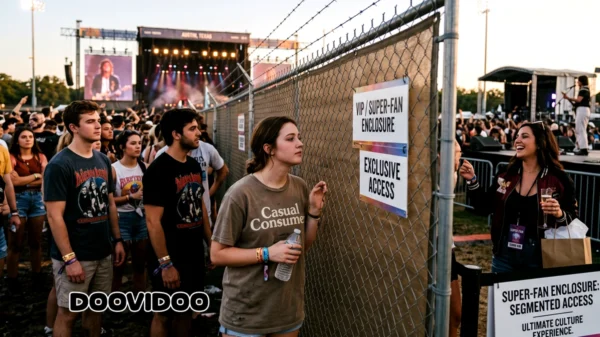
The artist no longer seeks only listeners. The artist seeks registered users, frequent buyers, subscribers, premium attendees, and brand defenders. The dream is not radio play. The dream is control over the full relationship with the public.
That is the difference between celebrity and global CEO. The celebrity lends an image. The global CEO builds assets.
Music now sits in a strange position. It keeps symbolic power. It loses economic monopoly inside the artist’s career. The hit is no longer the final goal. It is fuel.
What Comes Next
The artist as global CEO will not disappear. Streaming pressure, the value of data, and the cost of touring push more musicians toward parallel companies. We will see more tequila, rum, skincare, wellness, fashion, hotels, production companies, apps, design studios, and investment funds tied to musicians.
The question is not whether artists should do business. The question is whether music keeps a central function inside that expansion.
An artist entrepreneur with good music gains freedom. An artist who turns music into a sales excuse loses depth. The public notices the difference. You notice when a song comes from a vision and when it arrives as campaign support.
The purist artist died as the dominant model. There is no need to mourn it. Purity also had exploitation, unfair contracts, and dependence on labels. But the new stage demands another kind of vigilance. The artist as global CEO must answer for products, prices, partners, messages, and musical quality.
The song no longer lives alone. It travels attached to a company.
The future of music will depend on artists who know how to sell without reducing their work to a store. Fame now opens an e-commerce platform. The remaining question is whether, inside that platform, there will still be songs that matter more than the shopping cart.
Sources used: Reuters reported that Fenty Beauty generated around 450 million dollars in net sales in 2024 and that its valuation sat between 1 billion and 2 billion dollars while LVMH considered selling its 50 percent stake.
Forbes estimated in 2021 that Fenty Beauty was worth 2.8 billion dollars and that the beauty business, more than music, had made Rihanna a billionaire.
The Guardian reported that Square bought a majority stake in Tidal for 297 million dollars in 2021 and that Jay-Z joined Square’s board.
Bloomberg Law reported that Bacardi bought most of Jay-Z’s stake in D’Ussé, in a deal whose valuation pointed to a figure close to 750 million dollars.
TechCrunch reported that J Balvin launched OYE, a bilingual wellness app with daily practices and emotional check-ins in English and Spanish.
IFPI reported that global recorded music revenues reached 31.7 billion dollars in 2025, with streaming close to 70 percent of the total.