

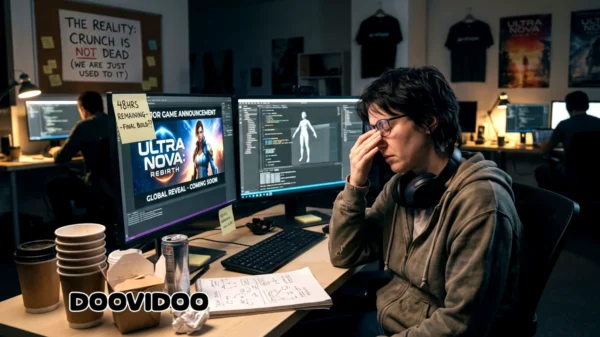









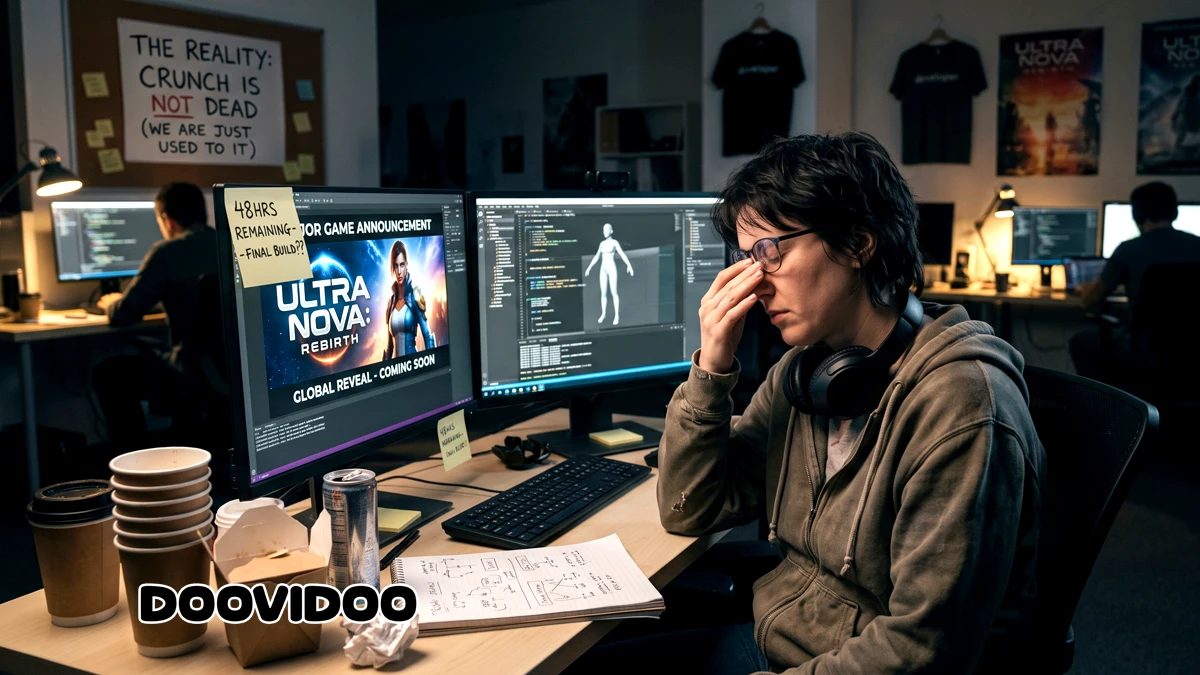
The death of “crunch” (and why it is still here) is one of the most uncomfortable contradictions in the video game industry. In public, almost everyone is against it. No one wants to defend endless workdays, exhausted employees, sleepless nights, and personal lives sacrificed to meet a release date. In private, the system keeps finding new ways to demand the same thing under another name.
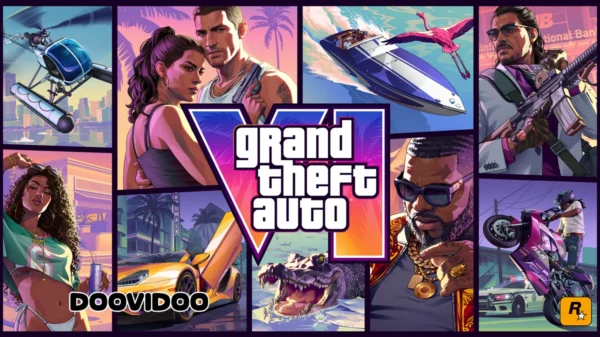
Summer Game Fest and the major June showcases sell the future. Bright trailers, epic music, massive logos, release dates, open worlds, anticipated sequels, expensive remakes, and technical promises. The screen says excitement. The room applauds. The consumer opens a wishlist. Marketing does its job.
But behind every trailer there is another story. There are teams that reached that presentation after months of pressure. There are dates imposed before the game was ready. There are demos prepared to convince investors, media, and audiences before development has stabilized its internal problems. There are workers who watch the same trailer that celebrates their talent and remember what it cost to finish those thirty seconds.
The death of “crunch” (and why it is still here) cannot be understood as a simple moral complaint. It must be understood as a structural problem. The industry has learned how to speak against labor abuse, but it has not always learned how to produce without depending on it.
The Spectacle That Does Not Show the Bill
June events have a precise function. They generate desire. Every trailer promises control, beauty, speed, and abundance. The game appears as a clean product. There are no bugs. No QA tickets. No canceled meetings. No artists remaking assets at the last minute. No designers adjusting systems on weekends. No producers trying to save an impossible schedule.
The trailer is the sanitized version of development.
That cleanliness is dangerous because it separates the consumer from the labor. We see the result, not the process. We see creatures, cities, weapons, animations, and cinematics. We do not see midnight emails, emergency calls, fear of losing a job, or the pressure to deliver a build for a date the commercial department already announced.
The industry calls that production. Workers experience it as wear.
“Crunch” does not always appear as a brutal order. Sometimes it arrives as culture. No one says “destroy your life for this game.” They say “the team needs commitment.” They say “we are in a critical phase.” They say “everyone is pushing.” They say “after the milestone, we will rest.” The phrase changes. The logic does not.
Broken Promises
In recent years, several studios have promised to reduce or eliminate “crunch.” Public pressure works. Investigative reports, leaks, and social media made working to the point of collapse stop looking like a badge of honor. Today, admitting crunch damages the brand.
But eliminating it requires more than good intentions. It requires reducing scope, delaying launches, hiring more people, paying overtime, protecting rest, rejecting late changes, and allowing a game not to arrive when the market wants it.
That collides with the machine of spectacle. A major announcement creates expectations. A date creates pressure. A public demo creates obligation. Once the trailer is out, the game stops being only an internal project. It becomes a public debt.
The problem is not announcing games. The problem is announcing ambitions without showing whether the team has real conditions to fulfill them. Marketing asks for certainty. Development lives with uncertainty. “Crunch” is often born in that gap.
The Industry That Lays People Off and Demands Passion
The conversation about “crunch” is happening inside an industry hit by layoffs. GDC reported that more than a quarter of surveyed professionals had been laid off in the previous two years, with higher numbers in the United States. It also indicated that half said their current or most recent employer had made layoffs in the previous year. In AAA studios, exposure to cuts was much higher.
That context changes everything. Working overtime does not feel the same when the worker knows their position is not secure. Saying no to an excessive workload does not feel the same when experienced colleagues are looking for jobs. Passion becomes a tool of control.
The gaming industry feeds on love for games. Many workers accept lower salaries, relocations, unstable contracts, or extreme pressure because they want to participate in something culturally important. That love is real. It is also exploitable.
When a company turns passion into a workplace expectation, the problem stops being individual. It is no longer about employees who “do not set boundaries.” It is about organizations that benefit from workers feeling guilty for setting them.
Modern Crunch Is More Subtle
Classic “crunch” was visible: 70-hour weeks, sleeping in the office, mandatory weekends, dinners paid for by the company as symbolic compensation. That model still exists, but modern crunch is often harder to detect.
It can appear as pressure to return to the office during a critical phase. As a “suggestion” to work overtime. As impossible goals in reduced teams after layoffs. As outsourcing to studios with less public visibility. As pressure on QA, localization, support, technical art, or contracted teams that do not appear in interviews or promotional documentaries.
It also appears in the stage before the announcement. An internal demo or vertical slice can require weeks of intense work just to show an idealized version of the game. The public thinks it saw representative gameplay. The team knows it saw a piece built to survive the stage.
That is the invisible cost of spectacle. It does not begin two months before launch. It can begin two years earlier.
QA, Credits, and the Less Visible Bodies
QA workers know that invisibility well. They test unstable builds, repeat errors, document failures, verify fixes, and live close to the real chaos of development. Yet for years they have been among the lowest-paid, most replaceable, and least recognized workers in the industry.
Recent union agreements at studios such as ZeniMax show why QA became a central point in the labor struggle. Wages, protection against arbitrary dismissal, and crediting rules are not minor details. They are basic ways of saying that a game does not exist only because someone directed it, wrote it, or showed it in a trailer. It exists because hundreds of people did repetitive, technical, and emotionally exhausting work so it would not break in the player’s hands.
The consumer rarely thinks about that. They buy the game, install it, complain about bugs, demand fast patches, and assume correction is natural. But every patch also has a body. Every update also has hours. Every “fix this now” can become another round of pressure.
Consumer Responsibility
The most uncomfortable question is whether the final consumer is responsible for labor exploitation. The honest answer is partially.
An individual player does not design schedules, negotiate contracts, decide layoffs, or force a studio to promise unrealistic dates. The main responsibility belongs to companies, executives, executive producers, publishers, investors, and labor structures without enough protection.
But the consumer is not completely innocent. Constant demand influences the system. We want bigger, cheaper, faster, and more polished games. We want delays when quality is at stake, but we mock a studio when a date moves. We want ethical labor conditions, but we pre-order without asking anything. We want transparency, but we reward hype over information.
Gaming culture can be cruel toward human time. It asks for enormous worlds and then demands that they come out now. It denounces crunch and the next day harasses developers over a delay. It celebrates spectacular trailers without asking whether the studio has a healthy labor history.
The consumer does not control the system, but they help sustain its incentives.
Transparency Before Buying
The demand for total transparency before buying does not mean every studio must publish all its internal data. It means labor ethics should become part of the public conversation with the same normality as resolution, frame rate, length, DLC, or monetization.
Players should know whether a studio has a union. Whether it pays overtime. Whether it credits workers correctly. Whether it uses temporary contracts to cover permanent labor. Whether it has been accused of “crunch.” Whether it responds to allegations with real reforms or empty statements. Whether it delays games to protect teams or only to protect shareholder value.
Not all data will be available. But cultural pressure matters. Years ago, many players also did not ask about loot boxes, aggressive monetization, accessibility, or server conditions. Today those issues affect purchases, reviews, and reputation. Labor must enter that list.
Buying a game should not require a legal investigation. But completely ignoring how entertainment is produced also has a cost.
Unions as Real Change
The good news is that the industry is not standing still. Unionization is advancing in several areas. Contracts such as ZeniMax QA’s agreement, efforts at Microsoft studios, SAG-AFTRA agreements for performers, and new labor campaigns show that workers are building stronger tools.
A union does not eliminate every problem. It does not make a game easy to produce. It does not erase commercial pressure. But it changes the balance of power. It allows workers to negotiate schedules, wages, credits, layoffs, artificial intelligence, safety, and working conditions with more strength than an individual complaint.
The real death of “crunch” will not come from a nice statement. It will come from structures that make abusing human time expensive. It will come from contracts. It will come from limits. It will come from workers with collective power to say no.
The New Standard of Spectacle
Trailers will continue to exist. Summer Game Fest will continue to sell the future. Players will continue to get excited. None of that is bad by itself. Video games are also illusion, desire, and spectacle. The problem begins when spectacle demands invisible sacrifices and then presents itself as magic.
The industry needs a new standard. A major announcement should come with labor confidence, not only expensive visuals. A delay should be read as a possible sign of responsibility, not an automatic failure. A studio that avoids crunch should receive public recognition. A game made under abusive conditions should carry that conversation into its launch.
Gaming culture must learn to look behind the trailer.
The death of “crunch” (and why it is still here) summarizes a transitional stage. The old model can no longer be proudly advertised. But it has not yet been fully replaced. The industry knows labor abuse looks bad. It still has to prove that it knows how to produce without depending on it.
The consumer has less power than a company, but more power than they admit. They can ask. They can wait. They can avoid harassing developers over delays. They can support transparent studios. They can listen to workers. They can stop treating the perfect launch as a natural right.
Games do not appear by magic. They appear because people make them. Until that truth weighs as much as a bright trailer, “crunch” will remain dead in discourse and alive on the calendar.
Sources used: GDC reported in its State of the Game Industry 2026 that 28 percent of respondents were laid off in the previous two years, 33 percent in the United States, and that half said their current or most recent employer had made layoffs in the previous twelve months. It also noted that two thirds of respondents in AAA studios reported layoffs at their companies.
Gameworkers.org reported in its labor conditions survey that half of surveyed workers had experienced “crunch” in the previous two years, that 25 percent worked 41 hours or more per week, and that 22.3 percent said they worked uncompensated hours for their employer.
Take This presented a report at GDC 2026 on mental health in the video game industry, focused on stressors, burnout symptoms, coping strategies, and the support developers request beyond superficial gestures.
The Verge reported that more than 300 ZeniMax QA workers reached a tentative agreement with Microsoft that includes wage increases, protections against arbitrary dismissal, and formal crediting guidelines.
SAG-AFTRA ratified a new video game agreement in 2025 with wage increases, higher health and retirement contributions, and AI protections such as consent and disclosure for digital replicas.