






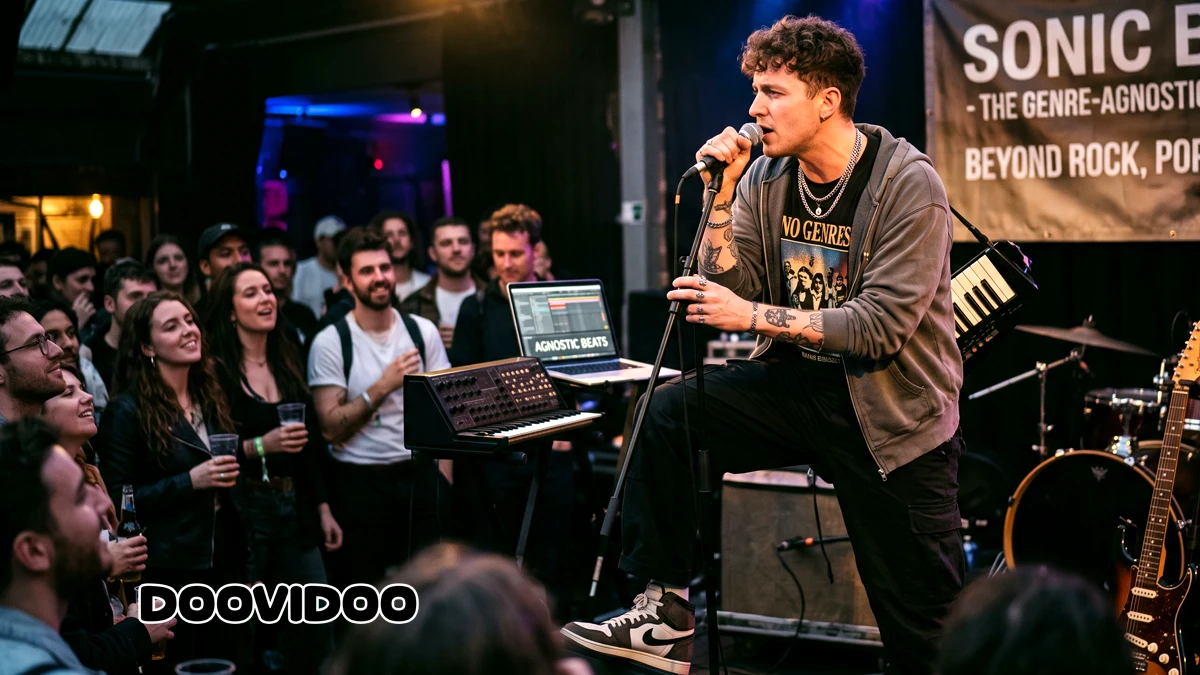
The “genre-agnostic” artist dominates today’s music. Today, a singer releases a trap song, then a ballad, then a pop track, then something close to flamenco, country, or jazz. Everything fits inside the same album. Everything lives on the same profile. Everything moves through the same platform.
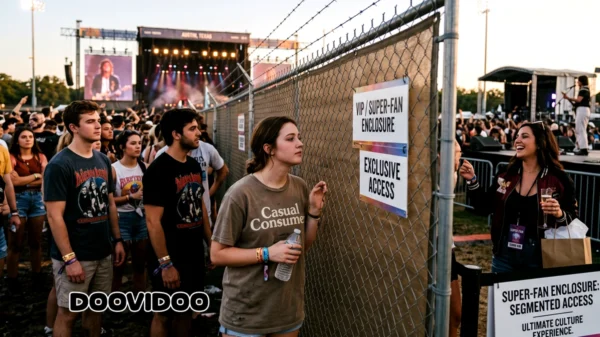
Before, musical genre defined identity. Being a rocker, rapper, pop artist, punk, metalhead, or reggaeton artist involved an aesthetic, a way of speaking, clothing, a community, a stance toward the market, and a way of looking at life. Music did not only organize taste. It organized belonging.
Today that border has lost force. Rosalía moves from flamenco to reggaeton, from bachata to experimental pop, from electronic music to orchestral composition. Post Malone came out of melodic rap, entered pop, picked up guitars, and ended up in country with F-1 Trillion. Kendrick Lamar has moved hip hop toward jazz, funk, soul, spoken word, psychological theater, and political chronicle.
The public no longer demands genre coherence. It demands vibe coherence. The word matters because it marks the shift. Genre asks for history. Vibe asks for immediate feeling. Genre asks for belonging. Vibe asks for fast identification. Genre creates scenes. Vibe creates consumption.
The thesis is uncomfortable. Musical identity no longer works as rebellion. It works as an accessory. Vibe replaced genre and left behind music that is aesthetically precise, flexible, attractive, and often empty of cultural friction.
The End of the Strong Label
For much of the twentieth century, musical genre carried social weight. Rock was not a sound file. It was hair, attitude, guitar, neighborhood, radio, T-shirt, rage, and mythology. Punk was not a list of chords. It was rejection, speed, precarity, and anti-commercial aesthetics. Hip hop was born as urban, technological, political, and community expression. Reggaeton carried body, street, censorship, dance, migration, and moral conflict.
Those scenes had limits. At times, they were rigid. At times, they excluded. At times, they punished anyone who moved. But they also gave people a shared language. If you entered, you accepted a code. If you left, you broke something.
The “genre-agnostic” artist does not need to break anything. They change style without asking permission. That freedom looks healthy. Part of it is. No one needs to remain trapped in a label. A musician should grow. A scene should not function like a prison.
The problem starts when freedom stops producing risk. If every genre is available as an aesthetic palette, change loses weight. The artist sings trap on one track and acoustic pop on the next without friction. The public accepts it because it no longer listens from a tribe. It listens from a personalized screen.
A genre jump no longer shocks. It feeds the algorithm.
Rosalía and Identity as Mutation
Rosalía represents one of the most complete versions of the “genre-agnostic” artist. Her career has never accepted a simple reading. El Mal Querer took flamenco, pop, R&B, electronic music, and religious aesthetics. Motomami moved her sound toward reggaeton, bachata, industrial textures, dembow, ballad, and digital humor. Lux pushed that search toward orchestral composition, chamber pop, multiple languages, and liturgical ambition.
Rosalía does not change genre as a way to seek refuge. She changes as someone who turns change into identity. Her artistic brand is born from mutation. The cultural problem is not her. It is how the market receives that mutation.
Before, a shift like that would have created an audience crisis. Today it creates content. Each era brings wardrobe, visual language, sounds, symbols, and conversation. The fan does not need to ask whether Rosalía is still flamenco, pop, urban, or experimental. The fan only needs to feel that the era has a clear vibe.
That logic rewards visual coherence more than musical belonging. Genre becomes raw material. The final identity lives in the aesthetic.
Rosalía shows that the current artist no longer needs a fixed sonic home. The artist needs an architecture of perception. The public does not follow one style. It follows a recognizable sensitivity.
Post Malone and Change Without Punishment
Post Malone proves another point. His career began in a blurred zone between rap, trap, pop, rock, and ballad. Many accused him of entering hip hop without carrying all of its history. Others saw him as a symptom of a generation that no longer distinguishes between playlist, radio, and scene.
Then came F-1 Trillion, his country album. The turn did not destroy his brand. It expanded it. He collaborated with figures such as Dolly Parton, Tim McGraw, Blake Shelton, Luke Combs, and Morgan Wallen. The country industry received him with more openness than a similar jump would have received in another era.
That move shows how the market changed. An artist no longer needs to be born inside a genre to enter it. They need performative credibility, the right allies, a convincing aesthetic, and an audience willing to move with them.
Country, class, race, and the history of country music do not disappear. They remain. But the algorithm reduces part of that tension by translating the shift into recommendation. If you like Post Malone, the platform takes you to Post Malone’s country. Then it takes you to other artists. The scene enters through consumption continuity, not cultural belonging.
The risk is clear. Genre stops being living tradition and starts working as an available category.
Kendrick Lamar and the Exception With Cultural Weight
Kendrick Lamar also crosses genres, but his case requires another reading. To Pimp a Butterfly took jazz, funk, soul, G-funk, spoken word, and rap. DAMN. entered pop and R&B zones without losing lyrical tension. Mr. Morale & The Big Steppers took hip hop toward therapy, theater, minimalism, and uncomfortable confession. GNX returned to Los Angeles with West Coast beats, competitive force, and more direct energy.
Kendrick does not change genre to soften his identity. He changes form to intensify it. His movements do not erase context. They carry it. When he enters jazz, he does not treat it as an elegant accessory. He links it to Black memory, violence, spirituality, politics, and musical tradition.
That is why his work contradicts part of the thesis, and that contradiction matters. Not every genre crossing empties culture. Some crossings amplify it. The problem starts when the market rewards superficial blending with the same force that it rewards deep study.
The “genre-agnostic” artist is not always empty. But the system around that artist often is.
The Algorithm Does Not Want Subcultures, It Wants Signals
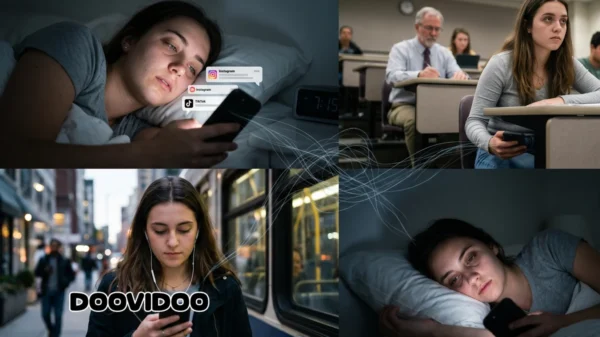
Subculture requires time. You learn bands, codes, histories, places, names, conflicts, and symbols. The algorithm prefers fast signals. You listened for thirty seconds. You saved the song. You repeated a chorus. You watched a video. You skipped to the next one.
Spotify, TikTok, YouTube, and other platforms organize taste through behavioral data. They do not need you to say “I am punk” or “I am a rapper.” They need to know what holds your attention, what you skip, what you share, what you repeat, what mood you seek before sleeping, running, studying, or crying.
Spotify already talks about discovering music for your moment and asking for your vibe from the home screen. TikTok and Luminate reported that a large share of songs that entered the Billboard Global 200 in 2024 went viral first on TikTok. That dynamic does not erase genre. It makes it secondary to the social use of sound.
A song no longer travels first as a cultural statement. It travels as a clip, gesture, transition, meme, emotional background, or personality signal. The user does not always know who sings. Sometimes they know the viral section before they know the artist. Sometimes they recognize the mood before they recognize the work.
The platform does not ask who you are. It watches how you react.
The Death of Subcultures
Saying that all subcultures have died would be inaccurate. Local scenes, small labels, raves, punk communities, rap collectives, metal circles, queer spaces, independent venues, and fan networks with their own codes still exist. But they no longer organize youth culture with the same force.
The algorithm absorbed part of their function. Before, finding music required walking toward a place. A store, a club, a forum, a friend, a specific radio station, a neighborhood. That process built identity. Today, a platform delivers fragments of many scenes in one session.
The consequence has two sides. Access grows. Belonging weakens.
You listen to a shoegaze track, then a corrido tumbado, then techno, later drill, then a Japanese ballad. That range brings pleasure and knowledge. It also lowers the cost of entry. You do not have to live a scene to take its surface.
Musical identity becomes modular. Today you wear one aesthetic. Tomorrow another. On Friday you are urban. On Saturday you are indie. On Sunday you are nostalgic. On Monday you return to the gym with electronic music. Your taste changes according to activity, mood, and content.
Subculture asked for commitment. Vibe asks for availability.
Music as Accessory
The phrase sounds harsh, but it describes a common practice. Music accompanies outfit, feed, workout, trip, date, personal brand, and emotional state. It does not always organize a stance. Often, it decorates a version of you.
Genre was a way of saying “I belong here.” Vibe says “I feel like this right now.” That difference changes everything. Identity stops being collective and becomes editable.
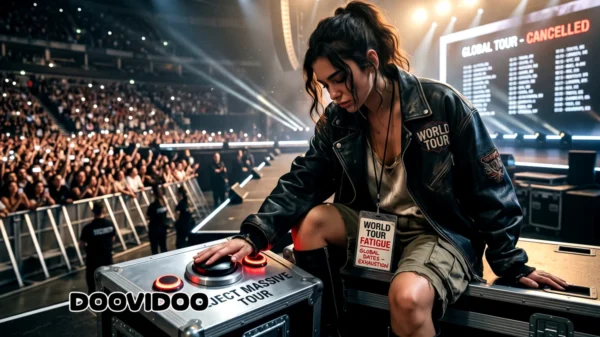
The artist responds to that demand. That is why a current album mixes trap, pop, afrobeat, ballad, electronic music, and acoustic guitar without asking for explanation. It does not seek to represent a scene. It seeks to cover moments. Song for dancing. Song for crying. Song for short video. Song for radio. Song for old fans. Song for the global market.
The industry calls this versatility. Sometimes it is. Other times, it is a way to avoid taking a position.
Cultural emptiness does not come from mixing genres. It comes from mixing without tension, without history, and without cost.
The Loss of Counterculture
Music still produces protest. There are songs about racism, gender, migration, war, inequality, mental health, and digital surveillance. There are artists with real discourse. There are scenes that resist outside the industry’s commercial center.
But the dominant system processes that energy fast. An uncomfortable sound becomes a trend. A marginal aesthetic enters a campaign. A neighborhood dance reaches a brand. A political phrase ends up on a shirt. The platform turns dissent into format.
Counterculture needs friction. It needs conflict with the market. The “genre-agnostic” artist lives in an environment where friction gets monetized at once. Their strangeness serves as competitive difference. Their blend serves reach. Their ambiguity serves advantage.
That is why it is hard to picture a global star with a closed musical identity. The market rewards adaptability. The algorithm rewards what crosses audiences. The brand rewards what does not exclude too many buyers.
The pure rocker, the pure pop star, and the pure trap artist still exist. But the center of the business favors another figure: the flexible, visual, mutable, playlist-ready artist who is easy to reposition.
What the Listener Loses
The listener gains access. The listener gains range. The listener gains freedom from old borders. They no longer have to choose between tribes as if taste were a fixed credential. That openness deserves defense.
But the listener also loses something. They lose depth of context. They lose a relationship with scenes. They lose memory of conflict. They lose the pleasure of belonging to a culture that demands more than playing songs. They lose resistance against an industry that turns every identity into a sellable aesthetic.
The “genre-agnostic” artist is not the enemy. That artist is the logical result of an economy that rewards attention, speed, flexibility, and visual recognition. Rosalía, Post Malone, and Kendrick show three different responses to that economy. The first turns mutation into language. The second turns change into market expansion. The third turns blending into historical density.
The difference between them defines the debate. Crossing genres is not enough. Meaning has to travel with the shift.
Vibe Replaced Genre
The “genre-agnostic” artist arrived because the public changed, platforms changed, and the industry learned to sell identity without subculture. Today, the label matters less than the sensation. Genre matters less than the visual scene. Tribe matters less than the feed.
Musical identity no longer works as mass rebellion. It works as a personality accessory. That does not destroy all music. But it reduces its ability to create broad countercultural movements.
The future does not need a return to rigid borders. No one wins if rock, pop, trap, flamenco, country, or jazz function like cages. But music does need to recover tension. It needs blending with memory. It needs aesthetics with position. It needs artists who change form without emptying the substance.
Genre died as a fixed label. The risk now is that vibe replaces everything. When every sound serves any brand, any clip, and any emotional state, music keeps beauty. It loses conflict.
And without conflict, a generation listens a lot, but belongs very little.
Sources used: Britannica describes Rosalía’s Motomami as an album that incorporates R&B, reggaeton, classical music, cumbia, and bachata, while NPR noted that her work has crossed flamenco, reggaeton, R&B, and electronic music.
GRAMMY.com presented Post Malone’s F-1 Trillion as a turn toward country from a career marked by rap, trap, and pop, and The Guardian reviewed the album as the artist’s entry into country territory with collaborations from major figures in the genre.
TIME analyzed Kendrick Lamar’s To Pimp a Butterfly as a work connected to soul, funk, G-funk, and live instrumentation, while El País described his legacy as a fusion of jazz, funk, and spoken word with social commentary.
Spotify presented 2026 music discovery features centered on asking for music for your moment and your vibe, while its earlier research on recommendations analyzed how algorithms interact with diversity of consumption, genres, and categories.
TikTok and Luminate reported that TikTok acts as a music discovery engine and that 84 percent of songs that entered the Billboard Global 200 in 2024 went viral first on TikTok.