

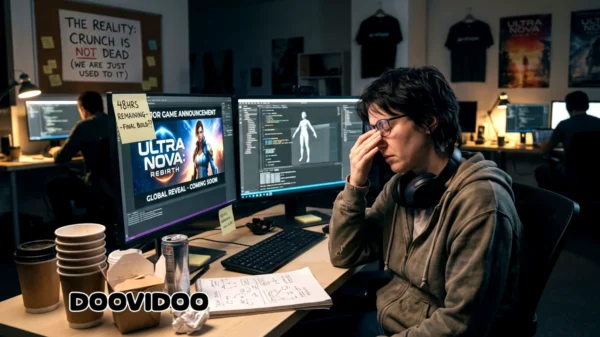

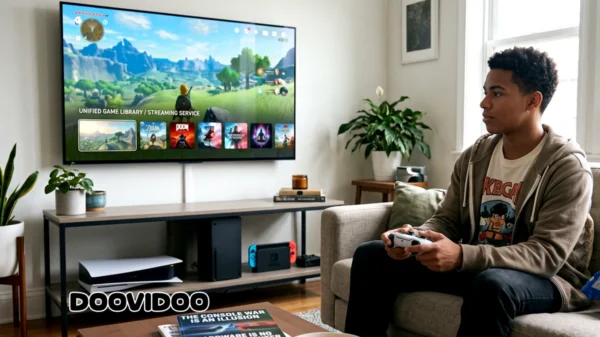










The console war is an illusion. For years, the industry sold a simple war: PlayStation against Xbox, Nintendo against everyone, PC as a separate territory, and mobile as a minor category for people who “did not really play.” That division organized stores, forums, family arguments, and advertising campaigns. It also gave players an identity. Owning a console meant choosing a tribe.
That world has not disappeared completely. Exclusives still exist. Some launches still sell hardware. Some players still defend a brand as if it were a national flag. But the center has moved. The business no longer revolves only around the plastic box under your television. It revolves around access.
The player of 2026 is increasingly agnostic. They want to play wherever they can, whenever they can, and with whoever they can. Console, PC, handheld, mobile, television, cloud, subscription, digital purchase, cross-save, cross-play. The question is no longer “which console do you own.” The real question is “where is your library and how easy is it to keep playing.”
The console war is an illusion because hardware has stopped being religion. Now it is a doorway.
The End of the Box as Identity
During the golden era of the console war, choosing hardware meant accepting clear limits. If you had a PlayStation, you lived inside its catalog. If you had Xbox, you defended Halo, Gears, and Game Pass before Game Pass existed. If you had Nintendo, you accepted its own logic. Each console was an island.
That model worked because the disc, the cartridge, and the physical store maintained borders. Content traveled little. So did the player. Exclusivity was the emotional center of the business. Buying a console meant buying access to a closed culture.
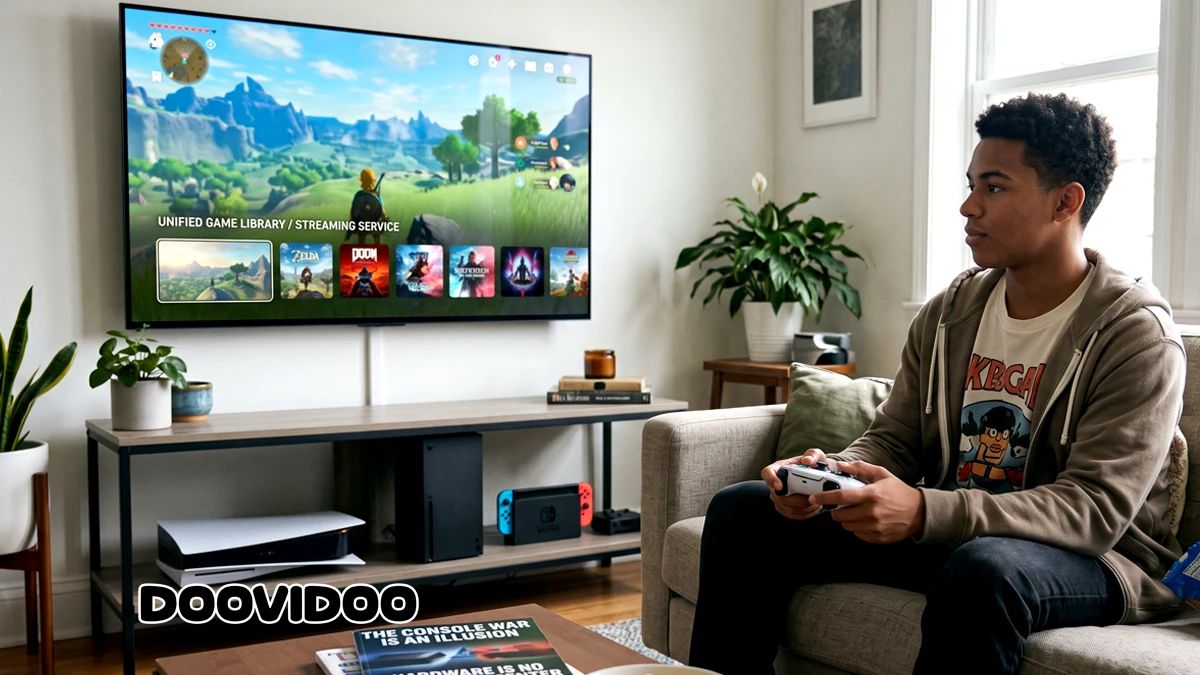
Today, that border has cracks. Games jump from platform to platform. Accounts preserve progress. Subscriptions replace individual purchases. Mobile competes for time. PC attracts console players. Handhelds with Windows or SteamOS mix stores. Google Play Games brings mobile experiences to PC. Xbox talks about console, PC, handheld, and cloud inside the same ecosystem. PlayStation measures its strength not only by boxes sold, but by active users and services.
The box is still there. But it no longer rules alone.
The New Agnostic Player
The agnostic player does not hate consoles. They use them without turning them into identity. They buy a PS5 for certain games, a Switch for others, use PC for mods or performance, play on mobile during breaks, and open a subscription when the catalog makes sense. They are not interested in winning a brand war. They are interested in reducing friction.
That player does not ask whether a company “betrayed” its console by bringing a title to another platform. They ask whether they will be able to play with friends. They ask whether their progress carries over. They ask whether the price makes sense. They ask whether the game works on the screen they have nearby.
The industry has already responded to that change. Not with a clean revolution, but with a contradictory transition. Microsoft pushes Xbox Play Anywhere and the idea of playing on console, PC, and handheld. At the same time, it still announces console exclusives to protect brand value. Sony keeps PlayStation as its central platform, but its network business, active users, and PC decisions show that hardware now coexists with another logic. Nintendo still sells hardware as a closed experience, but even its success confirms something else: the public buys formats of use, not only power.
The agnostic player understands something forums take longer to accept. The device matters less than the habit.
Services Against Plastic
The current battle is not PS5 against Xbox Series X. It is library against library. Subscription against subscription. Ecosystem against ecosystem. Account against account. Time against time.
Services gained ground because they solve a basic anxiety: what to play without paying full price every time. Game Pass, PlayStation Plus, Nintendo Switch Online, Apple Arcade, Netflix Games, Google Play Pass, and other models are not identical, but they share one idea: the relationship with the player no longer ends with the sale of hardware. It begins there.
A traditional console was sold as an object. A service is sold as a routine. It wants you to come back. It wants you to explore. It wants you to try. It wants you not to cancel. In that economy, the box matters less than the subscription, cloud saves, deals, benefits, and access to releases.
This changes the question of power. Before, the winner was whoever sold the most consoles. Now, the winner is whoever controls the most points of contact with the player. A company can lose a hardware argument and still win through software, services, PC, mobile, or licenses. Microsoft understood this after losing hardware ground to PlayStation. Sony understands it every time it reports active users and digital sales. Google understands it as it tries to unite mobile and PC through Play Games. Apple understands it by turning the iPhone into a premium and mobile gaming platform.
The plastic box under the television is no longer the battlefield. It is one node among many.
Mobile Enters the Living Room
For years, part of the public treated mobile as second-class gaming. That reading ignored the money, time, and scale. Mobile did not need to convince traditional players to dominate global revenue. It did so from another place: mass access, free-to-play models, short sessions, and devices everyone already owned.
Now the border is reversing. Mobile is entering PC. Google Play Games allows mobile titles to be played on Windows. The proposal of “buy once and play across devices” brings mobile language closer to traditional platform language. It is no longer only about adapting PC games to mobile. It is also about bringing mobile games to larger screens, with keyboard, controller, and PC ecosystems.
That movement matters because it destroys another hierarchy. If a mobile game is played on PC, with shared progress and cross-purchase, where does mobile end and desktop begin. If a free RPG lives on console, PC, and phone, which console won. If a player moves from a handheld to the television and then to mobile, which brand defines their identity.
The answer is none. Identity is defined by access.
Technological Convergence
Convergence does not mean all devices are the same. It means they are beginning to share functions, catalogs, and expectations.
A console wants to look more like a service. A PC wants to reach the couch. A handheld wants to be a portable console, compact PC, and cloud client at the same time. A mobile phone wants to run games that once seemed impossible outside dedicated hardware. A television wants to open games without a console. The controller no longer belongs to one box. Neither does the account.
Xbox on handhelds summarizes that direction. The experience no longer requires a traditional Xbox console. It allows access to Game Pass, downloaded games, cloud streaming, or compatible Play Anywhere titles. The brand moves from a box toward a layer of access.
This does not kill hardware. It redefines it. The device stops being a totem and becomes a terminal. It matters for comfort, price, screen, battery, ergonomics, and catalog. Not for tribal purity.
Even the next generation will have to sell something more than power. Players are no longer impressed the same way by teraflops. They want less waiting, more compatibility, better prices, protected libraries, shared progress, accessibility, control options, and the freedom not to start from zero every time they change screens.
The Exclusive Does Not Die, It Changes Function
Saying the console war is obsolete does not mean exclusives are dead. They still have value. A major exclusive can still activate desire, conversation, and sales. Nintendo lives from that force. Sony protects it in its major narrative games. Xbox is using it again in strategic titles.
But the exclusive no longer operates as it once did. Before, it justified a permanent border. Now it functions as a temporary anchor, prestige signal, or tool to attract users into an ecosystem. The goal is not always to keep a game locked away forever. Sometimes it is to bring the player into an account, a store, a subscription, or a community.
Exclusivity has become tactical, not dogma. A game can launch first on console, then on PC, then in the cloud. A multiplayer title needs to cross platforms to survive. A small franchise can grow by appearing in more places. A service needs volume, not purity.
The old war asked for loyalty. The new market asks for circulation.
Accessibility as the New Advantage
Accessibility no longer means only options for players with disabilities, although that dimension remains essential. It also means economic access, technical access, and social access.
A player with limited money does not always buy a console at launch. Maybe they play on mobile. Maybe they use an old PC. Maybe they subscribe for one month. Maybe they stream from the cloud. Maybe they use a secondhand handheld. Maybe they wait for a version on another platform. The industry that best understands that reality will have an advantage.
Accessibility also means playing with friends regardless of device. Cross-play and cross-progression have stopped being extras. They have become expectations. The player who loses progress when changing platforms feels punished by the company for moving. The player who cannot play with their group because they bought “the wrong box” feels the system is outdated.
The console war fed on separation. The modern player demands connection.
The Nostalgia of the Fanboy
The console war survives as nostalgia. In forums, memes, and comments, many people still debate sales, exclusives, and power with the language of 2006. That culture has something theatrical about it. It defends brands that do not need defense. It turns business decisions into personal identity. It treats multiplatform launches as betrayal.
That fanboyism is understandable as emotion, but weak as analysis. Companies no longer behave like closed armies. They behave like ecosystem managers. They license, buy studios, sell services, negotiate stores, optimize retention, raise prices, explore cloud, watch mobile, and measure active users.
The player still trapped in the console war looks at the box. The industry looks at the account.
The Real Battle
The real battle is not which console wins. It is who controls the daily relationship with the player. Who stores their purchases. Who hosts their friends list. Who preserves their saves. Who recommends the next game. Who charges the subscription. Who reduces friction between devices. Who turns a ten-minute session into a habit that lasts years.
That is where the power is. Not in the box, but in continuity.
The console war is an illusion because it hides that transformation. While some argue over whether a game “should” stay on one platform, the market is moving toward a logic where content needs to circulate, services need to retain, and users need to move.
The future will not be without hardware. It will be with less sovereign hardware. There will be consoles, yes. There will be new generations, yes. There will be performance debates, yes. But the cultural center will be somewhere else: access, library, community, progress, price, and availability.
The agnostic player already lives there. They are not waiting for permission from an old war. They turn on the screen closest to them and play.
Sources used: Xbox stated in its Xbox Games Showcase 2026 recap that Gears of War: E-Day and Clockwork Revolution will be Xbox console exclusives, but also said that titles already announced as multiplatform will keep that plan and that the company will invest in Xbox “both on console and beyond.”
Newzoo reported that the global video game market closed 2025 at 201.6 billion dollars, with mobile at 113.3 billion, PC at 43.6 billion, and console at 44.7 billion. It also noted more modest console growth and higher revenue from multi-game subscriptions.
Microsoft describes Xbox Play Anywhere as a program that allows compatible titles to be played on Xbox console, Windows PC, and compatible handhelds at no additional cost, with progress, add-ons, and achievements synchronized.
Google Play Games presents its offer as seamless gameplay between mobile and PC, with a catalog of more than 200,000 games and cross-platform options. Google also announced in 2026 “buy once play anywhere” features for mobile games that opt into Google Play Games on PC.
Sony reported in its 2026 strategic presentation that PlayStation has more than 125 million monthly active users and that those users enjoy titles “wherever they are” and connect with friends through gameplay. In its FY2025 results, Sony linked part of Game & Network Services performance to higher network services and third-party software, while reporting lower hardware sales.