












Media consumption is going through a deep break. Audiences no longer reach the news through one single door. In the past, people opened the newspaper, turned on the news, or visited a media website. Today, they receive headlines on TikTok, watch summaries on YouTube, listen to clips on Instagram, follow creators on X, and check alerts on their phones.
The shift is not only about platforms. It is about time, attention, and habit. Audiences want fast information. They want context without friction. They want to understand a topic while commuting, waiting for an appointment, eating lunch, or resting. In that routine, short video is gaining ground over long text.
Written articles still matter. They serve analysis, investigation, archives, and deep reading. But they no longer dominate the first contact with the news. For millions of people, the first encounter happens in a 30 second clip, a vertical summary, or a creator reaction.
Media consumption has become more visual, more fragmented, and more dependent on algorithms. This shift forces journalists, editors, and news brands to rethink how they produce, distribute, and measure their content.
What Media Consumption Means Today
Media consumption describes how people access information, entertainment, and opinion. It includes news, podcasts, videos, social media, newsletters, television, radio, written articles, and mobile apps.
The current difference lies in the mix. A person does not fully abandon one format when adopting another. They watch short videos, read headlines, listen to a podcast, and open an article when they need more detail. The habit spreads across screens and moments.
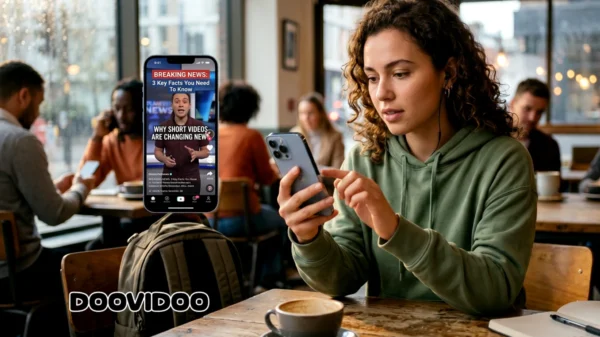
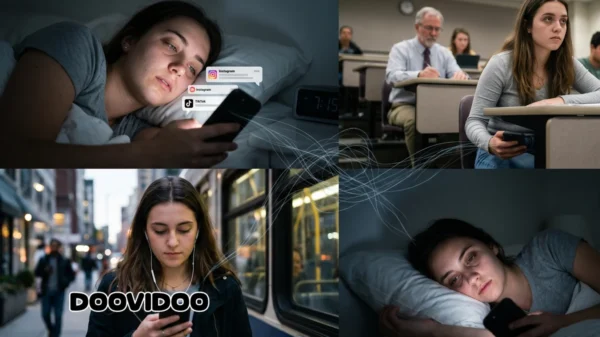
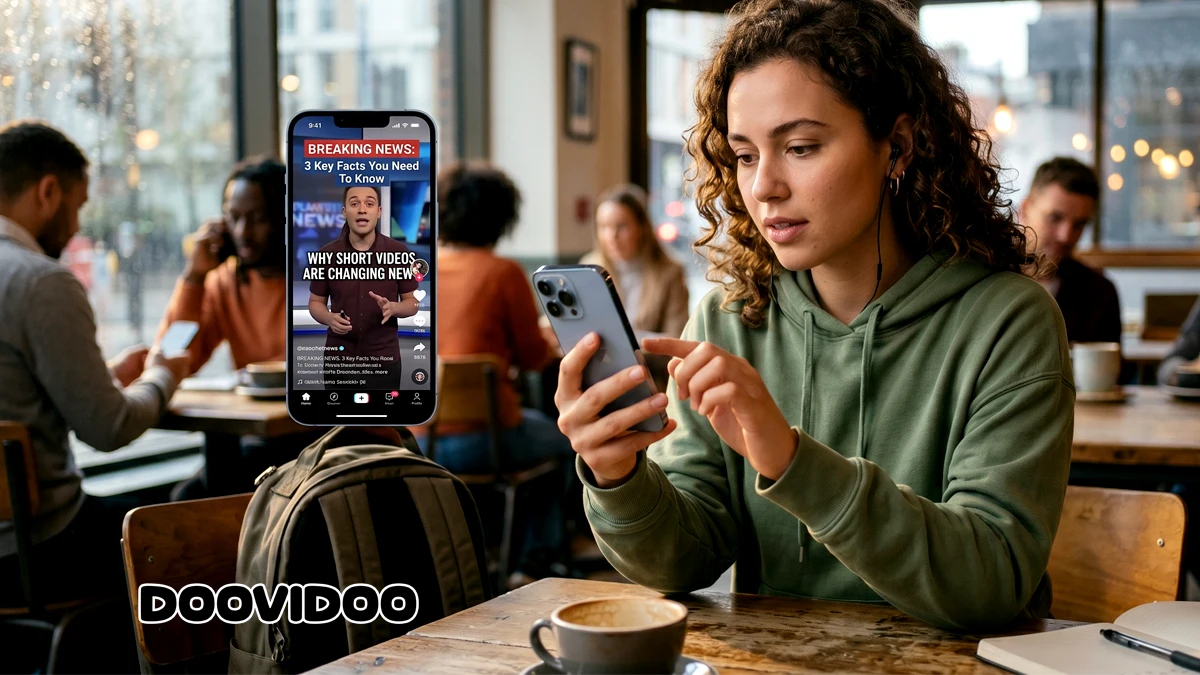
The phone concentrates much of that activity. The mobile screen favors short, visual, and vertical pieces. Long text demands more concentration. Short video enters with less effort. The user does not search for a link. The content appears in the feed.
In that setting, media companies no longer control the full path. The platform decides what appears. The algorithm orders visibility. The user accepts or rejects with one gesture. News competes with humor, sports, music, celebrities, advertising, and private conversations.
The Preference for Short Videos
Short video wins because it fits daily rhythm. It summarizes. It shows. It creates emotion. It delivers one idea in seconds. It also lowers the entry barrier for complex topics.
An economic news story in text requires careful reading. A video with graphics, voice, and captions delivers a first reading in under a minute. A war, an election, or a climate crisis arrives with images, maps, and testimonies. The format helps initial understanding.
But speed brings risks. A short video compresses facts. It leaves out nuance. It favors strong phrases. It rewards emotion. At times, it mixes information with opinion without a clear separation. The audience receives a fast version, but not always a complete one.
Media companies face a direct tension. If they do not produce short video, they lose reach with younger audiences. If they produce short video without rigor, they weaken credibility. The solution requires synthesis with method. Each clip must answer one specific question and guide the reader toward more context when the topic requires it.
Audience Data on Video Platforms
Recent data confirms the power of platforms. Reuters Institute reported in 2026 that, across 48 markets, social networks and video networks were the most used path to access online news, with 54 percent of respondents. Media websites and apps reached 51 percent. Television reached 52 percent.
In the United States, Pew Research Center reported in 2025 that 53 percent of adults get news on social media at least sometimes. Facebook and YouTube lead as regular news spaces. Thirty eight percent of adults said they regularly get news from Facebook. Thirty five percent said the same about YouTube. TikTok and Instagram reached 20 percent each.
TikTok shows a stronger figure when looking at its own users. Pew found that 55 percent of TikTok users regularly get news on the platform. In 2020, that share was 22 percent. The growth marks a clear transformation. The platform no longer works only as a space for dance, humor, or entertainment. It also acts as an entry point to politics, the economy, conflicts, culture, and local life.
YouTube keeps another advantage. DataReportal reported in its 2026 global report that YouTube leads total accumulated time among social apps on Android. It also noted that YouTube generated almost twice the total time of TikTok in August 2025. This matters because YouTube combines long video, short video, livestreaming, and connected television.
Time Spent on Short Videos
Time spent explains why short video dominates so many routines. DataReportal, using Similarweb data, indicated that the typical TikTok user on Android spends 1 hour and 37 minutes per day in the app. The typical YouTube user spends less daily time, but the average YouTube session lasts 14 minutes and 29 seconds. On TikTok, the average session reaches 9 minutes and 42 seconds.
These data show two behaviors. TikTok achieves high frequency and agile sessions. YouTube retains users longer in each entry. Both formats capture attention through video, although with different dynamics.
The TikTok user opens the app several times a day and consumes consecutive pieces. The YouTube user enters fewer times, but stays longer per session. For media consumption, both models matter. TikTok works for fast reach. YouTube works for deeper development, archives, and follow up.
Short video also turns dead time into consumption time. Before, waiting in line was a pause. Now it is a content session. That shift increases exposure to news, but reduces the chance to process it calmly.
Written Articles Versus Short Videos
The written article keeps value because it organizes information with depth. It allows documents to be cited, data to be ordered, context to be developed, and a record to remain. A short video rarely does all of that.
The difference lies in attention. Chartbeat, a media analytics company, indicates as a guide that written news stories often register between 60 and 90 seconds of engaged time. Landing pages often record between 5 and 30 seconds. Long form content passes 3 minutes when it achieves retention.
That comparison shows the editorial challenge. A 1,500 word article needs several minutes of reading. A short video delivers one idea in under a minute. The user decides fast which format fits the moment.
Deep reading does not disappear. It becomes more selective. The audience reads when it needs to verify, compare, or understand. It watches video when it wants a quick answer. It listens to audio while doing another activity. Media consumption is organized by context, not by fixed loyalty to one format.
Attention Span and Digital Platforms
The discussion about attention often falls into exaggeration. The claim that human attention lasts less than that of a goldfish is repeated often, but its basis is weak. The real problem is different. Platforms train constant jumps between stimuli.
Researcher Gloria Mark has studied attention on screens for years. Her work shows that people switch focus often in digital environments. She places the average attention time on a screen near 47 seconds before switching.
That data does not mean people can no longer concentrate. It means the digital environment pressures attention. Notifications, tabs, messages, videos, and recommendations interrupt focus. Media consumption now lives inside that same logic.
Recent studies on short video also point to risks. A 2024 study found that the tendency toward problematic short video consumption on mobile is associated with lower self control and lower executive control. Another study on TikTok, YouTube, and Twitter found that the TikTok condition affected recall of intentions in a prospective memory task, linked to rapid context switching.
For media companies, the reading is direct. Publishing is not enough. Content must be designed for an audience that jumps from stimulus to stimulus. The content needs a clear entry, simple structure, verifiable context, and routes toward greater depth.
The New Role of the Journalist
The journalist no longer writes only for a reader who arrives at the media website. They also inform an audience that finds them in a feed. That changes the job.
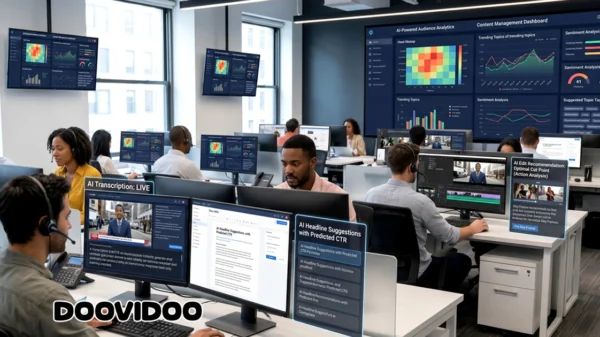
A report needs a written version, a visual summary, a short video, an adapted headline, social fragments, and data ready for graphics. Quality must not fall. The format must adjust.
Newsrooms need to think in layers. The first layer captures attention. The second delivers the main data. The third offers context. The fourth leads to the full article, original document, or long interview.
This model does not mean reducing everything to clips. It means creating paths. A short video opens the door. An article supports understanding. A newsletter builds loyalty. A podcast accompanies. A graphic clarifies.
Risks of Fragmented Consumption
Fragmented media consumption creates problems. The first is loss of context. The audience receives parts of a story without seeing the full picture.
The second is confusion between source and distributor. A user remembers seeing a news story on TikTok, but does not always identify who investigated it. The media brand loses presence. The creator gains visibility.
The third risk is misinformation. Short videos travel fast. A false claim with good editing reaches millions of views before a correction.
The fourth risk is fatigue. Watching many short pieces does not always inform better. At times, it creates saturation, anger, or the feeling of being up to date without real understanding.
What Media Companies Should Do
Media companies need to accept the shift without surrendering to the algorithm. First, they need to produce short video with clear editorial rules. Second, they need to keep deep articles for complex topics. Third, they need to measure retention, not only views. Fourth, they need to build a direct relationship with the audience through newsletters, apps, and memberships. Fifth, they need to train journalists in visual editing, data, and social distribution.
Media consumption will not return to the old model. The audience has already adopted short video as part of its information diet. The task now is to raise quality inside that format.
The Future of Media Consumption
The future of media consumption will be hybrid. Short video will keep growing as a main entry point. YouTube will keep its strength through its mix of long video, short video, and connected television. TikTok will keep shaping discovery habits. Instagram will maintain visual presence. Written articles will keep value in investigation, analysis, and archives.
The advantage will go to media companies that understand the full path. Capturing attention is not enough. That attention must become understanding. A view does not equal an informed reader. A viral clip does not replace an investigation.
The central challenge is clear. Inform in brief formats without weakening the news. Guide the user from the initial impact to the context. Respect audience attention, but do not treat the audience as unable to read.
Media consumption changed because digital life changed. The question for newsrooms is not whether they should adapt. The question is how to do it without losing rigor.
Sources used: Reuters Institute reported in 2026 that social networks and video networks were the most used path to access online news, with 54 percent across 48 markets, compared with 51 percent for media websites and apps. Pew Research Center reported in 2025 that 53 percent of adults in the United States get news on social media at least sometimes, with 38 percent on Facebook, 35 percent on YouTube, and 20 percent on TikTok and Instagram. DataReportal reported in 2026 that the typical TikTok user on Android spends 1 hour and 37 minutes per day in the app, and that YouTube had average sessions of 14 minutes and 29 seconds in August 2025. Chartbeat places typical engaged time on news articles between 60 and 90 seconds. Gloria Mark reports an average near 47 seconds of attention on a screen before switching focus. Recent academic studies link short video with lower self control, lower executive control, and more context switching.