





















“Niche gameplay” as resistance sounds like a contradiction in an industry obsessed with making everything immediate, clear, monetizable, and easy to sell in a thirty second trailer. But there it is: a growing part of the audience is taking refuge in games that do not explain everything instantly, do not forgive mistakes, do not try to please everyone, and do not treat the player like an impatient customer.
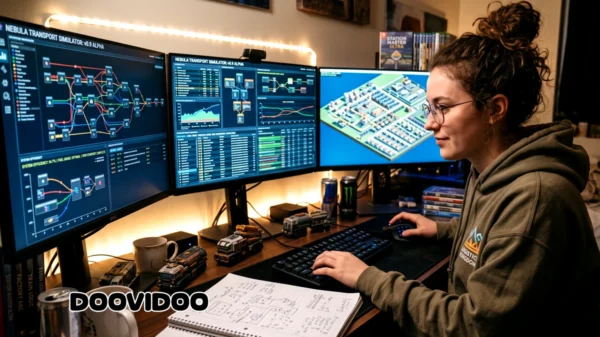
These are complex management games, specific simulators, dense strategy titles, colonies that collapse because of one broken logistics chain, factories that fail because one conveyor belt was miscalculated, tactical campaigns that demand reading abilities, factions, and consequences. Games where learning hurts a little. Where pleasure does not arrive quickly. Where the player does not buy power, but attention time.
In an age of instant rewards, that slowness feels almost political.
The success of titles such as Dwarf Fortress, RimWorld, Factorio, Workers & Resources: Soviet Republic, Shapez, Caves of Qud, or the latest Warhammer 40,000 DLCs shows that the market is not divided only between blockbusters and casual games. There is a third zone: players who want systems, friction, obsession, and failure. They do not want the game to adapt to them immediately. They want to adapt to the game.
The question is why.
The Fantasy of Understanding a System
Complex management games sell a fantasy different from power. They do not promise that you are the chosen one. They promise that if you pay attention, maybe you will understand how something works.
That explains part of their appeal. The real world feels increasingly opaque. Rents rise without visible logic. Algorithms decide what you see. Labor economies are unstable. Artificial intelligence threatens jobs. Politics becomes noise. Paperwork, prices, rates, crises, and platforms change rules without asking.
Against that, a complex simulator offers a world that is harsh but legible. If a city fails in Workers & Resources, there is a reason. Transportation is missing. Electricity does not arrive. The factory has no workers. The supply chain is broken. If a colony dies in RimWorld, there is a material story behind it. Hunger, cold, disease, poor planning, fire, invasion, trauma. If a factory in Factorio stops, someone can follow the line and find the error.
That pleasure is not simple escapism. It is a response to the frustration of living inside systems that cannot be touched. The complex game offers a rare promise: chaos can be studied.
Not for Everyone, and That Is the Point
For years, many major studios chased the game “for everyone.” Softer tutorials. Constant markers. Maps full of icons. Adjusted difficulty. Short missions. Frequent rewards. Interfaces that try to reduce every doubt. The logic was understandable: more audience, less friction, more sales.
But the problem with designing for everyone is that many times you end up designing for no one in particular. The game becomes correct, friendly, broad, and forgettable. An experience without teeth.
“Niche gameplay” as resistance appears against that softness. It does not reject real accessibility, which remains necessary. It rejects the idea that everything must be simple to have value. It rejects design that confuses respect for the player with fear of frustrating them.
A difficult game is not automatically deep. Many are clumsy, unfair, or poorly explained. But good complex games treat the player as someone capable of learning. They do not deliver satisfaction prepackaged. They demand that the player build it.
Warhammer 40,000 and the Religion of Detail
Warhammer 40,000 is an interesting case because its digital success is not based only on a known brand. It is based on a culture of detail. The Warhammer universe does not enter softly. It has factions, heresies, gods, military orders, religious technology, impossible political systems, baroque aesthetics, fanaticism, dark irony, and an absurd amount of lore.
That would be a problem for an industry that wants perfect onboarding. For its fans, it is the point.
Recent DLCs and expansions show how this audience accepts complexity when it feels that complexity respects the world. Warhammer 40,000: Rogue Trader does not work like a light RPG for killing an afternoon. It is a CRPG with decisions, builds, twisted morality, tactical combat, and layers of lore. The Infinite Museion, its third expansion, adds the archive of Trazyn the Infinite, a new Adeptus Mechanicus companion, and a cybernetic augmentation system that changes combat, aesthetics, and roleplay. This is not content designed for someone who wants to switch off their brain. It is content for someone who wants to sink deeper.
Warhammer 40,000: Darktide also moves in that direction with the Skitarii class, tied to the Adeptus Mechanicus. What matters is not only the new character. It is the type of promise: non-linear skill tree, servo-skull, hybrid configurations, mechanical identity, faction immersion. The expansion sells specialization. It sells becoming something stranger, more technical, less generic.
The audience responds because it understands the pact. Warhammer does not ask that everything be easy. It asks that everything have weight.
The Pride of Difficulty
Complexity creates community because no one masters it alone. Players share guides, spreadsheets, mods, builds, screenshots, mistakes, disaster stories, and absurd solutions. The game becomes conversation.
Dwarf Fortress is the extreme example. For years, it was famous for its intimidating interface, almost ridiculous depth, and ability to generate emergent stories. When it arrived on Steam with a more accessible presentation, it did not lose its soul. The entry point became friendlier, but the center remained the same: a simulation capable of producing tragedy, comedy, bureaucracy, violence, and memory.
Its success proves that the barrier was not complexity itself. It was unnecessary friction. When the interface allowed more people to enter, the public discovered that underneath there was something more polished games rarely offer: a system that does not run out after you understand its basic rules.
RimWorld works the same way. It is not only about building a colony. It is about managing bodies, emotions, addictions, wounds, weather, technology, attacks, relationships, and ethical decisions. Its Odyssey expansion took the game to a new player peak years after release. That does not happen by accident. It happens because systemic games age differently. They do not depend only on new content. They depend on how that content changes the machine.
Factorio and the Beauty of Obsession
Factorio may be the purest form of this resistance. On the surface, it is a factory. In practice, it is an optimization drug. Every improvement opens another problem. Every solution creates a new need. The player does not move toward an emotional ending, but toward a sharper understanding of flow, energy, production, speed, and expansion.
Space Age, its major expansion, sold hundreds of thousands of copies in less than a week. That says a lot about an audience willing to pay not for a more cinematic story, but for more system. More planets. More logistics. More problems. More voluntary headaches.
Factorio’s factory does not flatter the player. It confronts them with their own impatience. If you improvise too much, you pay. If you do not calculate, errors accumulate. If you expand without thinking, the system becomes a monster. That discipline seduces because it turns attention into real power.
In a culture designed to interrupt you every five seconds, spending three hours adjusting a production chain feels like a form of aggressive meditation.
The Rejection of Instant Gratification
Digital industry trains the user to receive fast stimuli. Infinite scroll. Daily rewards. Notifications. Loot boxes. Limited events. Progress bars. Micro-victories. Everything is designed so leaving is hard and thinking is optional.
“Niche gameplay” as resistance opposes that rhythm. Not because it is pure or superior, but because it asks for another relationship with time. Learning a complex simulator requires patience. Reading menus requires attention. Failing requires tolerance. Starting over requires humility.
This type of game is not consumed like a snack. It is inhabited like a workshop.
That is where its cultural weight appears. Many players do not seek difficulty to brag. They seek an experience that does not treat them like distracted spectators. They want the game to ask something from them. They want to feel that their time produced competence, not only artificial progress.
The reward comes late, but it comes differently. It does not appear as a shiny animation. It appears as understanding. Suddenly a chain works. A colony survives winter. An impossible campaign finds a solution. A city produces steel, energy, and transport without collapsing. The pleasure lies in having learned how to see.
Without Massive Marketing, With Fierce Word of Mouth
Many of these games do not grow like blockbusters. They grow like beautiful diseases. One player convinces another. A YouTuber shows an impossible factory. A streamer loses a colony in an absurd way. A forum shares a thirty page guide. A mod revives a system. A community turns a simulator into a shared language.
Shapez is a clear example. It began as a small project, inspired by frustration and love for automation, and ended up selling millions of copies across its first game and sequel. It did not need to look like Fortnite. It did not need a celebrity in a trailer. It needed a clear idea, clean execution, and a community that recognized the purity of its design.
Complex management succeeds because its players are intense. They may not be the largest mass audience, but they are loyal. They buy expansions. They recommend. They write reviews. They make mods. They return for years. They sustain games that traditional marketing would have considered too dry.
The market often underestimates audiences that read manuals. That is a mistake.
Slowness as Luxury
There is something almost obscene about playing slowly in 2026. Everything around us demands speed. Reply quickly. Produce quickly. Buy quickly. Give an opinion quickly. Update quickly. Even many games seem designed to leave no silence.
Complex simulators recover slowness as luxury. They allow players to obsess over a road, a mine, a squad of soldiers, a colonial kitchen, an electrical grid, a train line, or a production table. Not because those things are important in the traditional sense, but because they allow concentration with depth.
Concentration has become scarce. That is why it has value.
These games also return dignity to error. In many modern products, failure is softened so no one leaves. In complex simulators, failure is part of the language. A lost run is not wasted time. It is knowledge. It is story. It is scar.
The Future Will Not Be Only Simple
The industry will keep producing accessible, fast, broad games. It should. Not every player wants to study systems after working eight hours. Not every game needs to be a spreadsheet with music. Accessibility and clarity remain virtues.
But the success of complex management shows that there is hunger for something else. Hunger for honest difficulty. Hunger for worlds that do not explain themselves immediately. Hunger for systems that respect the player’s intelligence. Hunger for experiences that do not fit inside the language of “content for everyone.”
“Niche gameplay” as resistance does not mean locking oneself inside elitism. It means defending the right for strange, slow, dense, demanding games to exist. Games that do not ask trends for permission. Games that do not soften their identity to please everyone. Games that find an audience because they dare to be specific.
In a culture that sells instant gratification as if it were happiness, sitting down to build a factory, a colony, a republic, or an impossible campaign can seem absurd. But maybe that is the point.
Sometimes rebellion does not mean breaking the system. Sometimes it means learning one so complex that no quick reward can replace the satisfaction of understanding it.
Sources used: Warhammer Skulls 2026 confirmed several franchise announcements and expansions, including the Skitarii class for Warhammer 40,000: Darktide, The Infinite Museion DLC for Warhammer 40,000: Rogue Trader, and new activity around Dawn of War IV and Mechanicus 2.
Owlcat announced that The Infinite Museion, the third expansion for Warhammer 40,000: Rogue Trader, would release on June 11, 2026, with the archive of Trazyn the Infinite, a new Adeptus Mechanicus companion, and content centered on curiosities, artifacts, and augmentations.
Dwarf Fortress surpassed one million copies sold on Steam after years as a cult complex simulator, and PC Gamer described its Siege update as a new push toward even deeper simulation.
RimWorld reached a new record of nearly 100,000 concurrent players on Steam after its Odyssey expansion, while GameDiscoverCo reported that the expansion generated more revenue than any previous RimWorld DLC in its first two weeks.
Factorio: Space Age sold more than 400,000 copies in less than a week, and Shapez surpassed two million copies sold as a niche automation series driven by community and word of mouth.