




























Student debt has changed the way many families look at college. For decades, a college degree worked as a direct promise: study more to earn more. Today, that promise requires a colder review. The cost of studying has grown. Rent has risen. Entry level salaries do not always offset the monthly loan payment. The chosen major matters as much as the university.
Higher education still offers advantages. A degree opens job opportunities, improves long term income, and reduces unemployment risk. But student debt forces students to measure the return on each decision. Getting into college is not enough. Students need to calculate how much it costs, how much they borrow, what salary the field offers, and how many years it will take to pay.
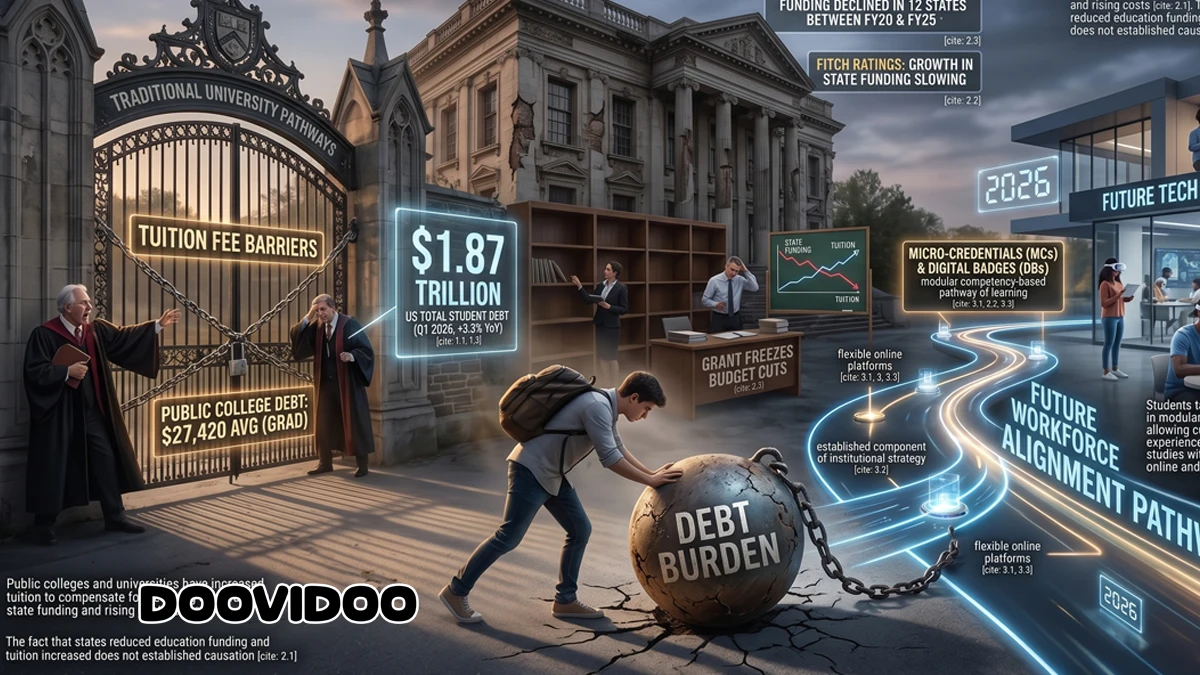
In the United States, the balance of education loans remains near historic levels. The Federal Reserve recorded 1.865 trillion dollars in student loans at the end of the first quarter of 2026. The Federal Reserve Bank of New York placed the student debt balance at 1.66 trillion dollars in its household debt report. Although the figures vary by methodology, both show the same problem: millions of people carry education debt during a critical stage of adult life.
What Student Debt Means
Student debt includes loans taken to pay for tuition, fees, books, housing, food, transportation, and other costs tied to higher education. In the United States, most of this debt belongs to federal loans. There are also private loans, parent loans, and debt tied to graduate studies.
The problem does not come only from the amount borrowed. It comes from the relationship between debt, income, and cost of living. A 30,000 dollar debt means something different for an engineer earning 80,000 dollars after graduation than for a social worker with a lower starting salary and high rent.
Student debt also weighs heavily because it arrives early. Many graduates start working life with little savings, high rent, health insurance, transportation costs, taxes, and monthly payments. Before buying a home or starting a family, they already owe a long term financial obligation.
How Many Graduates Leave School With Debt
College Board data shows that among 2023 to 2024 bachelor’s degree graduates from public and private nonprofit institutions, 47 percent finished their studies with debt. The average among borrowers was 29,560 dollars.
The difference by institution type matters. At public four year universities, 47 percent of graduates left with loans and an average debt of 27,420 dollars. At private nonprofit universities, 49 percent left with debt and an average of 34,420 dollars.
The data has two readings. First, more than half of graduates in those sectors did not leave with loans. Second, almost half did begin working life with a relevant financial burden. The discussion about student debt must recognize both realities.
The risk grows in graduate studies. Many professions require a master’s degree, doctorate, or professional degree. That path raises income in some fields, but it also increases debt. Medicine, law, specialized education, clinical psychology, and other professional programs raise the initial balance before the first full salary arrives.
The Return on Majors Is No Longer Uniform
A college degree does not produce the same return across all majors. The question is no longer whether studying is worth it. The right question is what to study, where to study, and at what cost.
NACE reported that the average starting salary for the class of 2024 was 65,677 dollars. But that average hides wide differences. Graduates in computer and information sciences reached an average starting salary of 88,907 dollars. Engineering graduates reached 80,482 dollars. Business graduates reached 68,644 dollars. Health professions graduates reached 63,608 dollars.
A 30,000 dollar debt is easier to manage with an 88,000 dollar starting salary than with a 42,000 or 45,000 dollar salary. The monthly payment does not change because a profession has social value. The math of the loan requires income.
This does not mean every person should study technology, engineering, or finance. It means every student must know the real cost of the program and the likely income from the first job. A major with a moderate starting salary requires lower debt, scholarships, public university, part time work, or a clear payment plan.
Entry Level Salary Versus Cost of Living
The average starting salary looks high when viewed before taxes. But the cost of living reduces the margin. A graduate earning 65,677 dollars does not receive that full amount in their account. They must pay taxes, rent, transportation, food, insurance, phone bills, utilities, and debt.
MIT maintains a living wage calculator by county and household type. Its methodology includes housing, food, health care, transportation, internet, phone, basic needs, and taxes. In Orange County, Florida, for example, the calculator shows a living wage of 25.25 dollars per hour for one adult with no children. That equals about 52,520 dollars a year with full time work.
The comparison shows the real margin. A starting salary of 65,677 dollars exceeds that threshold in that county, but leaves less room after taxes, rent, and loan payments. In more expensive cities, the pressure grows. In places like New York, Boston, San Francisco, Los Angeles, or Washington, an average entry level salary feels much more limited.
Debt payment becomes heavier when the graduate does not find immediate work in their field. It also becomes heavier when the graduate works in an expensive city to access better opportunities. The degree opens the door, but rent collects first.
How Many Years It Takes to Pay Student Debt
The traditional federal standard plan was designed for payment in 10 years. That term works for moderate debt and stable salaries. But many borrowers do not finish in 10 years. They change plans, enter pauses, refinance, pursue graduate degrees, or make smaller income based payments.
Current options show longer terms. In 2026, the Department of Education presented a tiered standard plan with 10, 15, 20, or 25 year terms depending on the amount borrowed. Income based plans also extend the road for borrowers with low payments compared with their balance.
That is why the practical average repayment time often exceeds a decade. Financial analysis reports place the average time near 20 years for many borrowers. This does not mean everyone takes two decades. It means student debt stretches out when the balance grows, the starting salary falls short, or the borrower enters plans with reduced payments.
The cost of extending the term is clear. The monthly payment falls, but the time increases. In many cases, the total interest paid also rises. Monthly relief is bought with more years of financial burden.
The Effect on Life Decisions
Student debt delays decisions. Many graduates postpone moving, buying a home, saving for retirement, starting a business, or pursuing graduate studies. Others accept jobs with better pay even when those jobs are not tied to their vocation.
The impact also reaches credit. A late payment affects financial history. A high balance affects the debt to income ratio. Banks review that ratio for mortgages, auto loans, and other products.
Debt does not affect everyone equally. A graduate with family support, shared rent, and stable employment moves faster. Another graduate without a financial safety net carries more risk. If they lose a job or face a medical emergency, the loan competes with basic needs.
Higher Education Under Pressure
Student debt forces universities to respond. Families want more transparency. They want to know how much it costs to finish, not only how much it costs to start. They want salary data by program. They want employment rates, average debt, and time to graduation.
Institutions that do not provide this information will lose trust. The current student evaluates college as an investment. Not because education has lost value, but because the price requires calculation.
Pressure also reaches majors with low starting salaries. Programs with high cost and weak job placement face more scrutiny. A university that charges high prices for a degree with limited return transfers risk to the student.
What a Student Should Review Before Borrowing
The first figure is net cost. Do not look only at the listed price. Review scholarships, aid, tuition, housing, food, transportation, and fees.
The second figure is projected debt at graduation. If the amount exceeds the expected starting salary, the risk signal grows.
The third figure is starting salary by major. Compare national and local data. The labor market changes by city.
The fourth figure is the employment rate of the program. A high salary does not help if few graduates get work in the field.
The fifth figure is the payment plan. Calculate the monthly payment before signing. If the payment consumes a high share of monthly income, look for a cheaper option.
Higher Education Needs a New Promise
Student debt does not eliminate the value of college. It makes that value conditional. A degree still creates advantages for millions of people. But the cost forces more precise decisions.
The future of higher education will depend on three factors. More transparent prices. Programs tied to labor outcomes. Less debt for careers with low salaries.
The student must also change focus. Choosing a major is no longer only an academic decision. It is a financial decision. College should help build a future, not turn the first paycheck into a bill.
Student debt will remain at the center of the debate while studying requires large loans and the cost of living reduces the margin for recent graduates. The question that defines this stage is direct: how much is a degree worth when the payment lasts 10, 20, or 25 years.
Sources used: The Federal Reserve reported 1.865 trillion dollars in student loans at the end of the first quarter of 2026 in its Consumer Credit G.19 report. College Board reported that 47 percent of 2023 to 2024 bachelor’s degree graduates from public and private nonprofit institutions left with debt, with an average of 29,560 dollars among borrowers. NACE reported an average starting salary of 65,677 dollars for the class of 2024, with differences by major. MIT updated its Living Wage Calculator on February 15, 2026, and includes housing, food, health care, transportation, internet, phone, basic needs, and taxes. The Department of Education stated in 2026 that the new tiered standard plan includes 10, 15, 20, or 25 year terms depending on the amount borrowed.