












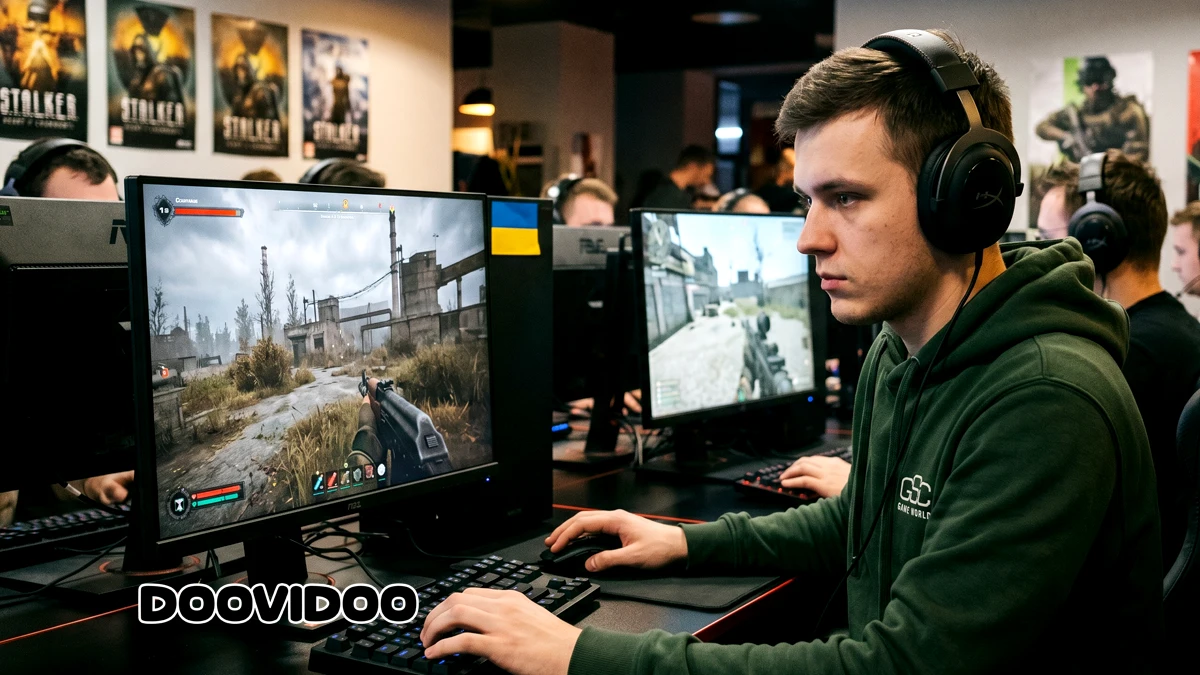
Video games in wartime no longer belong only to military fiction. Today they are born, written, and completed under bombings, displacement, blackouts, disinformation campaigns, and personal losses. What once could be a design setting becomes a production condition. War stops being a theme. It enters the studio.
Stalker 2: Heart of Chornobyl marks one of the strongest cases of this new stage. The game by GSC Game World did not reach the market as a simple sequel awaited by cult fans. It arrived as a work made by a Ukrainian team while its country resisted the Russian invasion. Part of the studio moved to Prague. Another part remained in Ukraine. Some workers kept creating. Others enlisted. Production had to coexist with fear, family separation, grief, digital attacks, and emotional pressure that is hard to measure from the outside.
That changes how the game is viewed. It is no longer only about graphics, performance, bugs, or missions. It is also about a more uncomfortable question: what does it mean to play a work created by people who were working while their real world was under attack.
Video games in wartime thus become historical documents. Not because they replace journalism, judicial archives, or direct testimony. But because they record a sensibility. They preserve how a generation saw conflict, how it translated it into systems, images, maps, sounds, and decisions. In some cases, they also function as cultural resistance.
Stalker 2 and the Zone as National Memory
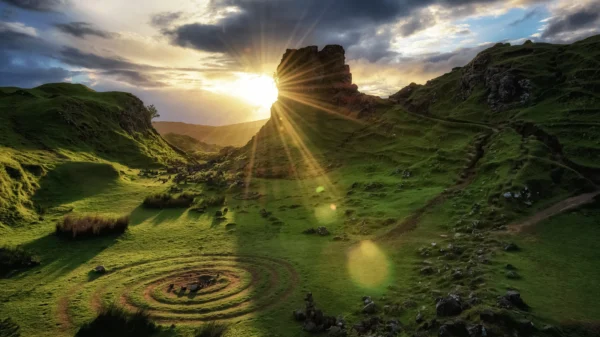
The Stalker saga has always been connected to Ukrainian history. Its world mixes science fiction, horror, Soviet ruins, mutations, smuggling, survival, and the shadow of Chornobyl. Before the 2022 invasion, that atmosphere already carried political memory. After the invasion, everything changed.
The title Heart of Chornobyl uses the Ukrainian transliteration, not the Russian one. That decision may seem small to those unfamiliar with the region. It is not. In a conflict where language, territory, memory, and sovereignty are disputed, naming is also taking a position. Chornobyl is not only a setting. It is a way of saying where one is speaking from.
The game does not need to turn every line of dialogue into a patriotic speech to be political. Its existence already is. A Ukrainian studio completed an international scale work while the country faced a war for survival. That condition alters every texture, every silence, and every abandoned landscape.
Stalker 2 does not document the invasion literally. It is not an interactive report from the front. But its development turns the game into indirect testimony. The fictional Zone becomes contaminated by the present. The player enters a space of anomalies and ruins, but behind the design are workers who knew the word threat too well.
Developing Under Extreme Pressure
Making a large video game is already difficult under normal conditions. It requires years of coordination, graphics engines, writing, animation, level design, sound, quality control, marketing, localization, and technical support. In war, every task becomes fragile.
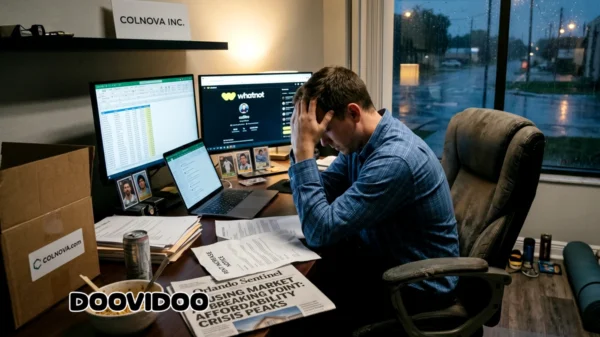
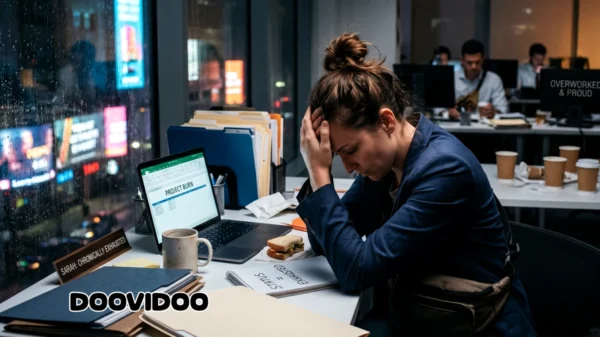
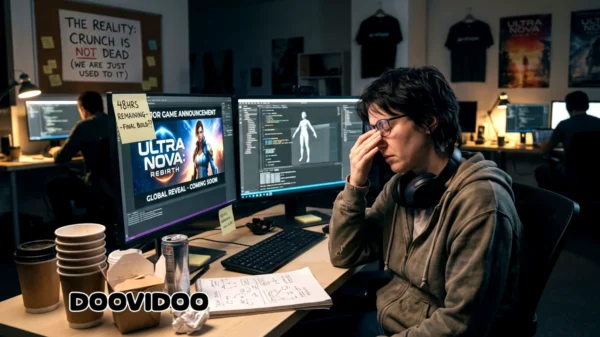
A meeting depends on electricity. A delivery depends on whether someone was able to sleep. A bug is fixed while news arrives from the front. An artist works from another city. A programmer has displaced relatives. A designer hears air raid sirens. The industrial calendar collides with a reality where nothing is guaranteed.
The pressure does not only affect the pace. It changes perspective. A team that lives real violence does not look at destruction as simple spectacle. It knows that a burned house is not decoration. That a siren sound is not atmosphere. That an empty road is not only mood.
When a team works under extreme pressure, the game absorbs a different gravity. Even if it keeps familiar commercial forms, shooter, horror, open world, survival, its emotional texture changes. Danger stops being complete fantasy. It becomes translation.
The Video Game as Resistance
Talking about resistance in video games can sound exaggerated until the Ukrainian case is examined. In a conflict where Russia also wages an information war, producing Ukrainian culture for a global audience matters. A video game can circulate where an essay does not. It can place names, landscapes, symbols, and emotions on millions of screens.
Stalker 2 was also targeted by disinformation. False campaigns tried to present it as a tool for recruitment or espionage. That shows the game was not perceived only as entertainment. It was treated as a cultural object with political value.
Resistance does not always consist of showing heroic soldiers. Sometimes it consists of continuing to work. Of keeping a company alive. Of publishing a work in the language and with the identity that an invading power is trying to erase. Of saying that a country’s culture is not suspended because the country is under attack.
In that sense, video games in wartime enter a broader tradition. War novels, films, songs, and photographs have served to document, denounce, and resist. Video games add interaction. They do not only show a broken world. They ask the player to move through it.
The New Conflict Simulators
Contemporary war is also changing genres. Alongside narrative titles, tactical simulators, realistic shooters, drone games, and mods are appearing that try to reproduce current conflicts. Six Days in Fallujah reconstructs the Second Battle of Fallujah from the accounts of soldiers and Iraqi civilians. Death From Above puts the player in the role of a Ukrainian drone operator. In ecosystems such as Arma Reforger, communities create scenarios inspired by the war in Ukraine.
These games open a difficult discussion. Simulation can educate, document, or trivialize. It can show complexity or turn suffering into mechanics. It can bring the player closer to real experiences or reduce war to tactical adrenaline.
The drone is one of the clearest symbols of this stage. The war in Ukraine turned commercial and military drones into a daily part of combat. When a video game adopts that perspective, it no longer simulates an abstract war. It touches a technology that appears every day in real videos from the front. The distance between game, archive, and propaganda becomes thinner.
For that reason, conflict simulators need more responsibility than ever. It is not enough to promise realism. We must ask: realism for whom. For the soldier. For the civilian. For the player seeking tension. For the community that lost relatives. For the market seeking novelty.
War as System and Wound
Video games tend to turn the world into systems. Health, ammunition, cover, inventory, vision, resources, morale, damage, repair. That logic helps represent conflict interactively. But it can also simplify suffering.
War is not only a series of tactical decisions. It is hunger, waiting, bureaucracy, fear, separation, trauma, grief, propaganda, exhaustion, and the loss of a future. The best video games in wartime understand that dimension. They do not stay with ballistics. They look at what happens around the shot.
This War of Mine was an important precedent because it focused on civilians trying to survive. Its entry into Poland’s educational debate showed that a video game could be read as a serious cultural work, not only as a consumer product. That view prepares the ground for understanding games like Stalker 2 differently.
The traditional military genre asks how to win. The most interesting video games in wartime ask what remains after trying to survive.
Working Conditions and Embedded Memory
When a studio develops during war, working conditions become part of the work even if they do not appear on screen. Not because each employee leaves a visible signature, but because the process affects decisions. What gets cut. What stays. What becomes impossible. What becomes urgent.
In Stalker 2, the pressure of the invasion, the relocation of part of the team, the workers who stayed in Ukraine, and personal losses surrounded production. The result cannot be evaluated only as an AAA product. It must also be seen as work made under extraordinary conditions.
This does not mean forgiving every technical error. A game released with problems can be criticized. The public has the right to evaluate quality. But context matters. When a team develops under war, criticism should recognize that the work carries a production history rarely visible in other markets.
Human labor appears there with force. Behind every mission is a chain of people who sustained the project while sustaining their lives. That changes the cultural value of the result.
The Risk of Consuming War
Interest in war video games also has a dark side. The market can turn real conflict into fast content. A recent war can become a map, skin, faction, or mission before its victims have buried their dead. The speed of digital culture reduces the time for grief.
The ethical line is not always clear. A game about war is not immoral simply because it exists. The problem appears when real suffering is used only as a sales aesthetic. When conflict is emptied of history. When civilians disappear. When the player receives power without responsibility. When violence becomes tourism.
Studios in conflict regions have a different authority to speak about certain wounds. Not because they are automatically objective, but because their relationship with the subject is not external. They speak from lived pressure. That does not guarantee a perfect work. But it changes the legitimacy of the gesture.
A simulator made far from the conflict needs more care to avoid turning someone else’s war into a tactical theme park.
The Interactive Document
The video game as historical document does not work like a textbook. Its document is not only in data. It is in atmospheres, rules, limitations, and experiences. It shows what could be imagined in a period. Which fears dominated. Which technologies seemed decisive. Which bodies mattered. Which landscapes became symbols.
Stalker 2 documents a Ukraine that insists on existing culturally. Ukraine War Stories documents civilian accounts from cities such as Hostomel, Bucha, and Mariupol through a visual novel. Death From Above documents the emergence of the drone as a symbol of contemporary war, even if it does so in arcade form. Six Days in Fallujah documents the attempt to reconstruct an urban battle through testimony, with all the ethical tensions that involves.
These games are not equivalent. They have different goals, scales, and risks. But together they show that war is no longer only a theme for distant historical games. It is a playable present.
How the Player’s View Changes
When the player knows that a team developed during war, their relationship with the work changes. Every ruin carries different weight. Every flag carries different weight. Every language carries different weight. The question is no longer only “does this entertain me.” Another one appears: what am I touching when I play this.
That change does not require permanent solemnity. A video game remains a system, challenge, exploration, and pleasure. But fun coexists with memory. Mechanical tension coexists with context.
Video games in wartime demand a more adult way of looking at the medium. Not every political game has to be perfect. Not every war game is propaganda. Not every simulation is exploitation. But not everything can hide behind the phrase “it is just a game.”
When war enters the development process, that phrase becomes too small.
What Comes Next
Geopolitical conflicts will continue influencing video games. They will do so through themes, narratives, technologies, and working conditions. We will see more drones, more urban warfare, more displacement, more propaganda, more maps inspired by real conflicts, more studios working from diaspora, and more works born under pressure.
The question will be how the industry responds. It can turn war into aesthetic fashion. Or it can treat it as historical and human material. It can accelerate simulators without memory. Or it can create works that understand war does not end when the mission ends.
Stalker 2 shows that a video game can be more than a product. It can be a form of cultural presence under threat. An imperfect, commercial, technical, and emotional work at the same time. A game that exists because a team decided to keep creating while everything around them demanded a stop.
Video games in wartime do not replace direct testimony from those who suffer. But they can accompany it. They can preserve fragments of an era. They can show what it feels like to create under extreme pressure. They can remind us that even in the middle of destruction, a culture continues producing worlds.
And that, in wartime, is also a form of resistance.
Sources used: Microsoft published about the documentary War Game: The Making of S.T.A.L.K.E.R. 2, describing it as a story of survival, hope, and resilience from the GSC Game World team during the war, with employee evacuation, work from exile, digital attacks, and colleagues who remained on the front.
Al Jazeera reported that Stalker 2 passed one million downloads and 117,000 concurrent players within the first 48 hours, that part of the team moved to Prague because of the Russian invasion, and that the game was targeted by a disinformation campaign. It also documented the combat death of former developer Volodymyr Yezhov.
Six Days in Fallujah presents itself as a tactical shooter based on real stories from Marines, soldiers, and Iraqi civilians during the Second Battle of Fallujah, with testimony and reference material provided by more than 100 participants.
Death From Above is described on Steam as a single player arcade experience set during Russia’s invasion of Ukraine, where the player takes the role of a Ukrainian drone operator.
This War of Mine was added by Poland to an optional school reading list, and officials highlighted its focus on civilians surviving war rather than soldiers in combat.