

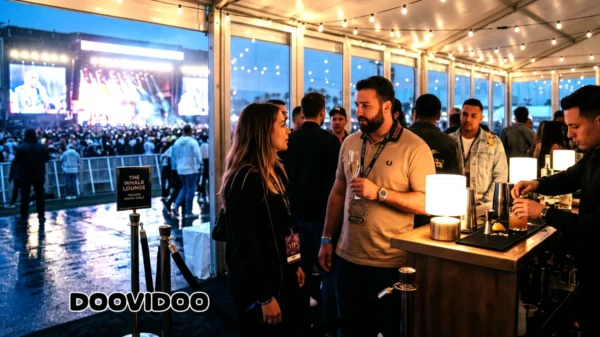
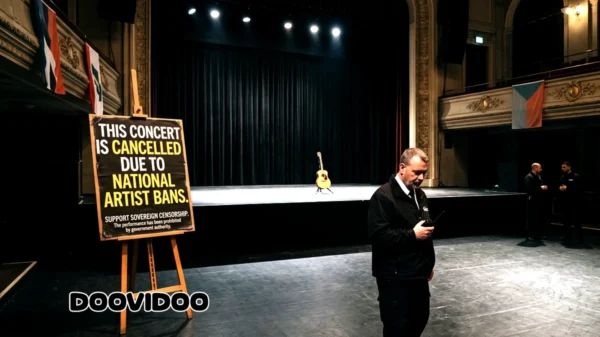
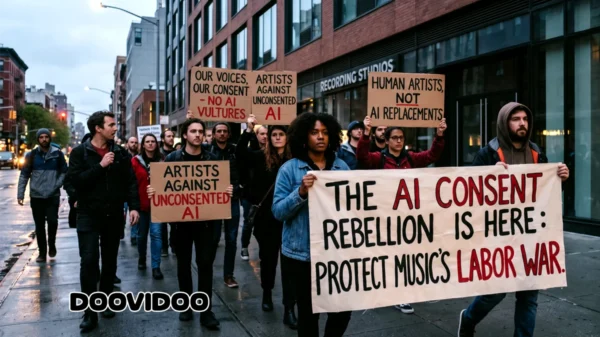



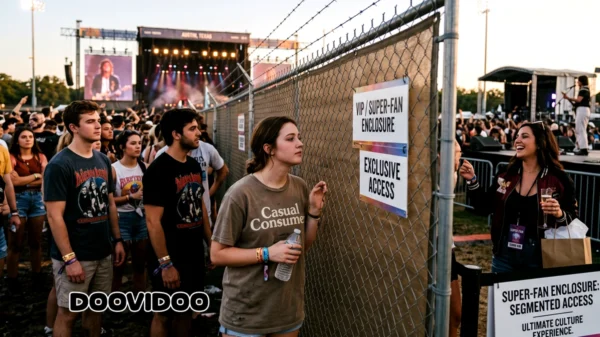
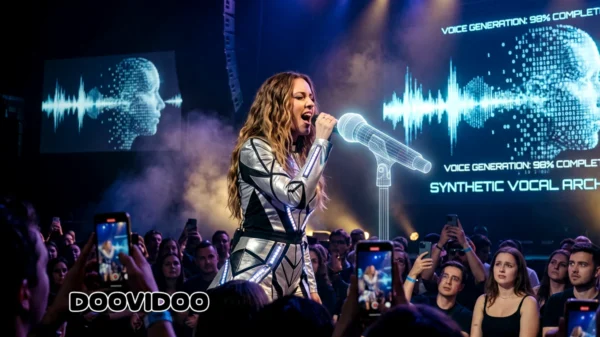
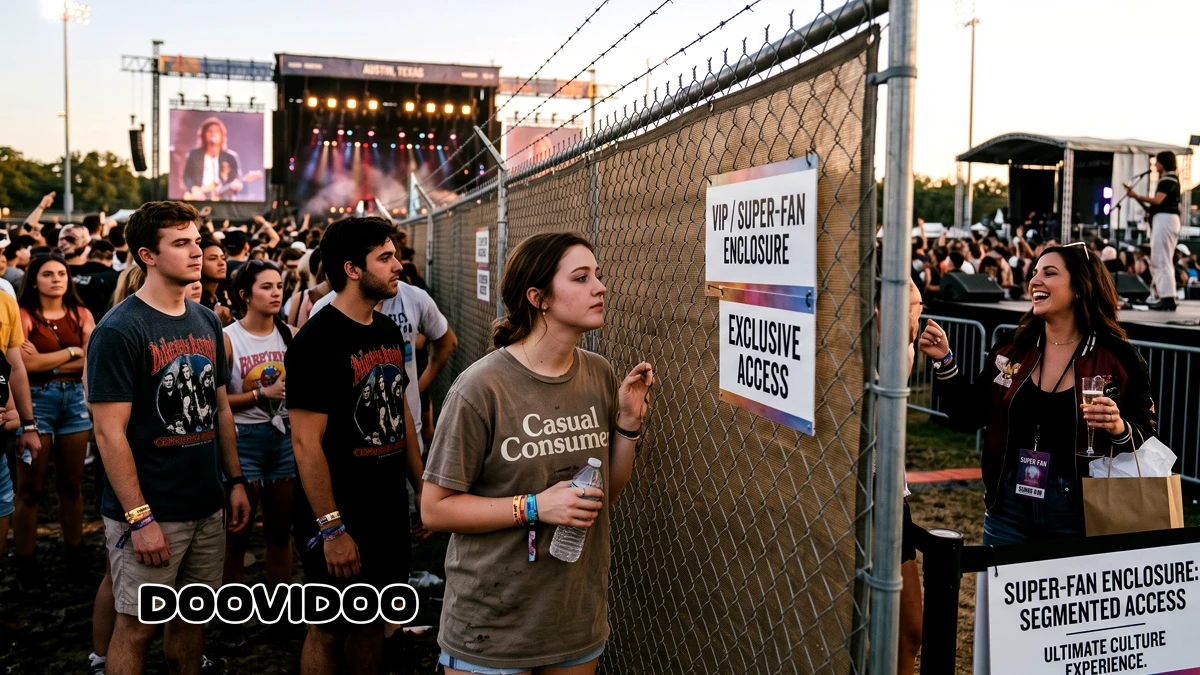
The “super-fan” economy against the casual consumer now defines the business of live music. The mass concert no longer works as a common meeting point between artist and audience. It now works as an access ladder. At the bottom are general admission tickets, when any remain. At the top are pre-sales, VIP packages, platinum zones, lounges, gifts, exclusive merch, early access, and luxury-priced seats.
Popular music was born as a shared language. A song moved through radio, television, streets, clubs, schools, cars, and parties. It belonged to millions at the same time. The concert extended that experience. You paid for a ticket and entered the same ritual as everyone else.
That model is breaking. Live music now segments the audience with precision. Not everyone buys on the same day. Not everyone sees the same stage. Not everyone enters through the same door. Not everyone receives the same attention. The industry no longer sells only a performance. It sells hierarchy.
The “super-fan” economy against the casual consumer turns musical love into a commercial category. The fan who pays more gets better placement, early entry, a lounge, a laminate, merchandise, and visible proof of belonging. The casual consumer remains outside or enters late, far away, with fewer options and more frustration.
Music does not disappear as a cultural good. But full access to it starts to look like a private club.
The Fan No Longer Listens, the Fan Invests
The word fan is no longer enough. The industry prefers the super-fan because the super-fan does not buy a song. They buy a relationship. They buy tickets, vinyl, variants, shirts, memberships, experiences, exclusive content, and tour packages. Their value does not come from listening. It comes from recurring spending.
That shift changes the center of the business. The casual listener creates volume. The super-fan creates margin. A person who listens to Dua Lipa on streaming adds a small fraction per play. A person who buys a ticket, VIP upgrade, and tour merch brings far more revenue. The economy decides who gets priority.
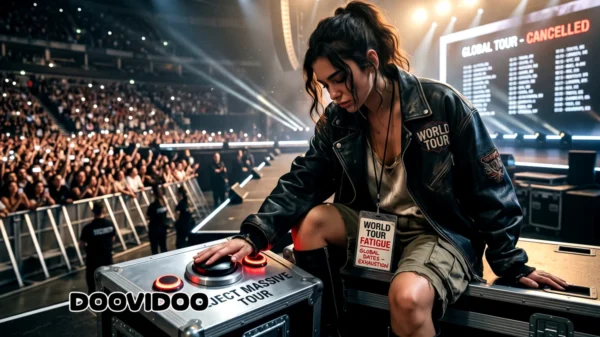
Dua Lipa offers a clear example of how the modern tour organizes levels. Her Radical Optimism Tour includes early entry packages and VIP upgrades with access before the general public, an official laminate, VIP wristband, merch shopping before the show, and on-site staff. The offer is not limited to seeing the artist. It lets you enter earlier, move earlier, and consume earlier.
The Weeknd takes that logic to stadium scale. His VIP packages include premium tickets, lounge access, food, drinks in certain venues, exclusive gifts, a photo backdrop, dedicated entry, and merch shopping without crowds. The After Hours Til Dawn Tour surpassed 1 billion dollars in gross revenue, according to Live Nation. That figure included reports of pre-sales, sales, VIP, and platinum.
The market message is direct. The experience gains more value when you divide it into layers.
The Casual Consumer Pays the Cultural Cost
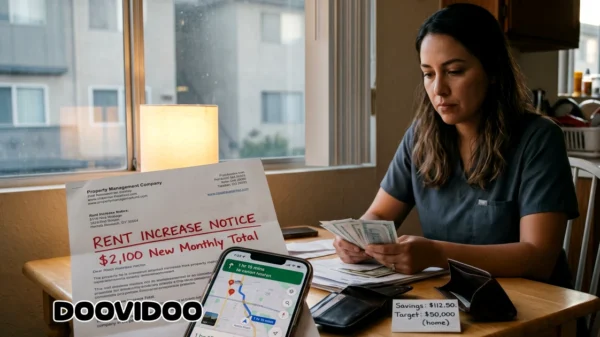
The casual consumer does not disappear because they stop loving music. They disappear because the system demands more money, more time, and more speed. They must register, wait for a pre-sale, understand codes, check platforms, calculate fees, enter a digital queue, and decide fast. If they hesitate, they lose.
This model punishes anyone who does not live attached to the artist’s calendar. It punishes the worker with a rigid schedule. It punishes the student with little money. It punishes the parent who does not check social media every hour. It punishes the late fan. It punishes the public that loves a song but does not belong to the obsessive core.
Popular culture has always had inequality. The best seats cost more. VIP zones existed. The current difference lies in the scale of the system. Segmentation no longer occupies one corner of the stadium. It organizes the entire sale.
The result is an uncomfortable division. Music is still called popular, but its best spaces are reserved for those who pay more. The soundtrack of a generation starts to carry an entry barrier.
The Platinum Level as a Social Border
Ticketmaster defines Platinum Tickets as popular tickets with prices set by the event organizer. The platform says these are not algorithmic surge pricing. It also says platinum tickets are not part of VIP packages. In practical terms, the buyer pays more for access to high-demand seats, often without receiving an added experience.
That detail matters. The platinum level does not sell hospitality. It sells proximity. It sells location. It sells advantage. Its value comes from demand and from the willingness of some fans to pay more to avoid sitting far away.
The logic mirrors social inequality. The person with money reduces uncertainty. They buy earlier. They buy better. They buy closer. The person with less money waits, compares, gives up, or accepts a worse spot. The democratic promise of live music weakens because the system translates passion into purchasing power.
The industry presents it as market efficiency. The audience experiences it as exclusion.
When a Concert Reflects Inequality
Live Nation reported 25.2 billion dollars in revenue in 2025 and 159 million attendees. It also reported that fee-bearing gross transaction value for concerts on Ticketmaster grew to 26 billion dollars. These numbers show a strong industry with high demand and the ability to extract more value from each fan.
The figure does not mean everyone wins. It means live music found a profitable formula through high prices, visible fees, pre-sales, sponsorships, premium experiences, and full stadiums. The cultural problem begins when financial success depends on separating the public by ability to pay.
The divide appears at the ticket. A fan with a limited budget looks for the cheapest option, accepts poor visibility, or stays outside. A super-fan with an available card buys VIP, enters earlier, gets merch access, and leaves with proof of a different experience. Both love the same artist. The industry does not treat them the same.
The mass concert becomes a social model. At the top, the fan with capital. Below, the fan who calculates. Outside, the public that no longer participates.
Pre-Sale as Filter
Pre-sale ticketing no longer serves a simple function. It once helped measure demand and organize launch. Now it works as a filter. Whoever has a code, specific card, membership, or preferred access enters first. Whoever lacks that arrives after visible inventory has already changed.
Pre-sale creates a culture of surveillance. The fan must stay ready. They must know when the queue opens. They must have an active account. They must trust a platform that often changes prices, availability, and waiting times. Emotion mixes with anxiety.
The super-fan accepts that work because they feel it forms part of the pact. The casual consumer rejects it or abandons it. The system reads that exit as lack of interest, even when it often reflects lack of access.
The industry calls it priority. It also works as exclusion.
Luxury Enters Through the Door of Pop
Dua Lipa and The Weeknd are not isolated cases. They represent a larger trend. Pop music has adopted the language of luxury. Going to the show is no longer enough. You need to live “the experience.” Buying a ticket is no longer enough. You need to enter a level. Listening is no longer enough. You need to prove presence.
The exclusive experience delivers emotional and social value. Your VIP ticket says something about you. Your wristband says something about you. Your lounge photo says something about you. Your seat near the stage says something about you. The concert turns into personal content.
This dynamic changes the relationship with the artist. The fan no longer buys one night. They buy position inside a community. They buy proof of loyalty. They buy a stronger version of their cultural identity.
The problem begins when the industry measures loyalty through spending. Under that logic, the best fan is not the person who knows the songs, follows the career, or shares the music. The best fan is the person who pays for the highest level.
The Law Arrives Late
Regulatory pressure has grown because the public no longer accepts opaque prices. The FTC approved a rule against hidden fees in tickets and lodging. The rule requires sellers to show the total price from the start and aims to prevent surprise charges at checkout. This is a real step toward transparency.
But the rule does not limit the price. It does not ban high fees. It does not remove platinum models, VIP packages, or access segmentation. The buyer sees the cost more clearly, but the cost remains.
Transparency helps. It does not create democracy by itself.
This point matters because many companies treat visible total pricing as a full solution. It is not. Knowing from the start that a ticket costs too much does not change inequality. It changes how you see it.
The End of the Concert as a Common Space
Popular music still holds collective force. A song can still bring together people from different classes, ages, and cities. But the concert no longer guarantees that mix. The venue divides. The platform filters. The pre-sale orders. The VIP package separates.
The mass event keeps the appearance of community. Thousands sing the same song. But not everyone accessed it under the same conditions. Some arrived through an exclusive code. Others paid resale. Others chose debt. Others stayed out.
That is where the cultural promise breaks. Music remains common on streaming, but it becomes private on stage. Your phone lets you listen. Your bank account decides whether you enter.
Streaming made almost all music feel available. The live show reminded everyone that physical presence still has an owner.
The Super-Fan as Emotional Aristocracy
The super-fan is not to blame for everything. They love the artist, save money, organize, and pay because they value the experience. Many work for months to buy a ticket. Many see the concert as a reward. Mocking that devotion misses the point.
The problem begins when the industry takes that love and turns it into the dominant model. If the business is designed to extract more from those who feel more, passion becomes a financial resource.
The aristocracy of fandom begins there. It is not inherited by blood. It is purchased through access level. It has better views, earlier entry, earlier merch access, and more comfortable spaces. Its difference from the casual consumer is not love. It is liquidity.
Music as a Private Club
The “super-fan” economy against the casual consumer shows a larger shift. Music is losing its role as a democratic cultural good in its most valuable form, the in-person experience. It still plays everywhere, but its central ritual gets more expensive.
Pop once sold broad belonging. Now it sells graduated belonging. Your level depends on your payment. Your proximity depends on your budget. Your memory depends on your access.
The future of live music demands clear decisions. Artists and promoters must reserve real inventory at reasonable prices. Platforms must show total prices from the first step. VIP packages must separate real experience from artificial pressure. Resale needs firm limits. Pre-sales must reduce financial privilege, not expand it.
You also have a role. Look at the total price. Reject impulse purchases if the cost breaks your budget. Do not confuse expensive access with real love for an artist. Support small venues, local scenes, and concerts with fair prices. Demand transparency before handing over your money.
Music should not become a private club. If the industry keeps selling closeness to the highest bidder, the casual consumer will lose space. And when the casual consumer leaves the concert, popular music loses part of its meaning.
Sources used: VIP Nation details that Dua Lipa’s Early Entry VIP package includes general admission, access before the general public, a laminate, wristband, early merch shopping, and VIP staff on site.
VIP Nation describes The Weeknd packages with premium tickets, pre-show lounge access, exclusive gifts, merch shopping without crowds, dedicated entry, and VIP hosts.
AP reported that The Weeknd’s After Hours Til Dawn Tour surpassed 1 billion dollars in gross revenue, with around 7.55 million tickets sold across 153 dates, and that the data included pre-sales, sales, VIP, and platinum.
Live Nation reported 25.2 billion dollars in revenue in 2025, 159 million attendees, and 26 billion dollars in fee-bearing gross transaction value for concerts on Ticketmaster.
Ticketmaster explains that Platinum Tickets provide access to popular tickets with prices set by the event organizer and that they are not algorithmic surge pricing.
The FTC approved a rule against hidden fees that requires sellers to show the total price from the start for live event tickets and lodging, although the rule does not limit the amount of fees or ban pricing strategies.