












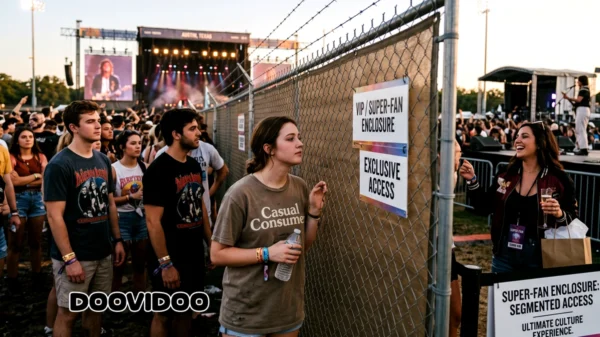

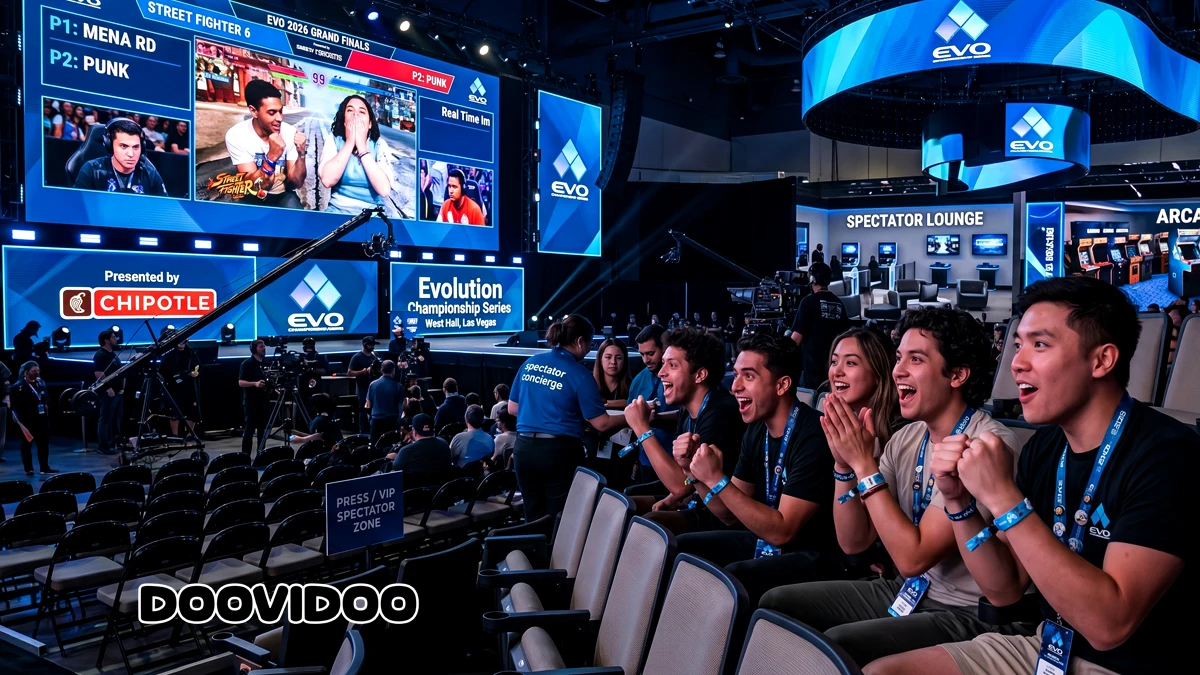
Evo 2026 and the professionalization of the spectator explain better than any trailer why fighting games are once again at the center of gaming culture. This is not only nostalgia. It is not only Street Fighter 6, Tekken 8, or Guilty Gear Strive. It is the return of a way of watching video games that still smells like a packed room, sweaty hands, shouting, pressure, rivalry, and physical community.
In an era where many esports seem designed for giant screens, overlays, statistics, sponsorships, and audiences watching from a distance, fighting games still keep something brutally human. Two people sit next to each other. A round lasts seconds. One mistake is punished. One correct read changes everything. There is no team to blame. No huge map to hide in. No macro strategy to soften failure. It is you, your opponent, and a life bar dropping in front of everyone.
Evo 2026 arrives with a lineup that confirms the vitality of the scene: Street Fighter 6, Tekken 8, Guilty Gear Strive, BlazBlue: Central Fiction, Under Night In-Birth II Sys, Fatal Fury: City of the Wolves, Granblue Fantasy Versus: Rising, Rivals of Aether II, Invincible VS, 2XKO, and Vampire Savior. The list mixes modern giants, anime fighters, cult classics, new proposals, and games with resistant communities.
The message is clear. Fighting games are not surviving. They are reclaiming territory.
The Scene That Never Died
For years, the dominant esports conversation revolved around team games, franchised leagues, tactical shooters, MOBAs, battle royale, and spectacle models closer to televised sports. Against that, the fighting game community seemed smaller, louder, and less domesticated.
But that supposed weakness was also its strength. The FGC never depended completely on a closed league. It grew in arcades, conventions, small venues, community tournaments, hotel ballrooms, universities, players’ homes, and streams made with minimal budgets. Its culture was born before brands learned how to sell gaming chairs.
Evo represents that history. It is a festival, tournament, family reunion, neighborhood fight, and world stage at the same time. Unlike other esports, where the spectator watches teams that look like companies, at Evo the audience sees real bodies under pressure. It sees hands. It sees gestures. It sees the player breathe before a final. It sees the crowd rise when someone pulls off an impossible comeback.
That closeness matters in an age marked by digital loneliness. Fighting games work as an excuse to leave home, travel, shout with strangers, and recognize that gaming culture does not have to be only isolation in front of a screen.
The Spectator Is No Longer Passive
The professionalization of the spectator does not mean everyone becomes a technical commentator. It means watching fighting games requires and produces knowledge. The public learns matchups, frames, punishes, confirms, wakeups, whiff punishes, defensive resources, meter management, ranges, corner pressure, and mental reads. It learns to see layers.
A casual spectator sees hits. A trained spectator sees decisions. They understand when a player does not pressure because they respect a reversal. They understand why walking backward can be aggressive. They understand that blocking for ten seconds is not passivity, but survival.
Evo 2026 and the professionalization of the spectator belong together because the scene turns the audience into part of the drama. The crowd’s scream after a parry, a command grab read, a perfect, or a comeback is not decorative noise. It is collective interpretation. The room understands what happened and reacts as one body.
In other esports, the spectator often needs cameras, replays, maps, and commentators to translate a war of information. In fighting games, the scene is frontal. Two characters. One distance. One hit that lands or misses. The complexity is there, but the emotion is understood instantly.
That makes the genre perfect for the clip era, but also for live attendance. A round can live on TikTok. A final needs a room.
Arc System Works and Anime as Avant-Garde
Arc System Works holds a special place in this revitalization. Guilty Gear Strive opened a wider door for anime fighters without completely abandoning its identity. BlazBlue: Central Fiction returns to Evo as a reminder of a community that refuses to let its games die. Under Night In-Birth II Sys keeps alive a tradition of dense systems, strange characters, and obsessive players.
Arc understands something other companies took longer to accept: visual spectacle does not have to conflict with depth. Its games look impossible in motion. Explosions, colors, camera cuts, exaggerated characters, intense music, animation that feels like a controllable anime. But underneath that surface, there is structure, punishment, and discipline.
The major new bet is Marvel Tōkon: Fighting Souls, developed by Arc System Works with PlayStation Studios and Marvel Games. Its 4v4 combat proposal takes the memory of tag fighters and crosses it with the visual language of modern anime. It is not just another superhero license. It is a sign that major brands are looking again at fighting games as a space for innovation, not as a relic.
Arc System Works is not copying the past. It is turning exaggeration into competitive grammar. That is one of the reasons the genre feels alive again.
Dead or Alive 6 and Life After Abandonment
Dead or Alive 6 is a different case. It does not dominate Evo 2026 like Street Fighter 6 or Tekken 8. Its Steam numbers are small compared with the giants. But its presence in conversation and community shows something important: in fighting games, popularity does not always mean massive volume. Sometimes it means persistence.
Dead or Alive 6 keeps players because its system has a clear identity. Strikes, throws, and holds build a logic of immediate risk. The fight feels physical. Not everything depends on long combos. Reading the opponent, anticipating their answer, and punishing their confidence matter. The game has a bad reputation among some players because of its history of sexualization and commercial decisions, but reducing it to that would be lazy. Underneath, there is a fast, tense system that is easy to understand when entering, but difficult to master.
The movement around Dead or Alive 6: Last Round and community tournaments on the road to Evo 2026 shows how a scene revives when its players decide not to wait for permission from a company. That is another difference in the FGC. The community does not always depend on official support. If it loves a game, it puts it on tables, streams it, discusses it, and keeps it breathing.
In an industry obsessed with games as a service, Dead or Alive 6 reminds us of an uncomfortable truth: a game can stay alive even when the main machine has abandoned it.
The Visceral Against the Dehumanized
Part of the current appeal of fighting games lies in their resistance to the dehumanization of esports. Many modern electronic sports feel enormous, clean, and distant. Teams with logos, leagues with corporate rules, players behind brands, cameras that reduce the individual to a piece inside an operation.
Fighting games do not eliminate commerce. Evo has sponsors, stages, production, and agreements. But the central experience remains intimate. Two chairs. Two controllers. One screen. An awkward greeting. A defeat in front of the opponent. A victory with the crowd on top of you.
That human scale creates identification. The spectator does not need to imagine a full infrastructure. They understand the duel. They understand the pressure of failing when everyone is watching. They understand the pride of winning through one correct decision in the final second.
Fighting games are reclaiming their throne because they offer something missing in many digital experiences: presence. The opponent is not a statistic. It is a person next to you. The community is not only a chat. It is a line, a hug, a joke, a runback, a conversation after losing.
In times of digital loneliness, that is worth more than any battle pass.
The Community as Cultural Space
The FGC is not perfect. It has problems with toxicity, exclusion, machismo, racism, harassment, and barriers to entry. Romanticizing it without criticism would be absurd. But it is also one of the few gaming cultures where physical encounter remains central.
A local tournament can change a person’s relationship with a game. You arrive thinking you are good because you won online. You lose to someone who looks at you, smiles, and explains what you did wrong. That moment hurts. It also teaches. Community is built in that mix of humiliation, learning, and respect.
The professionalized spectator is born there. They do not only watch finals. They watch pools. They watch unknown players. They watch regional styles. They watch rare characters. They understand that the scene does not live only from champions, but from all the bodies that fill the bracket.
Evo 2026 is not only a showcase. It is a reminder that competitive gaming needs places where people gather. In an industry that tries to turn everything into a platform, the FGC insists on being culture.
Why the Genre Is Returning Now
The return of fighting games is happening for several reasons. Street Fighter 6 managed to attract new players without losing depth. Tekken 8 turned aggression into a design identity. Guilty Gear Strive opened the anime fighter to a larger audience. Fatal Fury: City of the Wolves brought back a historic brand with modern energy. 2XKO speaks to a generation shaped by Riot and team games, but curious about direct combat. Invincible VS shows that licenses also want to enter the ring.
The genre learned to become more visible. Better tutorials, rollback netcode, creator content, global events, viral clips, and connected local scenes help reduce the barrier. Before, entering a fighting game felt like joining a technical cult. Today, it is still difficult, but the door is better marked.
There is also a cultural reaction. Against games designed to retain you for months with daily missions, currencies, cosmetics, and artificial progress, a fighting game offers a brutal promise: improve yourself. Not your pass. Not your inventory. You.
That clarity has force. You lose because you made bad decisions. You win because you learned. There is no corporate narrative to soften the result.
The Throne Will Not Be Comfortable
Fighting games are reclaiming their throne, but the path is not easy. They remain difficult. They still intimidate new players. They still depend on local communities that need space, money, organization, and care. They also have to solve how to grow without losing their soul.
The risk is that professionalization makes the scene too polished. That the spectator becomes a distant consumer. That the tournament loses its street-level energy. That studios chase accessibility until they remove the edge. That brands turn the FGC into another clean and controlled product.
The strength of the genre lies in balance. It must welcome new players without dismissing veterans. It must become spectacle without becoming plastic. It must professionalize the spectator without killing the shouting. It must grow without denying its physical, messy, community-based origin.
Evo 2026 as a Test
Evo 2026 and the professionalization of the spectator mark a test for the future. If the event can sustain the mix of high level competition, physical community, new proposals, and cult games, it will confirm that fighting games are not only back. They are offering a cultural alternative to depersonalized esports.
The genre returns because it is simple and deep at the same time. Because anyone understands a life bar, but not everyone understands how to survive under pressure. Because the public can watch a round and feel it in the body. Because losing hurts more when the opponent is sitting next to you. Because winning tastes better when a whole room screams with you.
Fighting games are reclaiming their throne because they still believe in the encounter. In the age of digital loneliness, that almost feels revolutionary.
Sources used: Evo confirmed that its 2026 lineup includes Street Fighter 6, Tekken 8, Guilty Gear Strive, BlazBlue: Central Fiction, Under Night In-Birth II Sys, Fatal Fury: City of the Wolves, Granblue Fantasy Versus: Rising, Rivals of Aether II, Invincible VS, 2XKO, and Vampire Savior.
Evo 2025 recorded 8,541 players, with Street Fighter 6 leading for the third consecutive year with 4,228 participants and Tekken 8 in second place with 2,521. Evo Japan 2025 also showed the strength of the genre with 8,648 unique attendees and 6,536 competitors in Street Fighter 6.
Arc World Tour 2026-27 includes Marvel Tōkon: Fighting Souls, Guilty Gear Strive, Under Night In-Birth II, and BlazBlue: Central Fiction, while outlets report that Marvel Tōkon is a 4v4 fighter developed by Arc System Works with PlayStation Studios and Marvel Games for 2026.
Dead or Alive 6 maintains a small but active scene: SteamDB reports current activity and a historic peak of 2,107 concurrent players in 2019, while communities such as FreeStepDodge organized “Road to Evo 2026” activity around Dead or Alive 6: Last Round.