

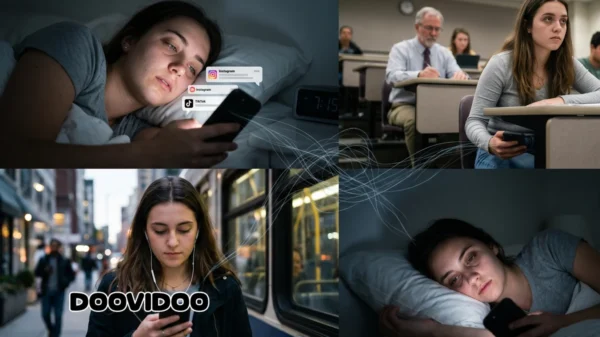




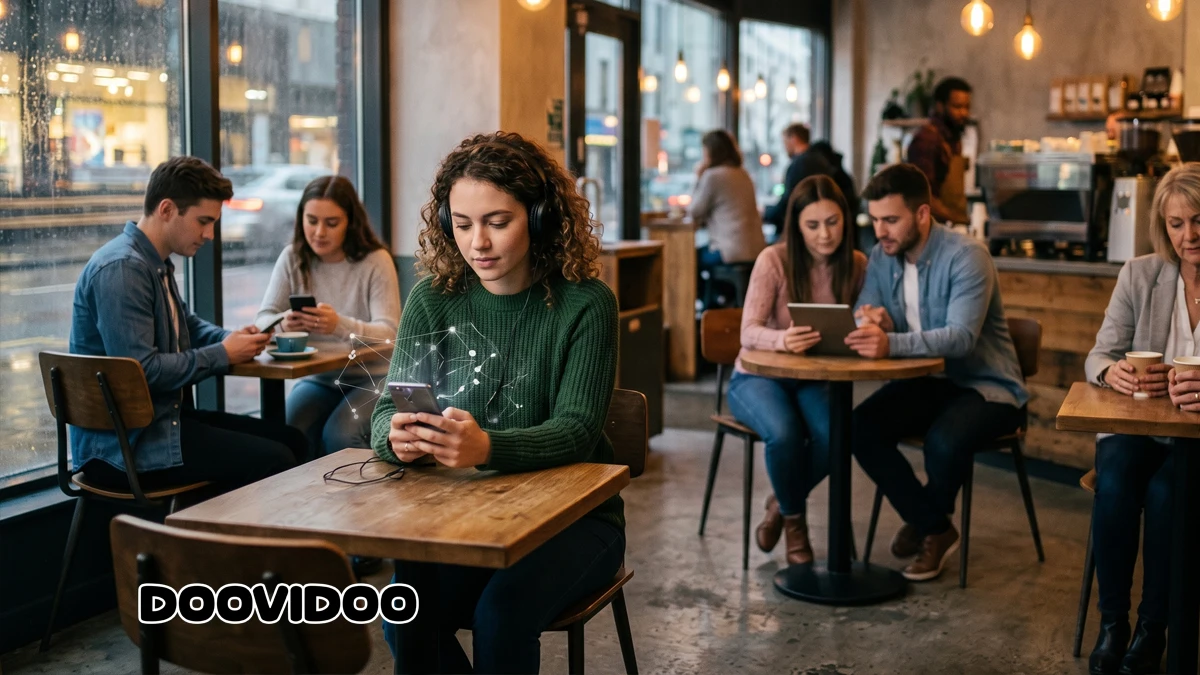
Dating apps have changed the way millions of people look for a partner. What once depended on friends, family, neighbors, work, college, church, or nights out now happens through profiles, photos, filters, messages, and algorithms. Courtship is no longer only a social practice. It has also become an experience designed by platforms.
The change may seem simple. A person opens an app, reviews profiles, and decides with one gesture. But behind that gesture, there is a deep transformation. The algorithm decides who appears first. The design defines how long the user stays. Filters narrow or expand the romantic market. The platform turns the search for a partner into a sequence of options.
Dating apps did not invent desire, attraction, or rejection. But they changed their rhythm. Before, meeting someone involved context. There were mutual friends, shared spaces, and social reputation. Now, many relationships begin between strangers with little external information. That change brings freedom. It also creates anxiety, fatigue, and a feeling of constant replacement.
What Dating Apps Mean in Modern Life
Dating apps are digital platforms that connect people interested in romantic, sexual, or emotional relationships. Tinder, Bumble, Hinge, Grindr, Badoo, OkCupid, and other brands are part of a global market. Some prioritize quick encounters. Others promise serious relationships. Others serve specific communities based on sexual orientation, religion, age, interests, or country.
The center of the system is the profile. Photo, age, location, interests, profession, height, religion, intention, short phrases, and preferences. The user does not present themselves as they would in a normal conversation. They summarize themselves. They edit themselves. They become a selected version of themselves.
This editing changes courtship. In a traditional conversation, attraction builds through voice, humor, gestures, context, and time. On an app, the first barrier is visual and fast. The user decides in seconds whether someone deserves attention. That speed favors certain traits and punishes others.
The Algorithm as the New Matchmaker
For decades, friends and family acted as matchmakers. They introduced people, gave references, and offered a basic form of trust. Work, school, and neighborhood life also played that role. Relationships began inside a recognizable social network.
Dating apps replaced part of that system. The algorithm now plays a role that once belonged to the community. It organizes options. It suggests compatibility. It evaluates signals. It learns from user behavior. It decides which profiles receive more visibility.
This shift is known as disintermediation. The user no longer needs someone else to make the introduction. They can enter the romantic market directly. That freedom expands possibilities. A shy person, a busy person, someone new to a city, or a member of a sexual minority can find more opportunities than in traditional spaces.
But the algorithm is not neutral. Its goal does not always match the emotional interest of the user. The app needs activity, subscriptions, messages, and time spent. A successful relationship can remove two users from the platform. That tension sits at the center of the model.
Traditional Courtship Loses Context
Traditional courtship had limits. Many people remained trapped in closed circles, strict family rules, or few options. Dating apps broke part of that barrier. They allowed people to meet outside their immediate social group.
But by expanding the market, they reduced context. A person no longer knows if the other person is telling the truth. There is no mutual friend to confirm. There is no community observing. There is no shared history. Trust has to be built from zero.
This changes first dates. The first meeting works as an interview, a verification process, and a chemistry test at the same time. The user must evaluate safety, intention, attraction, values, and compatibility in a situation with little previous information.
That is why many people describe dating apps as exhausting. They do not get tired only because of a lack of matches. They get tired because each interaction demands emotional energy with no guarantee of continuity.
Abundance and Romantic Fatigue
The algorithm offers a promise of abundance. There is always another profile. There is always another option. There is always someone closer, more attractive, or more compatible according to the screen.
That abundance changes desire. When there are too many options, choosing becomes harder. The person starts rejecting faster. A small detail is enough to end a conversation. A doubtful photo, a generic phrase, or a slow reply can reduce interest.
Research on choice overload in online dating shows that users tend to reject more profiles as they review more options. In experimental studies, the probability of acceptance dropped during the session. The result shows a clear effect: more options do not always produce better decisions.
Fatigue also affects the way people talk. Many messages become repetitive. Questions get copied. Conversations die before they begin. The search for a partner starts to feel like administrative work.
Dating Apps and Monogamy
Dating apps did not destroy monogamy. But they changed its context. Before, a monogamous relationship developed in an environment where alternatives were less visible. Now, the existence of options is always one download away.
This does not mean that every person is less faithful. It means that relationships now live with a stronger awareness of replacement. If one date fails, there is another screen. If a relationship enters a crisis, the idea of returning to the market feels closer.
Modern monogamy requires more explicit conversations. What are we. Are we exclusive. Are we still on apps. When do we delete the profile. What counts as digital cheating. Looking at profiles. Answering messages. Keeping old matches. Each couple must define rules that were once less visible.
Intermediate forms of relationships also appear. Situationships, unlabeled relationships, multiple dating, open relationships, and flexible agreements. Dating apps make these dynamics easier because they allow people to maintain several contacts at the same time. The platform structure favors continuous exploration.
Marriage in the Digital Market
Marriage has also changed. In the United States, Stanford studies show that meeting a partner online became the most common way for heterosexual couples to start relationships. The shift displaced the historic role of friends and family.
This changes the path into marriage. The couple does not always arrive with validation from a shared social circle. First, the bond forms. Then the family is introduced. That sequence gives autonomy, but reduces early external approval.
In cultures where family still carries strong weight, the impact is different. In India and other societies with traditions of arranged or semi arranged marriages, digital platforms do not eliminate the family. They reposition it. Matrimonial apps and filters for religion, caste, language, education, and income move traditional criteria into a modern interface.
In Japan, marriage matching platforms show another logic. Some services operate with verified profiles, serious search intentions, and follow up through engagement. A recent study of a Japanese marriage platform analyzed data from 2014 to 2025 and showed how digital matchmaking transforms partner search in markets oriented toward marriage.
This shows a central idea. Dating apps do not produce the same change in every culture. In the United States, they reinforce individual autonomy. In India, they coexist with family and community filters. In Japan, they connect with national concerns about low birth rates, delayed marriage, and structured partner search.
The Profile as a Personal Product
Dating apps turn identity into strategic presentation. The person chooses photos, removes signals, highlights hobbies, and adjusts phrases to attract the desired audience. The profile is not a lie by definition. But it is not a full life either. It is a display window.
This affects self esteem. The user measures interest through matches, replies, and dates. If they receive no attention, they may read the silence as personal rejection. If they receive too much superficial attention, they may feel used. The platform turns desire into a metric.
Women face particular risks. Pew Research Center reports show that women under 50 often report unwanted sexual messages, repeated contact after rejecting interest, and insults. The promise of digital freedom arrives with costs in safety and emotional strain.
That is why trust has become central to the business. Identity verification, reports, blocking, filters, message control, and public meeting recommendations are no longer secondary features. They are basic conditions for the digital romantic market to function.
Swipe Culture and the Loss of Ritual
Traditional courtship had rituals. Introduction, conversation, invitation, shared time, gradual signals, and participation from the social environment. Dating apps reduced those steps. The sequence became faster: match, message, date, evaluation.
Efficiency has advantages. No one needs to wait months to meet someone. But speed also weakens some gestures. Mystery drops. Patience drops. Tolerance for discomfort drops.
That is why attempts to recover social rituals are emerging. Singles dinners, book clubs, running groups, speed dating, friends of friends events, and swipe free experiences. Part of Generation Z shows fatigue with apps and looks for less structured encounters.
The companies know this too. Match Group has tested features that push users toward more direct dates and in person events. Bumble and other platforms also adjust products in response to market fatigue. The industry understands that the algorithm needs to produce something that feels like a human scene again.
What We Gained and What We Lost
Dating apps expanded access. A person in a new city can meet people. An LGBTQ person can find community. A busy person can filter intentions. A person who does not go out at night has another path.
But we also lost part of the social context. The algorithm replaced the friend who introduced people. The screen replaced the shared space. Abundance replaced patience. Comparison replaced curiosity.
The balance is not simple. Many happy couples began on dating apps. Many people found love, marriage, or companionship through them. But the system also produces fatigue, insecurity, and more transactional relationships.
The Future of Dating Apps
The future of dating apps will not be only more profiles. It will involve more verification, more artificial intelligence, more in person events, and more intention filters. Platforms will try to reduce fatigue and increase trust.
The central question is not whether love can begin on an app. It already does. The question is who designs the conditions for that encounter. If the platform rewards time spent, the user gets trapped. If it rewards real dates and safety, the algorithm serves human connection better.
Dating apps changed traditional courtship because they moved the search for a partner from the community to the digital market. They changed monogamy because they made alternatives visible. They changed marriage because they modified who introduces, who filters, and who validates.
The current challenge is to recover humanity inside a system designed to organize people as options. Love needs choice, but it also needs time, context, and presence. No algorithm fully replaces that.
Sources used: Pew Research Center reported that 30 percent of adults in the United States have used dating sites or apps, and that the figure rises to 53 percent among adults under 30. It also documented harassment experiences, with 56 percent of women under 50 who use online dating reporting that they had received unsolicited sexual content.
The study by Rosenfeld, Thomas, and Hausen published in PNAS found that meeting a partner online became the most common way for heterosexual couples in the United States to meet, surpassing introductions by friends around 2013.
Research on choice overload in online dating found that users tend to reject more profiles as the session advances, with an average 27 percent drop in the probability of acceptance.
Liesel Sharabi describes how dating platforms use algorithms and artificial intelligence to filter, rank, and recommend partners, with the challenge of turning data into useful relationship outcomes.
Match Group reported 3.5 billion dollars in total revenue in 2025, and Bumble reported 966 million dollars in 2025 revenue. These figures show the economic scale of the sector.