





















The annual blockbuster no longer looks like a safe date on the video game calendar. For years, major studios followed an almost automatic rule: release their most expensive titles in the second half of the year, occupy September, October, or November, and arrive with force for the holiday season. That formula turned fall into a highway of giant releases. Today, it is starting to look like a trap.
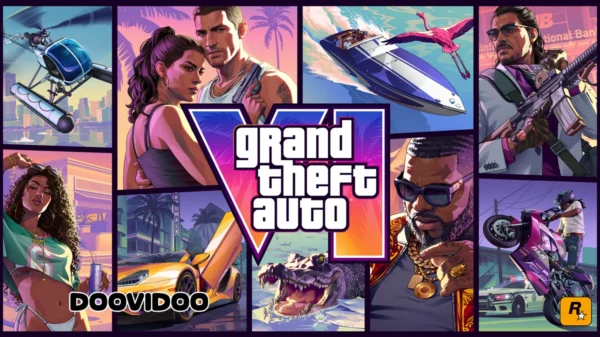
In 2026, September became the clearest example. The industry tried to avoid the impact of Grand Theft Auto VI in November and ended up concentrating too many games in the same month. The result was a new form of saturation. The blockbuster no longer fears only competing against another blockbuster. It fears disappearing inside an endless list of major, mid sized, and cult releases.
The phenomenon exposes a central question for the industry: are we seeing the end of the mass release strategy? Maybe not completely. But it does seem to mark the beginning of an era in which studios will have to think about more staggered windows, longer campaigns, and less suicidal release dates.
The Old Blockbuster Model
The video game blockbuster was born from a logic similar to film. Large budget, global campaign, fixed date, preorders, coordinated reviews, trailers, special editions, and an initial explosion of sales. The goal was to dominate conversation, digital stores, media covers, and social networks for one or two weeks.
This strategy made sense when there was less competition and consumption was more concentrated. A big game arrived, sold millions, occupied cultural space, and supported the publisher’s financial quarter. If the title belonged to a known franchise, the risk fell. Call of Duty, FIFA, Assassin’s Creed, Pokémon, Halo, or Grand Theft Auto were not only games. They were events.
But the market changed. Today, every platform has constant offers. Steam publishes thousands of titles a year. Xbox Game Pass, PlayStation Plus, Nintendo eShop, Epic Games Store, and mobile services compete for attention. Twitch, YouTube, TikTok, and Discord turn discovery into a daily war. The public does not lack games. It lacks time.
In that context, launching a blockbuster no longer guarantees attention. Even a large game can get trapped between other strong names. Visibility has become a scarce resource.
September as a Symptom
September 2026 shows the problem. Several important or anticipated titles were grouped into a narrow window. Some were trying to get ahead of GTA VI. Others already had their own calendars. Others were trying to avoid October and November. The sum created congestion.
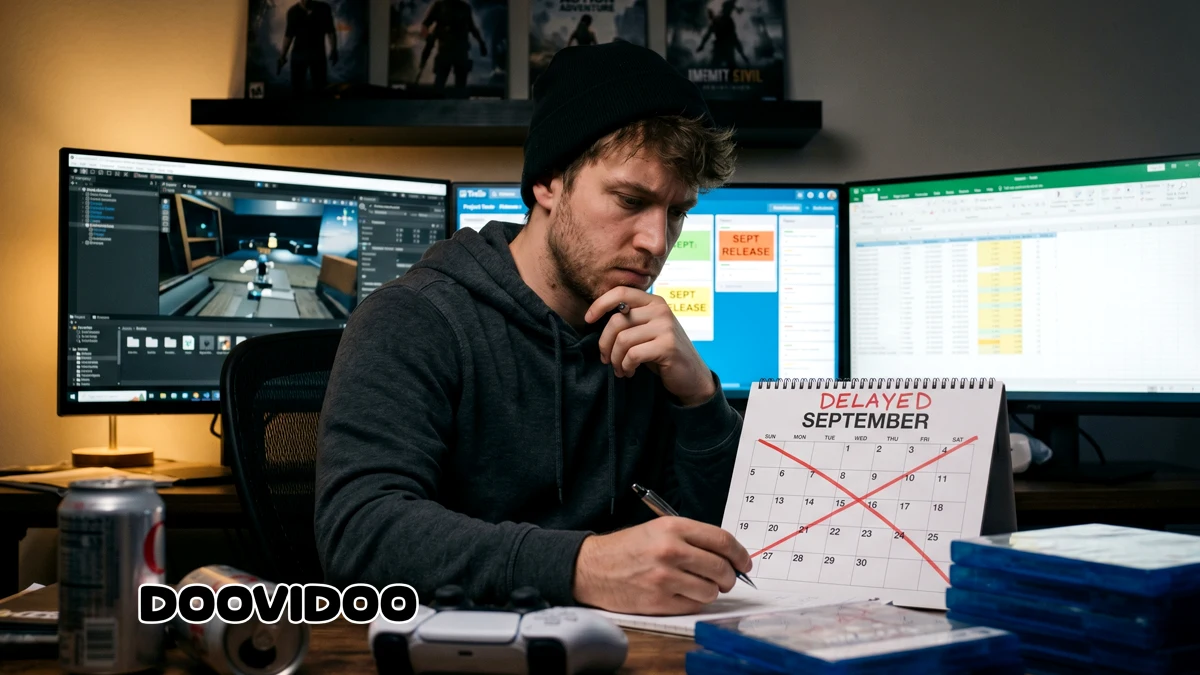
The case of Valor Mortis expressed it bluntly. One More Level delayed the game from September 24 to October 13 because September was “absolutely loaded” with games and the studio wanted to give the title and players’ wallets some space. The phrase reveals an uncomfortable truth. The public cannot buy or play everything at the same time.
Capcom also appeared in this conversation with Onimusha: Way of the Sword. Retail listings suggested a move from September 25 to September 4, a decision interpreted as an attempt to avoid late month congestion. Even moving within September shows the pressure. It is no longer enough to avoid November. Now studios must avoid the most crowded part of September itself.
The irony is strong. Many studios ran from the monster of November and ended up inside a crowd in September.
The Shadow of GTA VI
Grand Theft Auto VI works like a gravitational force. Rockstar set its release for November 19, 2026. Few studios want to arrive near that date. This is not only about direct sales. It is about public conversation. When GTA VI arrives, it will absorb social media, press, content creators, streams, memes, analysis, guides, technical debates, and player spending.
A normal blockbuster competes for attention. GTA VI threatens to occupy the entire atmosphere.
That is why the 2026 calendar was reorganized around one game. Some releases moved earlier. Others shifted. Others avoided confirming dates until they had more clarity. This behavior reveals a shift in power. The calendar is no longer decided only by each studio. It is decided by the concentration of attention created by the market.
The problem for everyone else is brutal. A game can be finished, polished, and good, yet still fail if it arrives in the wrong week. In the attention economy, a bad day can cost millions.
The End of the Mass Release
The mass release strategy depends on one idea: concentrate investment and noise to turn the launch into an event. But when everyone does the same thing, the event becomes a traffic jam. The player does not feel excitement. The player feels pressure. What to buy. What to skip. What to wait for on sale. What to play later.
Studios are starting to understand that a less obvious date can be more valuable than a traditional date. A game released in February, April, or July can receive more media space than one lost in September. The old obsession with fall loses strength if fall no longer guarantees dominance.
This does not mean the blockbuster will disappear. Major releases will continue to exist. But their logic will change. Instead of betting everything on one week, studios will have to build a longer life. Early access, demos, betas, seasons, post launch content, closed communities, digital events, and constant support.
The blockbuster stops being a single strike. It starts to look like a sustained campaign.
The Economy Behind the Shift
The financial reason is clear. AAA games cost too much to depend on a single window. Large teams, actors, motion capture, graphics engines, art, music, localization, marketing, quality control, and servers raise budgets. A calendar mistake can ruin years of work.
A saturated release affects more than initial sales. It reduces visible reviews, lowers stream presence, complicates commercial agreements, divides player spending, and weakens word of mouth. It also increases internal pressure. If the game misses targets, cuts, cancellations, or closures follow.
The industry is already in a period of labor instability. GDC surveys reported that many developers were affected by layoffs in recent years. In that environment, every launch becomes a survival test. The financial health of a developer depends on the game being not only good, but visible.
The calendar, then, becomes a protection tool. Moving a date can look like public defeat. In reality, it can be a conservation decision. A well calculated delay protects sales, team, and reputation.
Delaying Does Not Always Mean Failure
For a long time, delaying a game was interpreted as a sign of problems. Bugs, poor management, lack of polish, or chaotic production. Sometimes that is true. But in the current market, delaying can also be strategy.
A study of thousands of Steam releases found that delays are common. Almost half of the games analyzed changed their initial date. This suggests that flexible scheduling is already a normal part of modern development.
The difference today lies in the reason. A game is not delayed only because it is not ready. It is also delayed because the market is not ready to receive it. There are too many releases. There is too much competition for attention. Players have limited budgets. Streamers cannot cover everything.
In that context, moving is not shame. It is survival.
Pressure on Workers
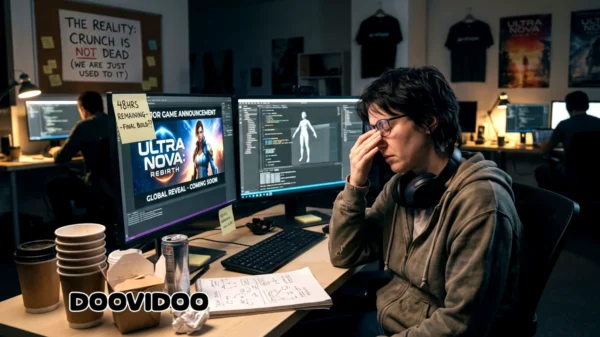
A blockbuster calendar does not affect only executives. It affects designers, programmers, artists, writers, testers, producers, localization teams, technical support, and marketing. When a date is maintained at any cost, the risk is crunch: weeks or months of excessive workdays to reach launch.
The mass release model tends to concentrate pressure. Everything must be ready for one day. Everything must work. Every error becomes a crisis. The weeks before release can become a machine of exhaustion.
A more staggered strategy could reduce part of that pressure. Not by magic. A delay can also extend stress if it is managed badly. But a culture that allows date shifts, avoids saturation, and launches with more margin can better protect the team.
Labor stability depends on more than good intentions. It depends on realistic budgets, credible dates, controlled scope, and clear direction. A blockbuster that changes date to breathe can be healthier than one that arrives on time and burns out its team.
Sustainable Releases
The idea of sustainable releases is starting to make sense. It does not mean always launching small games. It means releasing in a way that allows the product, the team, and the community to survive after launch.
A sustainable release avoids competing where it has no chance. It respects the player’s wallet. It does not force the team to finish the game through months of crunch. It allows testing campaigns. It listens to feedback. It accepts that the commercial life of a title can last months or years, not only one week.
The model already exists in part. Independent games build audiences with demos at digital festivals. Service games live through seasons. RPGs and strategy games sustain themselves through early access. Major studios test public betas, planned expansions, and longer campaigns.
The question is whether traditional AAA will learn from that logic. The blockbuster does not have to die. But it must stop acting as if the market were still the same as fifteen years ago.
The Player Also Changed
The current player does not buy like before. They have huge unfinished libraries. They wait for discounts. They watch reviews. They follow streamers. They evaluate length. They ask about technical performance. They read user comments. They decide with more information and more fatigue.
There is also the problem of time. A large game can demand 40, 60, or 100 hours. If three major titles come out in the same week, they do not compete only for money. They compete for life.
That is why a staggered calendar also benefits the public. It allows better choices. It reduces consumption anxiety. It gives space to games that need word of mouth. It prevents good titles from dying because they came out beside a giant.
Attention is finite. The industry took too long to accept it.
What Comes After September
The case of September does not mark the immediate end of the annual blockbuster. But it does show a fracture. Studios can no longer treat the calendar as a fixed tradition. They must read the market week by week.
There will be more tactical moves. More games releasing earlier than expected. More delays into less crowded months. More studios avoiding dates dominated by giant franchises. More continuous content strategies. More campaigns designed to last.
The positive consequence would be an industry less dependent on the single strike. The negative consequence would be another form of constant pressure, with games that never really finish launching and teams forced to sustain content for years. The challenge is finding balance.
The blockbuster as a cultural event is not disappearing. GTA VI proves that. But the idea that every studio must fight for the same season is starting to break.
The New Video Game Calendar
The video game industry is entering a stage where the calendar matters as much as quality. A strong title needs room to breathe. It needs community. It needs conversation. It needs the player to have time and money.
September 2026 will remain a warning. Running from one giant can create another problem if everyone runs to the same place. The future will not be only about avoiding GTA VI. It will be about abandoning the idea that there is only one ideal season to launch.
The blockbuster of the future will be less explosion and more construction. Less blind betting on one week. More sustained relationship with the public. Less calendar inherited from film. More strategy adapted to an industry where too many choices are already part of the problem.
For developers, this can mean healthier finances. For employees, it could mean fewer last minute crises. For players, better conditions to discover and enjoy games without feeling that the market is running over them.
The annual blockbuster is not dead. But its old form is losing authority. And September, for years a symbol of gaming’s big return, is starting to look too crowded to carry everyone’s weight.
Sources used: Polygon reported that September 2026 became one of the most crowded months for new video games, with titles such as Marvel’s Wolverine, Control Resonant, Silent Hill: Townfall, and others competing for attention. GamesRadar reported that retail listings suggested Onimusha: Way of the Sword was moving within September to avoid late month congestion. GameSpot reported that Valor Mortis delayed its release from September 24 to October 13 because September was “absolutely loaded” with games.
Rockstar confirmed that Grand Theft Auto VI is set for November 19, 2026, after moving from a previous May 2026 date. The Guardian reported that preorders opened on June 25, 2026, and highlighted enormous commercial expectations around the release.
GDC reported in 2025 that 11 percent of surveyed developers had been laid off in the previous 12 months and that 41 percent had been affected by their own layoffs or those of colleagues. In 2026, GDC reported strong concern among students about the lack of entry level positions, competition from laid off workers, and displacement linked to AI.
An empirical study of 23,485 games on Steam found that 48 percent had a delay from their initial date and that the median delay was 14 days, supporting the idea that moving releases is already a common practice in modern development.