
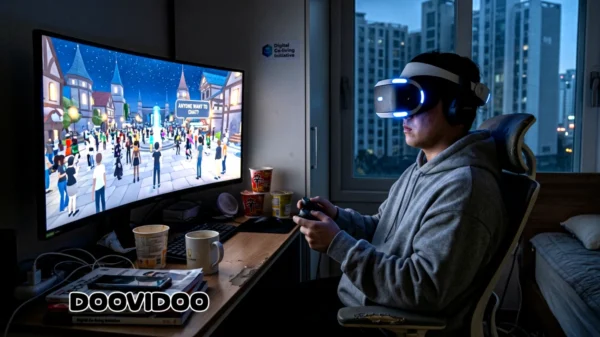








The rise of digital co-living did not begin with a marketing campaign. It began when millions of young people stopped entering video games only to win, level up, or kill monsters, and started entering them to be with someone.
A persistent open world is no longer only a map. It is a plaza. A café. A shared bedroom. A late night table where someone listens while another person talks about a breakup, anxiety, a terrible job, or the fear of not fitting in. In games such as Final Fantasy XIV, World of Warcraft, Roblox, Fortnite, Minecraft, or Destiny 2, socialization does not happen on the margins of the game. Many times, it is the game.
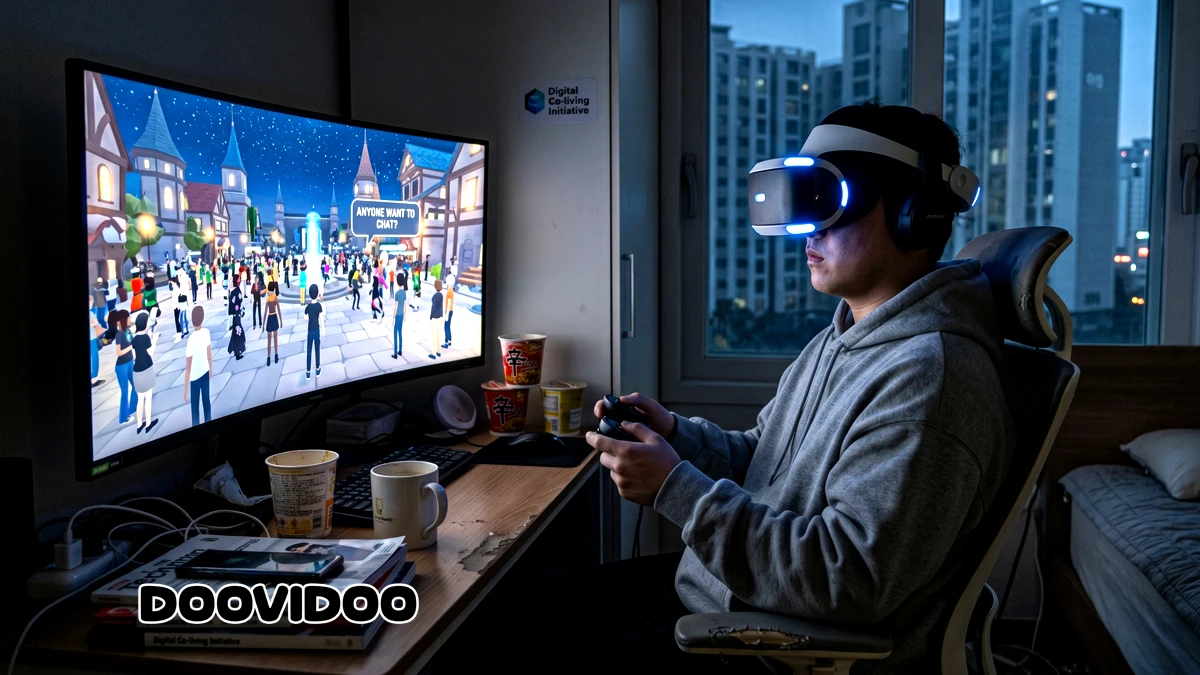
The idea sounds strange to anyone who still imagines the gamer as an isolated figure, locked in front of a screen. That image has aged badly. Contemporary loneliness does not always look like silence. Sometimes it looks like a full chat, a Discord channel, a raid at nine at night, and a group asking why you did not log in yesterday.
The rise of digital co-living describes that transformation. Young people do not only share matches. They share routines. They live stretches of their lives inside worlds that keep running when they log off. And in a society where the state, family, neighborhood, and office no longer provide the same support, guilds and gaming communities are starting to fulfill roles that once belonged to more stable institutions.
The Persistent World as a Third Place
For decades, sociologists spoke about the “third place”: spaces outside home and work where people build bonds. Bars, parks, churches, clubs, libraries, plazas, cafés. Those places have not disappeared completely, but in many cities they have become less accessible, more expensive, more surveilled, or weaker.
The young person who does not have the money to go out every week, who lives far from friends, who works broken schedules, or who feels social anxiety finds another door. They enter a server. They connect to a guild. They appear in a digital city where their name already means something.
Final Fantasy XIV shows this clearly. Its appeal does not depend only on dungeons, story, or classes. It also depends on virtual weddings, decorated houses, concerts organized by players, nightclubs inside the game, free companies, and communities that operate like neighborhoods. The game is not only content. It is social infrastructure.
Dawntrail expanded that world with new territories, story, and activities. But what keeps an MMO alive is not only the new map. It is the promise that someone will be there to explore it with you. A persistent world matters because it preserves shared memory. The group remembers when it defeated a boss. It remembers who arrived late. It remembers who was depressed that week. It remembers who disappeared.
The Social Network That Does Not Look Like a Social Network
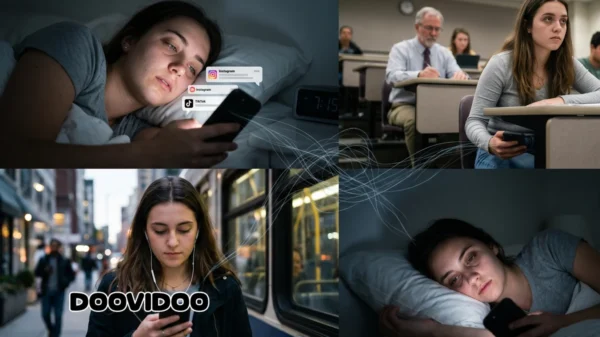
Persistent open worlds do something many social networks no longer achieve: they force cooperation. On Instagram, TikTok, or X, the user performs for an audience. In an MMO, a player needs others to advance, learn, coordinate, and survive certain activities. The relationship is not based only on posting. It is based on doing.
That difference matters. Social media turned life into a display window. Persistent worlds turn presence into a shared task. A raid requires attention. A dungeon requires coordination. A guild house requires organization. A community event requires care.
That is where a less abstract form of socialization begins. It is not enough to like a post. You have to show up. You have to listen to instructions. You have to wait for the new player. You have to cover mistakes. You have to negotiate schedules. You have to decide what to do with someone who insults, harasses, or breaks trust.
Guilds function like small societies. They have leaders, rules, rituals, conflicts, reputation, hierarchies, inside jokes, sanctions, and memory. Some are chaotic. Others are almost institutions. In both cases, the player learns how to inhabit a shared space.
Connected Loneliness
The World Health Organization has described loneliness as a global public health issue. Adolescents and young adults are among the most affected groups. That reality helps explain why so many young people seek community in digital worlds. They do not enter only to escape. They enter because, outside the screen, many networks are broken.
Loneliness in 2026 does not always mean talking to no one. It means talking without feeling supported. It means living connected and still not having anyone to call when something goes wrong. It means accumulating contacts without building intimacy. It means watching other people’s stories while your own life feels suspended.
Digital co-living does not solve that loneliness. But it organizes it. It gives it schedules, names, avatars, places, and rituals. Tuesday is raid night. Friday is event night. Sunday is farming. In the middle of that routine, someone asks how you are.
That question, repeated inside a game, carries weight. It does not replace therapy, family, or public policy. But for many young people, it is the first sign that their absence would be noticed.
Guilds as a Safety Net
The most important point is not the technology. It is care. Many gaming communities already function as informal emotional support networks. One member loses a job and the group organizes a collection. Another goes through a crisis and someone stays on voice chat until dawn. A young person who does not dare to say something at home tells their guild first. A trans player finds there the first space where their chosen name is respected.
This does not turn guilds into social services. They do not have clinical training, solid protocols, or clear legal responsibility. But they are filling a gap. When the neighborhood does not know your name, when school does not detect your depression, when work treats you as replaceable, and when the state arrives late, a digital community offers a basic form of safety: presence.
That presence has value. Not because it is perfect. Because it exists.
Research on MMOs and well-being points in that direction with nuance. Community play has been associated with social support, social capital, and a stronger sense of belonging in certain groups. There are also risks: dependence, harassment, abuse, physical isolation, sleep disruption, conflict, and exposure to toxic communities. The medium does not save anyone by itself. The difference lies in the quality of the bond.
A healthy guild accompanies. A toxic guild exploits. A well-managed server creates belonging. A server without rules reproduces violence. Digital co-living is an opportunity, not a guarantee.
Final Fantasy XIV and the Domestication of the MMO
Final Fantasy XIV stands out because it turned the MMO into a domestic space. It is not limited to combat. It offers housing, decoration, crafting, photography, fashion, roleplay, concerts, events, and zones where nothing urgent happens. That lack of urgency is part of its social success.
In many games, the player exists as a soldier. In Final Fantasy XIV, the player can also exist as a neighbor, artisan, host, dancer, musician, decorator, or guest. That range allows people with different skill levels to participate. Not everyone has to be competitive. Not everyone has to optimize damage. Some enter to talk, dress their character, care for a shared house, or accompany friends.
That detail explains why persistent worlds work as co-living. Life in common is not made only of major missions. It is also made of being close without doing much. Sitting in a plaza. Waiting for someone. Changing clothes. Showing a room. Listening to music. Talking while the avatar looks out at the sea.
Digital intimacy does not always come from a deep confession. Sometimes it comes from repeated presence.
The Professionalization of Community Care
As these communities grow, so does their responsibility. A large guild is no longer only a group of friends. It is an organization with moderation, codes of conduct, onboarding processes, help channels, and leaders who often end up acting as emotional mediators.
That burden is not always recognized. Moderating a community involves emotional labor. Resolving conflicts, detecting warning signs, stopping harassment, preventing exclusion, accompanying grief, and sustaining events takes time. Many leaders do it for free, out of affection or a sense of belonging.
That raises an uncomfortable question: if video games have become central social spaces, who takes care of those spaces. Companies benefit from active communities, but much of the emotional maintenance falls on users. Guilds produce retention, content, reputation, and informal safety. Community work keeps the game alive.
Digital co-living reveals that the industry sells worlds, but communities turn them into home.
The Danger of Romanticizing
Not every digital bond is healthy. Not every young person who socializes in an MMO is well supported. Some communities become closed, abusive, or hierarchical. Others normalize insults, racism, misogyny, transphobia, or emotional dependence. Some players use the digital world to avoid all physical contact. Others confuse constant presence with deep friendship.
That is why an adult approach should not fall into propaganda. Games do not replace physical society. They do not replace housing, mental health care, education, employment, safety, or public spaces. A guild should not have to carry everything that failed outside.
The risk of digital co-living is that the market uses loneliness as a business opportunity. If platforms understand that young people are looking for home, they can design systems that exploit permanence, fear of missing events, social pressure, and dependence. Community becomes economic value.
The ethical question is clear: what happens when a company monetizes the place where a person finds emotional support.
Beyond the Game
Even with those risks, denying the value of these communities would be a mistake. For many young people, the first group that celebrates their birthday is on a server. The first person who notices their sadness is on Discord. The first community that accepts their identity is inside an MMO. The first network that responds during a crisis does not come from an institution. It comes from a friends list.
That does not speak only about video games. It speaks about a weakened physical society. It speaks about expensive cities, fragmented families, unstable jobs, overwhelmed mental health systems, and shrinking public spaces. The game appears as refuge because outside there is not enough refuge.
The rise of digital co-living does not mean young people prefer the fake to the real. It means the digital has also become real. A voice conversation at three in the morning has real consequences. A community that accompanies grief produces real support. A friendship born in a raid can last for years. An open world can become the place where someone learns to trust.
The real does not depend only on physical presence. It depends on the bond.
A Generation Living Between Servers
Persistent open worlds are the shared residences of a generation that grew up with less material stability and more technical connection. Couples, friendships, rivalries, support groups, microcultures, and memories are formed there. Identities are tested there. Belonging is learned there.
Digital co-living is not a minor trend. It is a cultural response to connected loneliness. Young people are not using persistent worlds only to escape. They are using them to build social structures when other structures have become weak.
The question is no longer whether a video game is social. The question is why so many young people need it to be.
Final Fantasy XIV and other open worlds show that the future of socialization will not be divided between real life and digital life. It will exist at the border. In guilds that function as chosen families. In servers that act like neighborhoods. In virtual houses that gather people who lack stable emotional homes outside the screen.
The rise of digital co-living should not be celebrated without criticism or rejected out of prejudice. It should be read as both symptom and possibility. A symptom of a society that left many young people alone. A possibility for new forms of care, belonging, and community.
In a time when being connected does not guarantee being accompanied, persistent worlds offer something simple and rare: a place where someone is waiting.
Sources used: The WHO reported that one in six people worldwide experiences loneliness, with higher prevalence among adolescents and young adults, and linked lack of social connection to relevant health risks.
Pew Research Center found that 85 percent of U.S. teens play video games, that four in ten do so daily, and that many young people see positive effects such as making friends, collaborating, and solving problems.
Square Enix describes Dawntrail as an expansion of Final Fantasy XIV Online that takes the adventure to Tural and includes new areas, story, jobs, and content, reinforcing the MMO’s expansive character.
Research on MMOs and social well-being has found links between guild play, social support, social capital, self-esteem, and lower loneliness or depression in certain contexts, while warning about the quality of the bond and risks of abuse or isolation.
Texas A&M reported that online gaming communities could provide support for isolated young people, especially men who discussed personal issues and mental health in those spaces.