












Generative AI in development is no longer a promise of the future. It is already inside studios, meetings, prototypes, marketing departments, code, concept art, sound, and support writing. The entertainment industry presents it as a tool for efficiency. But behind that clean word sits an uncomfortable question: what happens when efficiency starts replacing creative judgment.
The recent controversy over the use of audio files and metadata to train AI sound systems captures the dilemma. This is not only a legal dispute. It is a fight over the value of human work. If a machine learns from songs, voices, soundscapes, tags, genres, and emotions created by people, then produces new audio in seconds, who should receive recognition. Who gets paid. Who loses commissions. Who gets pushed out of the creative chain.
Generative AI in development promises to speed up tasks, reduce costs, and allow small teams to do more with less. That promise is tempting for an industry pressured by huge budgets, layoffs, impossible schedules, and constant production demands. But it also opens a dangerous door: entertainment that is faster, cheaper, and more average.
The Ethics of Efficiency
The word efficiency dominates the conversation. Executives talk about more agile workflows. Studios talk about faster prototypes. Technology companies talk about tools that free creators from repetitive tasks. All of that sounds reasonable.
The question is what counts as repetitive.
In a video game, repetition is not always waste. Testing an animation twenty times teaches rhythm. Adjusting a sound again and again builds atmosphere. Writing discarded dialogue helps find a character’s voice. Making sketches that never reach the final game is part of the creative process. The industry calls part of the learning process inefficiency.
Generative AI in development threatens to turn process into an obstacle. If the main goal is reaching the result faster, the space where useful mistakes, strange decisions, and unexpected solutions appear gets reduced. The machine delivers a clean, plausible, fast version. But plausible is not always memorable.
Efficiency is not neutral. It decides which tasks matter, which jobs get cut, and what kind of work reaches the public.
The Sound Case
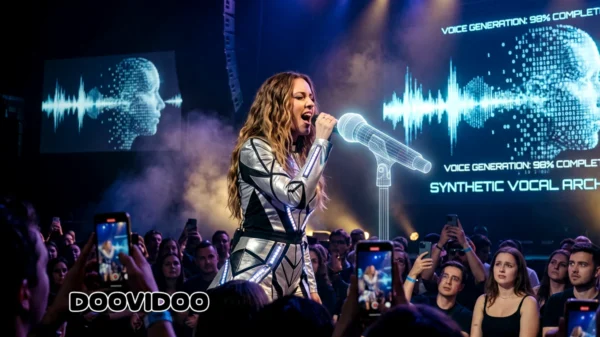
Jamendo’s lawsuit against Nvidia placed sound at the center. Jamendo alleged that Nvidia used hundreds of thousands of audio files and metadata from its platform to train systems such as Fugatto, an audio generator, and Audio Flamingo, a model that describes sounds. The accusation includes music and associated data such as genre, instruments, mood, and other categories.
This point is crucial. Metadata is not decoration. It is cultural labor. Classifying a song by mood, energy, instrument, or emotion helps a machine understand how sound is organized for human consumption. It is an invisible layer of knowledge. Without that layer, the file loses part of its technical value.
The conflict shows that AI does not learn from nothing. It learns from files, tags, decisions, and works created by people. Independent music, effects, soundscapes, libraries, 3D models, illustrations, and texts become raw material for systems that later promise to reduce the need to hire the people who produced that material.
The industry calls this process training. Many creators call it extraction.
How Studios Use AI
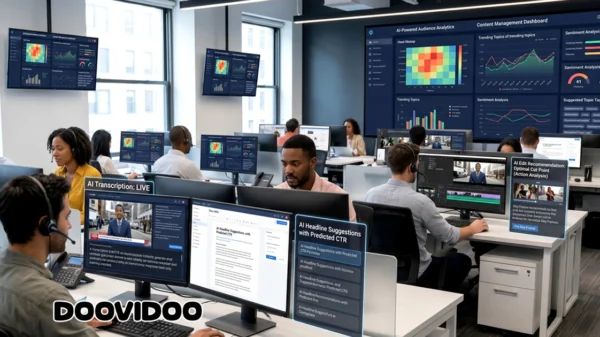
Generative AI in development does not have a single use. In video game and entertainment studios, it appears in brainstorming, documentation, support code, concept generation, animation, testing, localization, marketing, support, and prototyping.
GDC data shows that more than one third of video game industry professionals already use generative AI tools as part of their work. Use is stronger in business, marketing, support, and publishing than inside development teams themselves. It also appears in research, brainstorming, coding assistance, and prototypes.
This reveals something important. AI first enters where results tolerate more automation or where pressure to produce more content is higher. Emails, reports, early ideas, visual tests, descriptions, ads, preliminary translations, and prototypes are fertile ground. Then the tool moves toward more sensitive areas: art, narrative, sound, and design.
Studios are not necessarily trying to replace all human work overnight. They are trying to compress time. A three day task becomes an afternoon. An initial sketch appears in minutes. Test dialogue is generated before the writer begins revising. That speed changes the hierarchy of work.
The human becomes the supervisor. The machine produces the base. The question is how long it will take before the base is treated as the final product.
The Birth of Average Art
Generative AI tends to produce the recognizable. It learns patterns. It averages styles. It identifies frequent structures. It generates results that sound, look, or read like something that already exists.
That does not mean every result is bad. Many outputs are useful, even impressive. The problem lies in the cultural direction. If a studio uses AI to speed up backgrounds, ambient music, temporary voices, side quests, filler dialogue, and promotional art, entertainment starts filling with pieces that are correct, but frictionless.
Average art does not offend. It also does not surprise. It sounds good. It looks good. It works. It does not take risks. It does not carry a clear human obsession. It does not carry a scar. It does not show the mistake of someone who decided to go against the pattern.
In entertainment, average is dangerous because it looks professional. A song generated for a menu serves its function. A promotional illustration looks polished. A secondary dialogue explains the mission. A texture covers the space. The user does not always notice the loss immediately.
The accumulation is felt. Games become more similar to each other. Music becomes more generic. Characters speak with the same clean tone. Visual worlds look assembled from common references. Experiences work, but they do not stay.
Creativity as Supervision
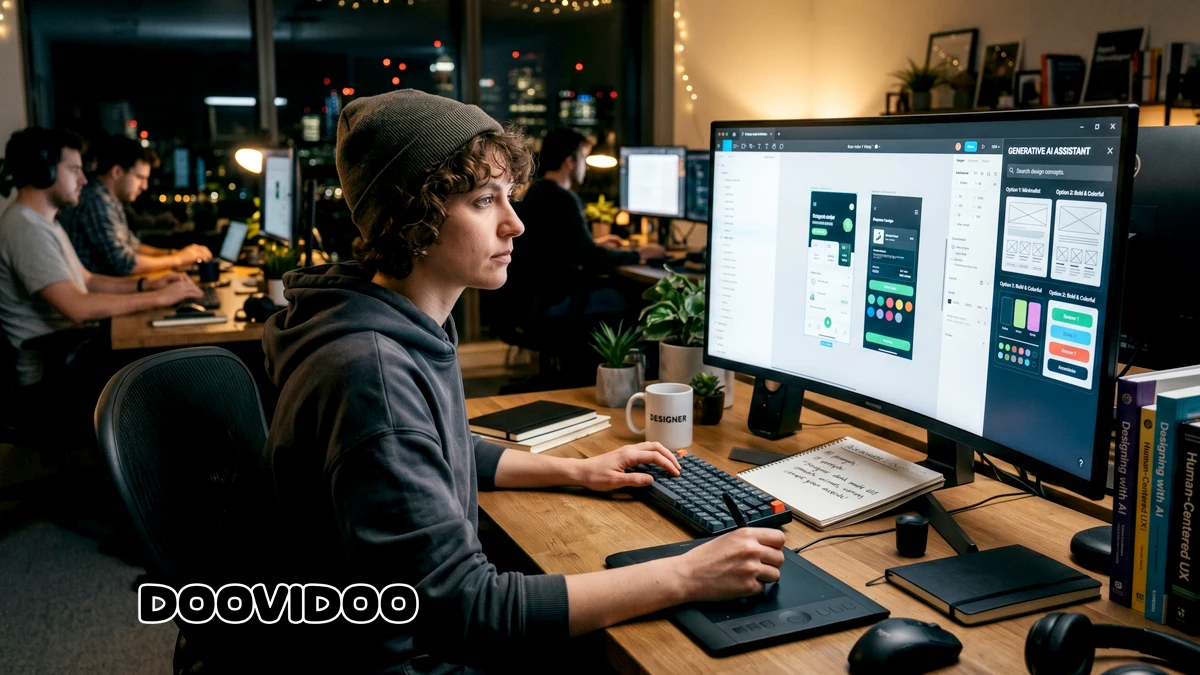
Defenders of AI say the artist does not disappear. The role changes. The artist no longer creates every element from zero. They direct, select, correct, and edit. This idea is partly true. Many tools in the history of art changed the creator’s role: the camera, synthesizer, sampler, digital editing, graphics engines, and 3D software.
But not all supervision equals strong authorship. There is a difference between using a tool to execute a vision and asking a tool to propose the vision. If the creator arrives with a clear intention, AI works as support. If the creator arrives without judgment and accepts the first output the system gives, the work becomes delegation.
Generative AI in development requires a new skill: knowing how to say no. No to the first output. No to the easy style. No to the cliché. No to the result that looks ready but has no identity. Human value shifts toward judgment, editing, taste, ethics, and direction.
The problem is that those skills take time. And the promise of AI is to save time.
Workers Under Pressure
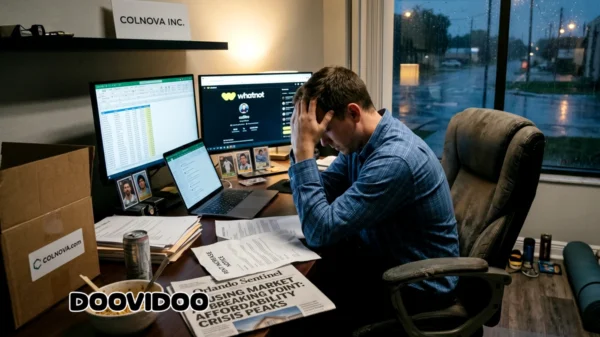
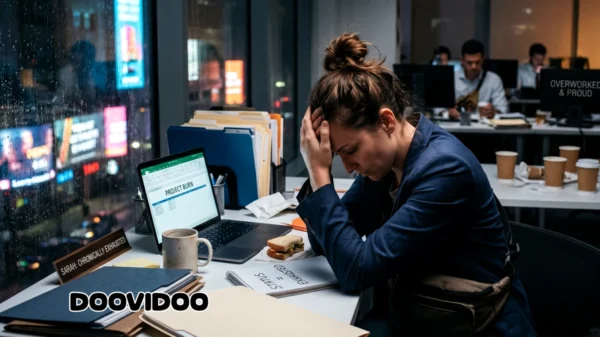
The conversation about AI is happening in a wounded industry. GDC reported that more than a quarter of respondents were laid off in the previous two years, with a higher figure in the United States. It also reported that half said their current or most recent employer had layoffs in the previous twelve months. In AAA studios, exposure to cuts was even higher.
In that context, every announcement about efficiency has a double meaning. For executives, efficiency means margin. For workers, it sometimes means fewer jobs.
Many developers do not reject all AI out of romanticism. They fear a concrete sequence: first it is used for support, then acceleration, then team reduction, then justification for making fewer people do more work. The tool promises to remove tedious tasks. But if the savings do not translate into better conditions and instead become cuts, the efficiency argument loses legitimacy.
AI also affects entry level positions. If a tool generates sketches, basic text, audio tests, or simple code, what tasks remain for juniors. The industry needs to train talent. But automation often attacks precisely the tasks where new workers used to learn the craft.
Without an entry ladder, there are no future experts.
Intellectual Property and Trust
The legal conflicts over training show that the problem is not only labor. It is also trust. Creators want to know whether their works were used, under what license, with what compensation, and with what limits. AI companies argue transformation, innovation, and fair use. Courts are still defining the boundaries.
In 2026, Reuters described AI copyright battles as entering a decisive phase. The cases are not limited to music. They also involve books, images, 3D models, news, and other materials. The entertainment sector is watching because its production depends on rights, licenses, and authorship.
If studios adopt AI trained on disputed material, they inherit legal and reputational risk. A video game does not only need to work. It needs to show that its assets, sounds, voices, and texts do not come from an opaque chain of exploitation.
Transparency becomes part of the product. The public wants to know whether a voice is human. Whether a song was generated. Whether an illustration used artists’ work without permission. Whether a mission was written by a person or filled in by a model.
Trust will be a competitive advantage.
The Real Promise
Generative AI in development should not be rejected completely. That would be naive. There are legitimate and valuable uses. It can help small teams prototype. It can speed up documentation. It can assist accessibility. It can generate early versions for testing. It can support people with disabilities. It can reduce administrative tasks that take time away from creative work.
The question is not AI yes or no. The question is who benefits.
If AI frees time so artists, designers, musicians, and writers can make better decisions, then it can enrich the work. If it is used to replace human judgment with average content, it impoverishes culture. If it reduces costs without improving working conditions, it increases precarity. If it trains on works without permission, it transfers value from creators to platforms.
Technology does not decide by itself. Contracts, unions, studios, laws, budgets, and audiences decide.
The Value of Human Work
AI forces us to defend something that once seemed obvious: human effort has cultural value. Not only because it takes time. It has value because it includes experience, intention, body, memory, error, conflict, and responsibility.
A composer does not deliver only audio. They deliver listening. A designer does not deliver only levels. They deliver rhythm, tension, and learning. A writer does not deliver only words. They deliver perspective. A 3D artist does not deliver only geometry. They deliver shape, weight, and visual judgment.
When all of that is reduced to training data or generated content, the industry loses its root. Entertainment becomes more abundant, but less situated. Faster, but less human. More efficient, but less memorable.
Efficiency needs limits. Not everything that can be automated should be automated. Not every saving improves a work. Not every speed is progress.
Delegating or Directing
Generative AI in development marks a boundary. A studio can direct AI or delegate creativity to the algorithm. The difference lies in intention. Directing means having human vision, clear rules, transparency, compensation, and critical review. Delegating means accepting the average output because it is cheap and fast.
The entertainment industry will decide which path it takes. If it chooses delegation, it will have more content and fewer works with identity. If it chooses direction, AI will be a tool inside a human chain of creation.
The public will also have a voice. It can reward the generic or demand transparency. It can accept that everything sounds the same or value work with risk. It can consume efficiency or defend authorship.
The central question is not whether machines will create. They already do. The question is whether cultural industries will still value the people who taught those machines how to sound, look, write, and build worlds.
The future of entertainment will not depend only on more powerful algorithms. It will depend on an ethical decision: to use technology to expand human creativity or to make it cheaper until it becomes invisible.
Sources used: Reuters reported that Jamendo sued Nvidia in California over the alleged unauthorized use of hundreds of thousands of audio files and metadata to train Fugatto and Audio Flamingo, and that the company sought statutory damages of up to 150,000 dollars per infringed copyright.
GDC reported in 2026 that 36 percent of video game industry professionals use generative AI at work, that the most common uses include research, brainstorming, daily tasks, coding assistance, and prototyping, and that 52 percent believe generative AI has a negative impact on the industry.
GDC also reported that 28 percent of respondents were laid off in the previous two years, that the figure rises to 33 percent in the United States, and that half said their current or most recent employer had layoffs in the previous twelve months.
Reuters reported in 2026 that Meta, Nvidia, and Roblox faced a lawsuit from a 3D artist over the alleged misuse of millions of 3D models to train generative systems used in video games, virtual worlds, and animation.
Reuters described 2026 as a pivotal year for AI copyright litigation, with courts evaluating whether training on protected material is covered by fair use or requires compensation for rights holders.