











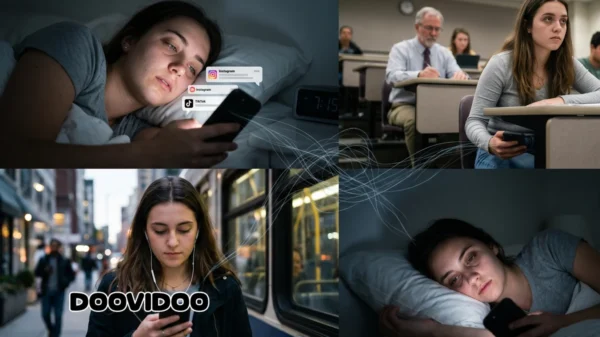








Burnout has stopped being a warning sign and, in many offices and creative sectors, has become a badge of honor. Saying “I haven’t slept,” “I’m overloaded,” “I’ve been nonstop for weeks,” or “I live attached to work” does not always sound like a problem anymore. Sometimes it works as proof of professional value.
Burnout culture rewards excessive sacrifice. It turns exhaustion into reputation. It presents constant availability as commitment. In creative, technology, finance, legal, advertising, corporate, and media industries, being exhausted is interpreted as a sign of ambition. The person who rests seems less committed. The person who sets limits seems less competitive. The person who does not answer outside working hours seems less reliable.
This logic has damaged the way many people understand work. Employment stopped occupying one part of life and began defining identity, self esteem, and belonging. Burnout became a way to prove that someone matters inside an organization. If you are overloaded, it means they need you. If you are always busy, it means your work has value.
But the cost is high. Chronic exhaustion does not produce better ideas. It does not improve relationships. It does not build healthy careers. It wears down the body, reduces creativity, increases cynicism, and breaks the emotional relationship with work.
What Burnout Is
The World Health Organization defines burnout as an occupational phenomenon associated with chronic workplace stress that has not been successfully managed. Its main signs are exhaustion, mental distance from work, cynicism or negativity, and a reduced sense of professional effectiveness.
This definition matters because it places the problem in work, not only in the person. Burnout does not come from a lack of individual strength. It appears when workload, expectations, schedules, pressure, and workplace culture exceed a person’s real resources.
Even so, many companies treat burnout as a private problem. They recommend meditation, exercise, better sleep, or vacation. Those practices help, but they do not fix an organization that rewards constant urgency, useless meetings, excessive messages, and availability without limits.
Burnout culture turns a structural failure into an individual virtue. The exhausted worker does not receive a warning. They receive recognition.
Exhaustion as Proof of Commitment
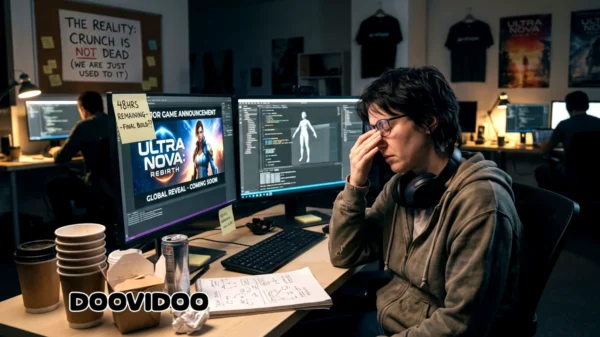
In many offices, the busiest person gains moral authority. They arrive first. They leave last. They answer emails at night. They enter meetings without eating. They cancel personal plans. They say they do not have time to get sick. In that environment, burnout works as social currency.
The pressure does not always come from a direct order. Sometimes it comes through comparison. If everyone stays connected after 7 p.m., disconnecting seems like betrayal. If the boss answers messages on Sunday, the team understands that it should do the same. If promotions go to those who never set limits, the message becomes clear.
In corporate sectors, burnout is disguised as high performance. In creative sectors, it is disguised as passion. In both cases, the result looks similar: long workdays, identity tied to work, and guilt when resting.
The phrase “do what you love” made the problem worse in creative fields. If you love writing, designing, filming, editing, acting, producing, photographing, or creating campaigns, then exhaustion is presented as part of the price. The worker does not only sell time. They also sell emotion, taste, style, and vocation.
That discourse makes it difficult to complain. If you complain, it seems like you do not love what you do enough.
Creative Industries and the Romanticization of Sacrifice
Creative industries have spent years celebrating the image of the exhausted genius. The director who does not sleep. The designer who rebuilds a campaign at dawn. The journalist who lives between deadlines. The musician who works without rest. The agency that boasts about long nights before a presentation.
Creativity is associated with intensity. But intensity is not the same as exploitation. A creative process needs time, error, silence, and distance. Burnout kills those conditions. An exhausted mind produces fast answers, not necessarily better ones.
The digital economy increased the pressure. Content must always come out. Campaigns must respond to trends in real time. Independent creators must post, sell, edit, reply, negotiate, and protect their personal brand. The algorithm does not rest. That is why many creative workers feel they should not rest either.
The promise of freedom turns into permanent surveillance. Working from anywhere ends up meaning working from everywhere. Passion turns into an extended shift.
Corporate Burnout and the Endless Workday
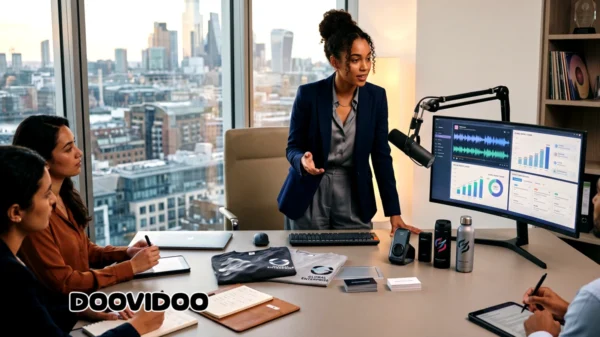
In the corporate world, burnout takes another form. It does not always look like chaos. Sometimes it looks like a full calendar, constant messages, back to back meetings, and productivity metrics.
Microsoft described the infinite workday as a pattern in which work invades early hours, nights, and weekends. The employee receives messages outside core working hours, returns to email at night, and lives interrupted by meetings, chats, and last minute changes.
Technology promised efficiency. In many cases, it multiplied interruptions. Every tool meant to save time created another channel to check. Email, chat, video call, task manager, shared document, board, voice message, mobile notification.
The problem is not technology. The problem is a culture that confuses constant communication with real work. Being available became more visible than thinking. Answering fast became more rewarded than solving well.
That is how corporate burnout grows. Not always through one major crisis, but through an accumulation of micro demands. One more meeting. One more message. One more change. One more emergency. The worker does not collapse all at once. They empty out piece by piece.
Burnout and Status: Why We Brag About Exhaustion
Bragging about exhaustion seems irrational, but it serves a social function. In competitive work cultures, burnout communicates sacrifice. It says “I am necessary,” “I work more than others,” “I deserve to be promoted,” “my professional life carries weight.”
It also protects against fear. If a person is exhausted, at least they feel they are doing everything possible. Rest opens uncomfortable questions. What happens if I am not indispensable. What happens if my value does not depend on working more. What happens if the company continues the same without me.
Burnout is also related to professional class. In certain sectors, being busy works as a sign of success. Having a full schedule becomes a symbol of importance. Not having time becomes a form of prestige.
But that reputation is fragile. The system applauds excess until the body fails. Then the same culture that demanded availability starts talking about resilience, self care, and personal responsibility.
The Generational Clash
Younger generations question this ethic more strongly. Not because they reject work. Most want stability, income, growth, and meaning. But many Gen Z and millennial workers do not accept that a career should require destroying their health.
Deloitte reported that a significant share of young workers feel stress or anxiety frequently, and that money, housing, and the financial future influence their labor decisions. When the promise of working without rest no longer guarantees a home, security, or promotion, sacrifice loses legitimacy.
That point explains movements such as quiet quitting, rejection of hustle culture, the search for shorter workweeks, and the right to disconnect. Not all these movements mean a lack of ambition. Many mean a renegotiation of the psychological contract with work.
The question is no longer “how much are you willing to sacrifice.” The question is becoming “what does work give back in exchange for your time, health, and energy.”
Quiet Quitting and Work Boundaries
Quiet quitting became popular as a controversial label. In its simplest version, it describes workers who fulfill their responsibilities, but stop doing extra work that is unpaid, unrecognized, or permanent.
Companies read it as apathy. Many workers experienced it as defense. After years of absolute availability, setting limits began to look like a form of recovery.
The problem is the name. “Quiet quitting” sounds like abandonment, even though it often describes working within the contract. Leaving at the agreed time, not answering messages at night, and not taking on extra tasks without compensation is not failure. It is drawing a boundary.
This movement questions a central idea of burnout culture: the belief that a good worker always gives more. The new question is more uncomfortable for companies. Why did normal work stop being enough.
The Four Day Workweek
The four day workweek appears as one of the most visible responses to burnout. Trials in companies in the United Kingdom showed strong reductions in stress and exhaustion. In the British pilot coordinated by labor research organizations, 39 percent of employees reported less stress and 71 percent reduced burnout levels by the end of the trial.
The argument is not working less out of laziness. It is working better. Fewer meetings. Fewer useless tasks. More focus. More rest. More recovery.
The four day week forces organizations to review real productivity. Many discover that much of the exhaustion does not come from deep work, but from noise: poorly designed meetings, duplicated processes, unnecessary emails, and invented emergencies.
Rest stops being seen as a prize and begins to be seen as workplace infrastructure.
The Right to Disconnect
The right to disconnect is also gaining ground. Australia adopted a law that allows workers to refuse work contact outside working hours, except in reasonable circumstances. European countries had already advanced with similar rules.
This movement attacks one of the roots of modern burnout: the workday that never ends. The phone turned the worker into a portable office. The right to disconnect tries to restore a basic boundary between employment and life.
The legal rule does not solve everything. If workplace culture punishes those who do not answer, the right remains weak. But it marks a strong symbolic shift. Disconnecting stops being a whim. It begins to be recognized as protection.
From Individual Self Care to Work Redesign
Burnout is not solved only with candles, breathing, or vacations. Self care matters, but it is not enough. A person returns rested to a sick system and burns out again.
The real answer requires redesigning work. Clear workloads. Fewer meetings. Protected schedules. Managers who do not reward permanent availability. Fair salaries. Autonomy. Enough staff. Realistic expectations. The right to get sick. Respected breaks. Evaluation by results, not endless presence.
Companies that want to reduce burnout must stop treating exhaustion as proof of commitment. No one should have to get sick to prove their value.
The New Work Ethic
Burnout culture is beginning to lose authority because its promises failed. Working more does not always guarantee stability. Being available does not always bring promotion. Loving what you do does not justify exploitation. Having a full calendar does not mean living better.
The movements questioning this ethic do not seek to eliminate ambition. They seek to separate it from harm. They want sustainable careers, creativity with rest, leadership without abuse, and success without personal destruction.
Burnout will continue to exist as long as excess is rewarded. Changing it requires another kind of prestige. Valuing the leader who protects the team. Celebrating the creative worker who works at a healthy rhythm. Recognizing the company that reduces meetings. Admiring the person who performs well without turning life into permanent sacrifice.
The future of work is not defined by who endures the most. It is defined by who builds systems where people do not have to burn out to be taken seriously.
Sources used: The World Health Organization defines burnout as an occupational phenomenon resulting from unmanaged chronic workplace stress, with exhaustion, mental distance or cynicism, and reduced professional effectiveness.
Gallup reported in State of the Global Workplace 2026 that global engagement fell for the second year and that in 2025 only 20 percent of employees were engaged at work.
Deloitte reported in 2025 that 40 percent of Gen Z and 34 percent of millennials feel stressed or anxious all or most of the time, and that work contributes significantly for about one third of those groups.
Microsoft described the “infinite workday” with more than 50 messages outside core hours and nearly one third of workers actively checking email around 10 p.m.
The British four day workweek pilot reported 39 percent less stress and 71 percent less burnout among employees by the end of the trial.
Australia implemented the right to disconnect in August 2024 for companies with more than 15 employees, with expansion to small businesses in August 2025.