

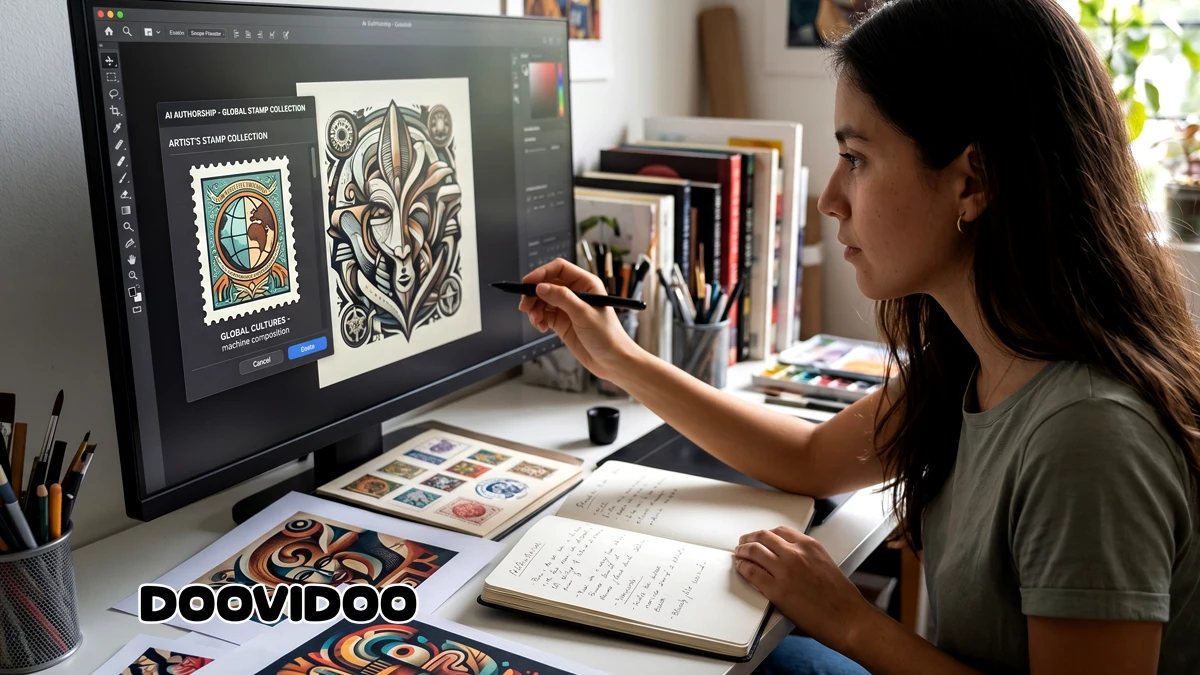
Artificial intelligence has changed a question that once seemed stable: who made the work. For centuries, the artist was the person who imagined, drew, wrote, composed, rehearsed, corrected, and signed. The cultural market measured value through a mix of talent, technique, style, effort, biography, and public recognition. Today, a machine can generate music, painting, or literature in seconds. Authorship no longer seems so clear.
The problem is not only legal. It is cultural. When an artificial intelligence platform produces a song with a synthetic voice, an image with the look of oil painting, or a story with literary structure, the public faces a new doubt. Is the artist the person who wrote the prompt. Is it the person who trained the model. Is it the musician, painter, or writer whose works fed the system. Is it the company that owns the tool. Or is there not enough human artist in that work.
Artificial intelligence does not erase human creativity. But it changes where creativity appears. Before, the creative gesture was seen in the hand, the voice, the stroke, or the sentence. Now, part of the process happens in the selection, direction, editing, and curation of results generated by a machine.
Authorship enters a conflict zone. The artist no longer always produces every element. Sometimes the artist directs a system that produces variations. Sometimes they edit an output. Sometimes they combine materials. Sometimes they only ask and receive.
What Artificial Intelligence Changes in Art
Generative artificial intelligence works with large amounts of data. It learns patterns from images, sounds, texts, and styles. Then it produces new content from instructions. This capacity has altered music, painting, illustration, literature, design, advertising, video games, film, and social media.
The novelty lies in scale and speed. A writer may take weeks to build a short story. An illustrator may take hours or days to finish a complex image. A composer works through melody, harmony, lyrics, mixing, and voice. An artificial intelligence tool delivers versions in seconds.
That changes the cultural market because it reduces the cost of producing average content. A brand that once hired illustrators now generates internal sketches. A creator who needed musicians can test melodies with AI. A publisher can explore cover designs. A user without visual training can create images to publish.
The result is a new abundance. More images. More songs. More texts. More covers. More videos. But abundance does not solve the problem of value. It makes it harder. When producing a basic piece costs less, human effort becomes less visible and more important at the same time.
Who Is the Artist?
The answer depends on the level of human intervention. If a person writes a simple instruction and accepts the first result, their creative role is limited. If a person designs a concept, tests dozens of versions, edits, combines, rewrites, corrects, and makes clear aesthetic decisions, their intervention carries more weight.
The artist, in the age of artificial intelligence, moves closer to the figure of a director. They do not always paint every line or write every word. They define intention, tone, limits, references, selection, and montage. The final work depends on their decisions.
But there is tension. The tool also carries thousands or millions of cultural traces inside it. A model trained on music, paintings, or books learns from previous human works. Even when it does not copy a specific piece, it absorbs patterns of style, composition, and language. That is why many creators ask whether their work was used without permission to build systems that later compete against them.
In an AI generated painting, the user who writes the prompt participates. The model participates. The artists used in training are also indirectly present. The company that built the tool controls the infrastructure. Authorship becomes fragmented.
The question “who is the artist” becomes another question: who contributes the human expression that deserves recognition.
The Law Is Still Searching for an Answer
Copyright offices have marked a central line: protected authorship requires human creativity. In the United States, the Copyright Office has held that a work generated entirely by artificial intelligence does not receive copyright protection if its expressive elements were produced by a machine. By contrast, a work that includes enough human selection, arrangement, or modification may receive partial protection.
This standard changes the incentive. It is not enough to say that a work came from a tool. The person must show what part they made. What they chose. What they transformed. What they organized. What they contributed through their own judgment.
The World Intellectual Property Organization has also noted that artificial intelligence accelerates the need for strong copyright infrastructure. The question is not only whether a final work can be protected. It is also how to recognize and compensate those who produce the materials used to train models.
The law moves more slowly than technology. Meanwhile, the market is already moving.
Music: Voice, Style, and Conflict
Music shows one of the most visible conflicts. Artificial intelligence tools generate complete songs, synthetic voices, arrangements, lyrics, and tracks that imitate recognizable genres. The problem appears when those songs sound like living artists or when models are trained on protected recordings.
In 2024, major record labels sued Suno and Udio, two music generation services, for alleged large scale use of protected recordings to train their models. The dispute is not only about one song. It is about the right to build a machine capable of producing competitive music from someone else’s cultural archive.
For musicians, the threat has two levels. First, that their work may have been used without permission. Second, that the resulting system can generate music that competes for attention, licenses, and money. Artificial intelligence does not only take a melody. It also absorbs market space.
Voice makes the debate more serious. A voice is identity. If a machine sings with a tone similar to an artist, the public may feel human presence where there is none. The music industry will have to distinguish between creative tool, imitation, parody, homage, and exploitation.
Painting and Image: Style Without Permission
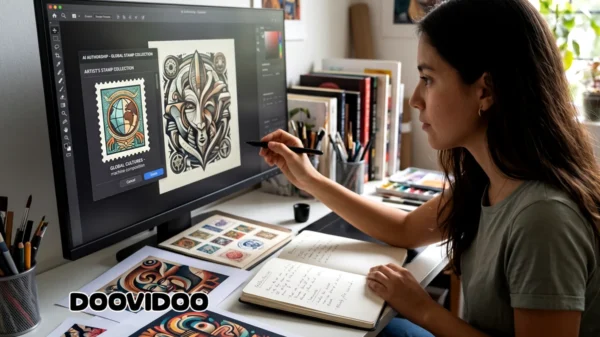
In visual arts, the question focuses on style. A user can ask for an image “like” a famous painter or an illustration with an aesthetic similar to a living artist. Even if the output does not copy a specific work, it can capture recognizable traits.
Getty Images sued Stability AI over the alleged unauthorized use of millions of images to train visual generation models. The case showed the clash among image archives, photographers, illustrators, and artificial intelligence companies. The central issue is economic and symbolic. Human images create the value that the system later automates.
For illustrators and photographers, the problem is not that the technology exists. The problem is competing against tools that learned from their work without a clear agreement. In the visual market, artificial intelligence lowers prices for generic pieces. That hurts low and mid budget commissions, where many artists sustain their income.
At the same time, some artists integrate AI into their practice. They use it to sketch, deform, mix, test atmospheres, or speed up visual exploration. In those cases, artificial intelligence works as a tool, not as a total replacement. The difference lies in human control and transparency of process.
Literature: Writing, Rewriting, and Losing the Trace
Literature faces a different problem. A text generated by artificial intelligence can imitate tone, structure, and genre. It can write poems, stories, scripts, articles, short novels, or dialogue. But literature is not only the production of sentences. It is perspective, experience, memory, rhythm, risk, and responsibility.
A human book carries a biography. We know that someone chose to tell something from a place. Artificial intelligence does not live grief, desire, guilt, migration, childhood, social class, or fear. It can describe them because it learned language patterns. But it does not experience them.
That does not mean an AI assisted text has no value. A writer can use artificial intelligence to generate ideas, review structure, test voices, or correct drafts. But literary value depends on the human intention that orders the text. Without that intention, the work risks feeling correct and empty.
The publishing market faces an excess of manuscripts, self published books, and fast content. Artificial intelligence multiplies that volume. In that environment, the human signature may gain value as a guarantee of experience, judgment, and responsibility.
Human Effort as Cultural Value
Artificial intelligence forces us to reconsider effort. Before, time invested worked as a sign of value. A painting mattered because it required technique. A song mattered because it demanded composition and performance. A novel mattered because it condensed years of reading, life, and writing.
Now, the final result may look similar without the same process. That creates discomfort because the cultural market never sold only objects. It sold stories of effort. It sold the idea that a person went through a process and left something of themselves in the work.
When an image generated in seconds gains attention, some ask whether effort still matters. The answer is yes, but it changes shape. Human effort is no longer measured only by manual hours. It is also measured by vision, judgment, context, editing, sensitivity, and ethical responsibility.
The danger lies in confusing ease of production with artistic depth. A machine can generate surface beauty. But a culture needs works that respond to a situated human experience. It needs conflict, memory, risk, failure, and decision.
The Cultural Market Facing Abundance
Artificial intelligence creates an economy of cultural abundance. If everyone can generate songs, images, and texts, value moves elsewhere. Curation. Trust. Authenticity. Community. Trajectory. Live presence. Personal history. Relationship with the public.
A human artist no longer competes only by producing. They compete by meaning. The public may value a work more when it knows who made it, why it was made, and what risk was taken. Authorship becomes context.
For that reason, the cultural market may split. One sector will accept cheap AI generated content for quick advertising, visual backgrounds, ambient music, basic texts, and low cost entertainment. Another sector will pay more for verifiable human works, artisanal processes, real concerts, signed editions, books with a recognizable voice, and pieces with history.
Transparency will be central. The public will want to know whether a work was created by a person, assisted by AI, or generated almost entirely by a machine. Not to ban every use of artificial intelligence, but to value works clearly.
Artificial Intelligence as Collaborator
Artificial intelligence can also expand possibilities. A musician without access to a studio can test arrangements. An illustrator can explore compositions. A writer can break through blocks. An independent filmmaker can create visual prototypes. A person with a disability can find new ways to produce work.
Denying that potential would be a mistake. The history of art is full of technologies that changed authorship: photography, synthesizers, samplers, digital editing, portable cameras, design software. Each tool produced fear and new forms of creation.
The current difference is the machine’s apparent autonomy and the mass use of previous works to train it. That is why the conversation should not be reduced to “AI yes” or “AI no.” The right question is under what rules, with what transparency, with what compensation, and with what human recognition.
The Artist After the Machine
Artificial intelligence does not kill authorship. It makes it more demanding. In a market full of automatic outputs, the human artist will have to demonstrate vision, not only production. They will have to show judgment, not only technique. They will have to build trust, not only content.
The artist will be the person who assumes responsibility for the work. The person who can say why it exists, what decisions were made, what materials were used, and what human experience sustains it. The machine can generate. The artist answers.
Artificial intelligence redefines the value of human effort because it separates result from process. A work no longer matters only because it looks good, sounds good, or reads well. It matters because of the relationship among intention, context, work, risk, and human truth.
Culture does not need to choose between machine and person. It needs to decide what kind of creativity it wants to reward. If it rewards only speed, it will get empty abundance. If it rewards human perspective, artificial intelligence will be a tool. Not a replacement for the artist, but a test of what we still expect from one.
Sources used: The U.S. Copyright Office published the second part of its report on artificial intelligence and copyright in January 2025, focused on the registration of AI generated works. Its position maintains that protection requires human authorship and that human contributions must be analyzed case by case.
The World Intellectual Property Organization states that the rise of generative artificial intelligence accelerates the need for strong copyright infrastructure to protect creators and allow innovation.
The RIAA announced in June 2024 lawsuits against Suno and Udio over alleged large scale unauthorized use of protected recordings to train music generation services.
Getty Images v. Stability AI became one of the most important cases involving images, model training, and copyright in generative artificial intelligence.
Reuters reported in June 2026 that Jamendo sued Nvidia over alleged unauthorized use of hundreds of thousands of audio files and metadata to train AI audio systems.