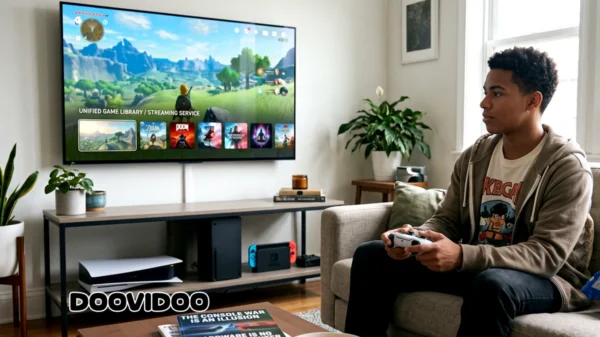
The van, the keyboard, and the crisis no longer belong to separate worlds. The van represents those who turned a vehicle into housing because rent rose too high. The keyboard represents those who spend hours in a video game decorating a house they may never be able to buy. The crisis is the same: a generation that grew up hearing that home was a natural goal and now discovers that goal requires more money, more debt, and more stability than it has.
In this context, cozy games are no longer light entertainment. Games focused on quiet life simulation, interior design, gardening, home restoration, cooking, cleaning, and managing small spaces function as digital micro-homes. They are places where the player organizes, decorates, repairs, stores objects, chooses colors, moves furniture, and feels control.
The question is not whether these video games replace real housing. They do not. No one pays less rent by decorating a virtual living room. No one gets a fixed address by designing a kitchen on a screen. But they do fill an emotional void. They offer a manageable version of something the housing market has made inaccessible: having a space of one’s own.
The Home That Moves Further Away
For decades, homeownership was the main symbol of adult stability. Buying a home, decorating it, expanding it, starting a family, or living alone with autonomy marked a life stage. Today, for many young people, that story has broken. Housing rose faster than wages. Rents absorb income. Mortgages require savings that are hard to build. Temporary contracts and student debt delay major decisions.
The crisis does not affect only people in extreme poverty. It also affects workers with jobs, graduates, creatives, office employees, and young couples. Having a job no longer guarantees access to decent housing in the cities where opportunities exist.
When the real home becomes unstable, the digital home gains emotional force. A small room, a shared bedroom, a van, or a parent’s house does not always allow someone to decorate, change walls, buy furniture, or design a domestic life of their own. In a video game, the player does decide. They can paint a wall without asking permission. They can build a kitchen without a mortgage. They can place a bed beside a window that does not exist.
That gesture may seem small. It is not. Decorating is a way of saying “this space responds to me.”
The Rise of Cozy Games
Cozy games have grown because they offer calm in a market saturated with violence, competition, and urgency. Instead of killing, racing, or winning, the player grows crops, organizes, fishes, cleans, cooks, talks, cares for animals, restores homes, or designs rooms.
The aesthetic matters. Soft colors. Quiet music. Slow rhythm. Small goals. Frequent rewards. No harsh punishment. No extreme pressure. The house, workshop, farm, or island functions as an emotional center. The player returns there to breathe.
The trend is no longer marginal. On Steam, games described as cozy rose sharply between 2022 and 2025. The word stopped being a niche label and became a commercial promise. The market understood that many players are not looking for adrenaline. They are looking for shelter.
Animal Crossing: New Horizons was an early signal of this relationship between gaming and emotional home. It arrived during the pandemic and turned a virtual island into a global common room. Millions of people decorated houses, designed gardens, visited friends, and organized routines while the physical world was closed. Nintendo reported almost 50 million copies sold by March 2026. That figure shows that the desire for a personal, safe, editable space was not small.
Interior Design as Social Fantasy
The new cozy wave takes that logic further. It is no longer only about living on a beautiful island. It is about cleaning houses, restoring objects, painting walls, decorating rooms, and transforming abandoned spaces. Games such as Hozy, MakeRoom, Unbox the Room, Renovation Plan, Tiny Glade, Unpacking, and cleaning or restoration simulators turn domestic design into a central fantasy.
The irony is clear. Many players who cannot afford their own apartment spend hours decorating virtual homes. They cannot choose the floor in their real kitchen, but they can choose digital tiles. They cannot knock down a wall, but they can redesign a cabin. They cannot buy a sofa, but they can move ten virtual sofas until they find the right angle.
This does not mean they are naive. On the contrary. The fantasy works because everyone understands the distance between screen and market. The video game does not deceive the player. It gives them a space where imagination still obeys.
In real life, decorating requires a deposit, contract, debt, transport, tools, permission, time, and money. In a cozy game, decorating requires intention. That reduction gives pleasure because it removes the cruelest part of housing: the economic barrier.
The Digital Micro-Home
The digital micro-home is a small, controllable, emotionally personal space inside a video game. It can be a room, a farm, a van, an island, a shop, a cabin, a workshop, or an empty house that the player restores.
Its power lies in scale. It does not promise to dominate the world. It promises to organize a table. It does not demand saving a galaxy. It asks the player to place a lamp. It does not ask them to conquer territory. It asks them to choose curtains.
That scale feels attractive in a time when real problems feel enormous. Housing crisis. Inflation. Unstable work. Loneliness. Debt. Climate anxiety. Against that list, designing a virtual kitchen may seem small. But the smallness is precisely the relief.
The player gets a sequence that real life often denies: effort, visible improvement, and reward. They clean a room and the room changes. They plant flowers and they grow. They save in-game currency and buy a bed. They move furniture and the place feels better. In the real housing market, effort does not always produce progress. Working more does not always bring homeownership closer. Saving does not always reach the target. The video game repairs that broken relationship between action and result.
The Van as Symbol
The van appears in this conversation because it sums up the contemporary contradiction. On social media, van life is sold as freedom: sunrises, roads, minimalism, coffee beside a mountain. But for many people, living in a vehicle is not adventure. It is a response to impossible rent.
The real van is compressed home. Bed, burner, box of clothes, portable battery, curtains, safe parking if lucky. There is not always a bathroom. There is not always privacy. There is not always safety. Even so, it offers a form of roof.
The cozy video game offers another symbolic van: a minimal, flexible, organized, personal space. In some games, the player designs compact spaces with a precision that resembles mobile living. Every object must fit. Every corner has a function. Beauty comes from doing a lot with little.
This connection explains part of the appeal. A generation used to living in small rooms, shared studios, or vehicles understands the value of efficient space. The game turns that precarity into design. It takes a limitation and makes it aesthetic.
The risk is romanticization. Not every tiny room is minimalism. Not every van is freedom. Not every coliving arrangement is community. Sometimes lack of space is not a choice. It is a symptom of a crisis.
The Keyboard as Entrance
The keyboard, controller, or touch screen functions as a key. It opens a home that does not require a deposit, guarantor, credit history, or income three times higher than the rent. The video game democratizes a domestic fantasy that the economy restricts.
That access has emotional value. The player designs without permission. They test tastes. They try out identity. They build a version of home they may not yet have in real life. They choose furniture, plants, rugs, lights, shelves, pets, and windows. They learn what they like. They decide what kind of order gives them calm.
Virtual design also allows belonging. Sharing screenshots of a room on social media, visiting islands, showing a farm, or presenting a restored house creates community. Decoration becomes conversation. The digital home is not closed. It circulates.
In a time of unstable rents, the video game allows permanence to be saved. The game file remains there. The virtual room does not rise in price every year. The landlord does not sell the building. No one bans painting a wall. The game preserves a simple promise: if you return, your space will be waiting.
Cozy Games and the Anxiety of the Present
Cozy games do not eliminate anxiety. They manage it. They turn it into small, repeatable tasks. Water plants. Organize boxes. Prepare soup. Clean dust. Restore wood. Decorate a patio. Care for a pet. Buy a chair.
These actions feel therapeutic because they imitate care routines. They give rhythm. They give control. They give a sense of progress without violence or humiliation. In a labor market where many tasks are abstract, temporary, or invisible, seeing a room improve has force.
Unaffordable housing breaks part of the adult project. The cozy game rebuilds it in miniature. It does not provide property. It provides agency. It does not provide wealth. It provides symbolic space. It does not provide material security. It provides a scene where the player still decides.
That nuance matters. Video games should not serve as an excuse to accept worse real conditions. But they should not be dismissed as empty escape either. Sometimes, temporary shelter makes it possible to keep breathing.
The Industry Knows It Too
Companies have already understood that virtual home sells. Even games that were not born cozy now include decoration, pets, furniture, gardens, farms, bases, houses, and customizable spaces. Crimson Desert, an open world action game, added options to decorate outdoor house areas and dozens of new furniture items. The signal is clear: even large adventures want to offer a domestic corner.
Personalization increases attachment. If the player builds a house, they care more about the game. If they decorate a room, they return. If they feel that the space represents them, they invest time. Virtual housing becomes a retention system, but also a form of identity.
That creates an ethical tension. The market sells shelter to people who cannot find shelter outside the screen. That does not make these games bad. But it requires reading them inside their time. Cozy gaming does not grow only because people love digital plants. It grows because many people need a version of home that does not expel them.
Video Games Do Not Replace Housing Policy
No interior design simulator solves the crisis. The real answer requires affordable housing, stable rents, tenant protections, well located construction, transportation, sufficient wages, and strong public programs. The game accompanies, but it does not replace rights.
The van, the keyboard, and the crisis must be read together. The van shows extreme adaptation. The keyboard shows symbolic shelter. The crisis shows the cause. A healthy society should not celebrate that its young people learn to decorate virtual houses because they cannot decorate real ones.
Even so, the phenomenon says something deep about human desire. People still want home. Even if the format changes. Even if it is a digital island. Even if it is a pixel cabin. Even if it is a small room in a game. The desire to organize a space of one’s own does not disappear. It simply looks for another place to survive.
The digital micro-home is not a solution. It is a sensitive symptom. A form of care inside a present that made housing too expensive. A small refuge on a screen. A key without a mortgage. A room where the generation that cannot buy real walls can still choose the color of its own.
Sources used: Harvard Joint Center for Housing Studies reported that in 2024 there were 22.7 million cost burdened renter households in the United States, equal to 49 percent of renters, and 12.1 million paid more than half their income toward rent and utilities.
The Guardian explicitly connected the rise of cozy games with the inability to access homeownership, and noted that on Steam, cozy games grew from 19 releases in 2020 to 616 in 2025. It also mentioned titles focused on cleaning, painting, and decorating homes, such as Hozy, MakeRoom, Unbox the Room, and Renovation Plan.
GameDiscoverCo reported that games using “cozy” in their description rose from 0.4 percent in 2022 to 3.1 percent in 2025 among titles with more than 100,000 dollars in cumulative revenue.
Nintendo reported that Animal Crossing: New Horizons reached 49.91 million copies sold as of March 31, 2026.
GamesRadar reported that Crimson Desert added an update with exterior house decoration and 58 new furniture items, showing how even action games are adopting home and cozy design features.