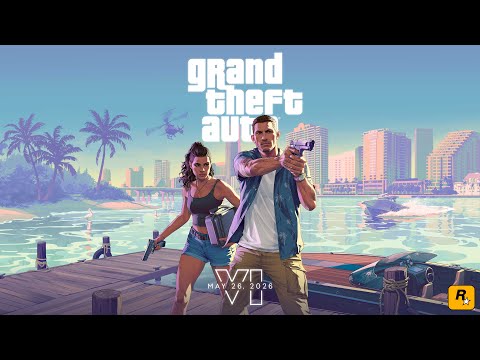
GTA VI is no longer just a video game. As of June 25, 2026, with the official opening of pre-orders, it became a brutal test of how the modern cultural economy works: millions of people are not buying a finished product. They are buying a date, a promise, and a guaranteed place inside the global conversation.
Grand Theft Auto VI will arrive on November 19, 2026. That means money starts moving almost five months before players can drive through Vice City, meet Lucia and Jason, or confirm whether Rockstar managed to build the definitive open world of this generation. In simple terms, users are paying today for an experience they cannot yet consume. In cultural terms, they are paying for something more valuable: the certainty that they will be part of the event.
The GTA VI pre-order is not a normal transaction. It is a massive mobilization of capital toward a digital asset based on trust, nostalgia, anxiety, and status. The “pre-order” button works as both cash register and social ritual. The receipt does not only confirm a purchase. It confirms belonging.
In the attention economy, having GTA VI reserved today is the same as saying: “I am already in.”
Financial FOMO
Fear of missing out has always moved markets. It did so with concerts, limited sneakers, new phones, fashion drops, and collector’s editions. But GTA VI takes that logic to another scale because it does not sell traditional scarcity. A digital copy will not sell out. There is no physical line guaranteeing real exclusivity. Even so, the public acts as if it must enter early.
The screenshot with the confirmed purchase message became a social object. Posting it does not mean only fan excitement. It means status. It is a way of announcing that you already have your ticket to the cultural event of the decade. In another era, people camped outside a store to get a record, a console, or a game. Today, the line happens on social media. The campout became a screenshot.
That gesture reveals a mutation in consumption. The product does not need to be available to create identity. Expectation already fulfills that function. The early purchase turns the player into an emotional shareholder of the launch. They do not own the game yet, but they own public proof of faith.
That is financial FOMO. It is not fear of failing to get the product. It is fear of not being part of the moment.
Expectation as Real Value
The central thesis is simple: GTA VI has stopped being only software and has become an index of the cultural market. Its pre-order measures more than purchase intent. It measures trust in a brand, the power of nostalgia, price elasticity, hunger for open worlds, and Rockstar’s ability to absorb global attention before delivering the product.
This is not an empty metaphor. In the digital market, expectation has financial value. Companies report reservations, investors watch demand, media outlets calculate impact, competitors adjust calendars, and users immobilize money. All of this happens before the game exists in the hands of the public.
GTA VI shows that hype is no longer noise around the product. It is part of the product.
The pre-order turns desire into cash flow. It turns conversation into reservation. It turns nostalgia into advance revenue. The promise is monetized before it is verified. The industry has always sold the future, but rarely has it done so this clearly.
Rockstar did not only open a store. It opened an emotional stock exchange.
November’s Monopoly Starts Charging in June
The industry has been looking at November 19 for months as a contaminated zone. Major studios, mid-sized publishers, and ambitious indies know that competing against GTA VI in its launch window means fighting a cultural storm. It is not only about sales. It is about time, media coverage, streamers, reviews, social conversation, and the player’s mental bandwidth.
That is why September and October filled up with releases that seem to be running before the hurricane arrives. The logic is clear: sell before Vice City captures the screen.
But the pre-order changes the calendar again. Rockstar does not start charging in November. It starts in June. The symbolic monopoly of fall moves into summer.
That detail matters for the player’s wallet. A person who pays 80 or 100 dollars for GTA VI today is not only reserving a game. They are reallocating part of their annual entertainment budget. That money is no longer available for a July indie, an August RPG, or a mid-sized September release. Maybe the player still buys other titles. Maybe they do not. But the priority has already been marked.
GTA VI does not compete only on the day it comes out. It competes from the moment it captures liquidity.
In an economy where many users carefully calculate entertainment spending, that pre-order carries weight. The player is not saying “I will buy GTA VI.” They are saying “GTA VI already has my money before everyone else.”
The Video Game as a Cultural Safe-Haven Asset
The idea may sound absurd: a video game as a safe-haven asset. But culturally, it makes sense. In volatile financial markets, housing crises, inflation, labor anxiety, and an endless news cycle, people look for certainties. Some people buy gold. Others buy experiences. Others reserve GTA VI.
Not because the game preserves financial value like a stock. Most digital copies cannot be resold. But the receipt works as symbolic refuge. It marks a future date when something large, recognizable, and shared will happen. Against an unstable present, the player buys a scheduled reward.
November 19 becomes a private promise. That day, if everything goes as expected, there will be a new open world, a recognizable city, a brutal satire, cars, crime, radio, chaos, and global conversation. There will be escape. There will be community. There will be memes. There will be people discovering the same universe at the same time.
Paying in June to play in November is a way of anchoring hope. Not political hope, or economic hope, or spiritual hope. A consumer hope, yes. But that does not make it any less emotionally real.
The present exhausts. Vice City waits.
The Psychology of Buying Before Playing
The pre-order appeals to a powerful mix: accumulated trust and anticipatory anxiety. GTA V sold the idea that Rockstar can build a world capable of lasting more than a decade. GTA Online turned that world into social and economic infrastructure. Red Dead Redemption 2 reinforced Rockstar’s image as a studio obsessed with detail. The brand arrives at GTA VI with an enormous debt, but also with a reserve of faith that is hard to match.
The consumer knows that buying early always carries risk. They have seen broken launches, false promises, downgrades, bugs, emergency patches, and premium editions that promise more than they deliver. Even so, GTA VI seems to occupy another category. The player does not evaluate it as a fully rational purchase. They evaluate it as an inevitable event.
That is the strength of the product. It does not need to convince everyone that it will be perfect. It needs to sustain the feeling that not being there would be worse.
The pre-order becomes insurance against cultural exclusion. No one wants November to arrive and have the conversation pass over them. No one wants to watch clips, spoilers, debates, and memes from the outside. Buying now reduces that anxiety.
The consumer is not only buying access to the game. They are buying access to day one.
The Price of Faith
The 80 dollar standard for the base edition marks another important point. GTA VI does not only measure Rockstar’s strength. It also tests how much the public is willing to pay for a premium blockbuster. The more expensive Ultimate Edition adds exclusive content and reinforces a familiar logic: the most committed fan pays more to feel they have a superior version of the experience.
The problem is not that different editions exist. The problem is the type of emotional contract they activate. When the player pays early for a game they cannot yet touch, the studio receives advance trust. That trust is not free. On launch day, tolerance will be lower.
An 80 or 100 dollar game reserved five months early cannot arrive broken. It cannot feel incomplete. It cannot ask for patience as if the player had not financed the wait. The pre-order creates a moral obligation: if the public buys faith, the studio must deliver evidence.
That is the risk of overvaluation. When expectation is worth as much as the product, the product must live up to a fantasy that has grown for years.
The Nostalgia of Vice City
Vice City is not only a setting. It is cultural memory. For those who played Grand Theft Auto: Vice City in 2002, the name activates an era: neon, radio, crime, palm trees, excess, satire, adolescence, old controls, and a simpler way of imagining digital freedom.
GTA VI uses that memory, but updates it for another generation. Leonida, Lucia, Jason, and the new Vice City carry the promise of a hyperreal, absurd, violent, and recognizable Florida. The game does not sell only a technical future. It sells emotional return.
That return explains why the pre-order works like early collecting. Even if it is digital, even if there is no disc, even if the copy has no real scarcity, the player feels they are saving their place in a story. The receipt is an early relic. Proof that they were there from the first day of the promise.
Nostalgia does not look only to the past. It also organizes the future. GTA VI sells a new memory before it exists.
The Invisible Cost of the Spectacle
The pre-order economy does not end with the consumer. It also pressures the studio. A massive pre-order increases the money, but it also increases the obligation. Every reservation adds weight to the shoulders of developers, artists, designers, writers, testers, producers, and support teams.
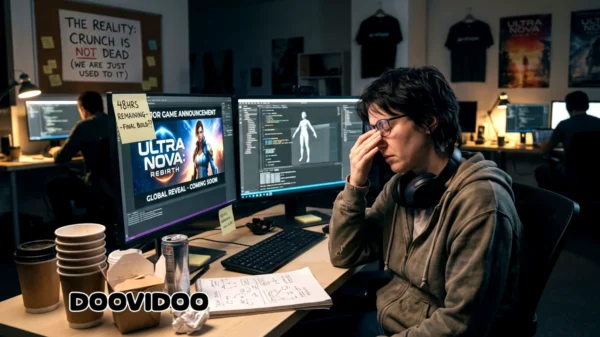
The video game industry knows the cost of spectacle well: crunch, stress, layoffs, late changes, pressure to polish, and fear of failure. Rockstar has a complex public history around working conditions, return-to-office policies, unions, and conflicting accusations over dismissals. Ignoring that context would mean reading GTA VI only as a consumer fantasy.
The ethical question must remain on the table: what level of labor pressure sustains the promise the public bought today.
The consumer who demands perfection must also demand transparency. It is not enough to ask for 60 frames, a massive world, and zero bugs. We must also ask whether that result is built under decent conditions. A record-breaking pre-order should not become an excuse to squeeze teams until November.
If GTA VI is an index of the cultural market, it must also be an index of public maturity. Buying excitement does not require accepting exploitation.
A Promise Too Big to Fail
GTA VI now enters a strange category: too big to fail culturally. Not because it cannot disappoint. It can. Recent gaming history is full of giant launches that crashed into their own promises. But GTA VI’s size makes any failure more than a technical problem. It would be an economic, cultural, and reputational event.
The pre-order amplifies that fragility. Every dollar paid in advance increases the distance between expectation and reality. Every screenshot shared on social media adds pressure. Every edition bought before November turns the launch into a public audit.
Rockstar sold something more delicate than an open world today. It sold trust.
The Day the Internet Bought a Promise
June 25, 2026, will remain an important date for the entertainment economy. Not because GTA VI came out. Precisely because it did not. The event was something else: millions of people decided that the promise was already worth money.
That is the real shift. In the modern digital economy, the product does not begin when it is downloaded. It begins when it is desired in an organized way. It begins when expectation becomes payment. It begins when the receipt becomes content and that content feeds more expectation.
GTA VI does not need to be available to dominate the market. It only needs to be dated, priced, and socially secured.
The GTA VI pre-order proves that pop culture no longer sells only objects, songs, films, or games. It sells emotional coordinates. Dates when people expect to feel part of something. Imaginary places where they can deposit anxiety. Promises strong enough to move money before they exist.
Today, the internet bought Vice City before setting foot in it. It bought November in June. It bought an exit before opening the door.
Now Rockstar has to prove that the future it sold really exists.
Sources used: Rockstar and Take-Two confirmed that pre-orders for Grand Theft Auto VI begin on June 25, 2026, at midnight local time, with a November 19, 2026 launch for PS5 and Xbox Series X|S, a base price of 79.99 dollars, and an Ultimate Edition priced at 99.99 dollars.
Reuters reported the 79.99 dollar price, the 99.99 dollar Ultimate Edition, the pre-order bonuses, and the fact that GTA V has sold nearly 230 million copies since 2013.
Take-Two reported in 2013 that GTA V surpassed 800 million dollars in sales on its first day, and Reuters reported that it exceeded 1 billion dollars in three days, the fastest pace ever recorded for an entertainment product at the time.
GameSpot reported that September 2026 is packed with releases trying to avoid GTA VI’s window, and The Game Business cited publisher executives planning to move games away from Grand Theft Auto VI.
Outlets such as The Verge and PC Gamer have documented union accusations, dismissals, and labor organizing at Rockstar ahead of GTA VI, with Take-Two denying that the dismissals were tied to union activity and citing “gross misconduct.”