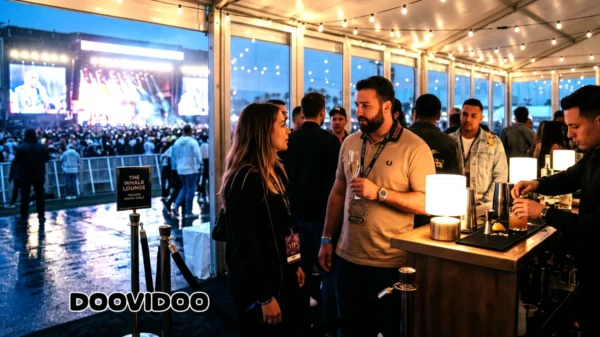
The “Anti-Festival” Underground begins where the mega festival stops feeling like escape. It begins after the expensive pass, the VIP lane, the payment plan, the influencer tent, the fake ticket alert, the sponsored lounge and the meal price people post online in disbelief. It begins when fans decide a crowd does not need to feel like a shopping mall with speakers.
The modern festival sold access to music, youth and shared emotion. Then it added tiers. General admission. VIP. Platinum. Shuttle pass. Locker. Hotel bundle. Viewing deck. Brand activation. Payment plan. The crowd still came for sound, but the structure started to feel like financial sorting.
A counter movement now moves under the main stage economy. Gen Z and younger millennials are looking toward micro festivals, secret raves, warehouse nights, woodland gatherings and private fields with no sponsor banners. These events reject size as proof of value. They favor intimacy, risk, participation and trust.
The thesis is clear. The “Anti-Festival” Underground is not a rejection of live music. It is a rejection of festival extraction. Fans still want collective sound. They no longer accept every corporate mega rave as the highest form of culture.
The festival became a bill
The festival once offered density. You paid once and entered a weekend of discovery. You saw a headliner, found unknown acts and moved through a crowd with people outside your usual circle. The appeal came from scale and surprise.
Now the full cost often stretches beyond the ticket. Travel, lodging, parking, food, water, fees, merch, rideshare, camping gear and missed work reshape the decision. The weekend pass becomes the first line of a larger invoice.
Pollstar reported in 2025 that festival production and attendance costs had risen across the sector. It cited Coachella general admission near 600 dollars for a weekend, while Bonnaroo sat around 455 dollars. Those prices arrive before hotel rooms, flights and food.
Coachella became the most visible symbol. Reports placed 2025 general admission between 599 and 649 dollars. VIP reached 1,399 dollars. People also reported that about 60 percent of Coachella ticket buyers relied on payment plans.
That detail matters. A payment plan does not mean failure. It means the price reached a level where many fans need time to absorb it. The festival still sells desire. It also sells debt style scheduling.
When a weekend of music needs financing, the old promise of freedom loses force.
The scam layer made trust collapse
The “Anti-Festival” Underground gained strength because the mainstream ticket economy lost trust. Fans now move through presales, codes, resale pages, fake websites, screenshots, speculative listings, dynamic prices and service fees. Every step adds friction.
The Federal Trade Commission sued Live Nation and Ticketmaster in 2025. The agency accused the companies of illegal ticket resale tactics and misleading pricing. The FTC said Ticketmaster earned hundreds of millions from tickets obtained illegally by brokers and that consumers paid billions in inflated prices and fees.
The case sits inside a larger public anger. Fans feel trapped between official platforms, broker markups and scam risk. The problem does not stop at one company. Social platforms and resale pages create space for fraud. New York consumer officials warned in 2025 about fake tickets sold through social media, fake sites and online marketplaces. Scammers send screenshots, barcodes and convincing emails.
For younger fans, the process feels rigged before the lineup drops. The show may still matter. The path to entry feels hostile.
That hostility pushes people toward decentralized scenes. A friend of a friend sends an address. A group chat shares rules. A private link replaces the queue. A field replaces the brand village. These spaces have their own problems, but they offer one thing the corporate system keeps losing: trust.
Inside the micro festival mood
The new micro festival is small by design. Fifty people. Two hundred people. A farm. A woodland clearing. A private estate. A wedding venue after hours. A secret field. A room where the stage matters less than the crowd.
The Guardian profiled small secret festivals in 2026 as gatherings built by friends and communities rather than public ticket systems. Events such as Loveshack, Killer Wales, Come Bye, Mansionface and Oddfolk leaned on participation, shared meals, costumes, installations and volunteer labor. Some rejected commercial branding and sponsorship.
That shift changes the contract. You are not buying a polished weekend built for passive consumption. You bring something. Food. Labor. A set. A costume. A generator. A car. A skill. A cleanup shift. The crowd builds the event with the organizer.
This model lacks the comfort of the mega festival. It also avoids the emotional distance of the mega festival. You see who cooked. You see who built the stage. You know who took the risk. The event feels human because the labor is visible.
The “Anti-Festival” Underground does not promise perfection. It promises proximity.
Mermaids, mud and no sponsor wall
The strange details matter. A mermaid theme. A talent show at midnight. Mud on every shoe. A handmade sign with rules. A field kitchen. A phone bag at entry. A crowd told not to document everything. A DJ playing for people who know each other by first name.
These choices create a social limit. If phones stay away, the event does not become content first. If sponsors stay away, the crowd does not walk through a sales funnel. If attendees help clean, they stop acting like customers.
This is the core difference. A corporate festival gives you access. A micro festival gives you responsibility.
The no phone rule carries weight in a generation trained to document pleasure. It blocks the influencer economy at the door. It protects bad dancing, messy outfits, odd performances and private joy. It lets people participate without building a public identity around the event.
The no sponsor rule carries another weight. It removes the constant reminder that culture has been pre sold. No energy drink tent needs your attention. No liquor wall tells you where to stand. No brand activation asks you to perform fun.
The crowd creates the spectacle. That sounds small until you stand inside a major festival where the best lighting, best shade and best bathrooms often sit behind paid tiers.
The festival bubble squeezed both sides
Large companies still win in many areas. Live Nation reported 20.9 billion dollars in 2025 revenue and hosted 159 million fans across 55,000 shows. Demand remains strong. Stadiums still fill. Major artists still move huge audiences.
The independent side lives with sharper risk. The Association of Independent Festivals said 78 UK festivals were cancelled, postponed or shut in 2024. Festival Insights reported that 43 faced the same outcome in 2025. AIF called for government support in 2026 as more cancellations arrived.
Rising costs hit labor, insurance, security, staging, energy, weather planning and artist fees. A small festival does not have the same financial cushion as a global promoter. Weak advance sales or bad weather may erase the event.
The underground response is practical. Reduce scale. Reduce fixed costs. Reduce infrastructure. Build with shared labor. Keep the crowd small enough to manage. Avoid headliner inflation. Avoid sponsor dependence when it would change the culture.
This does not solve everything. Small events still need safety planning, consent norms, medical access, transport clarity, weather plans and fair pay. Informal does not mean ethical. But scale is no longer treated as the goal.
The search for intimacy in a crowd
The deeper force behind The “Anti-Festival” Underground is psychological. People feel connected all day and still crave contact that feels unprocessed. Feeds show everyone going everywhere. Festivals turn into proof. The photo becomes part of the ticket value.
A small gathering interrupts that loop. The reward is not a clip. It is memory shared with people in the room. The crowd is small enough to notice faces. The night is strange enough to resist clean branding. The event exists for those present, not for those scrolling later.
This matters for Gen Z because digital life has trained them to manage identity nonstop. A no phone rave or invite based micro festival offers relief from performance. You do not need to turn the night into evidence. You get to be there.
That desire does not reject technology. It rejects constant capture.
The mainstream festival often sells belonging at scale. The underground offers a narrower version. It asks for less polish and more presence. It may look less impressive from outside. It may feel more real inside.
What big festivals still offer
A fair critique cannot pretend the mega festival has no value. Large festivals support major productions, touring crews, vendors, local economies and artists who need large stages. They also create shared moments that small rooms cannot match.
The issue is not size by itself. The issue is what size serves.
If size funds music, access, safety and fair labor, it has value. If size mainly funds tiered status, sponsor capture and extraction, the crowd notices. Fans will still attend. They may not trust the model in the same way.
The large festival now competes with the underground on meaning. A bigger stage no longer guarantees deeper loyalty. A bigger lineup no longer cancels out a bad buying experience. A luxury lounge does not repair a crowd that feels priced out.
Festival companies should read the underground as market feedback. Lower the pressure on upgrades. Show total prices early. Fight scam resale with real force. Protect affordable inventory. Limit brand saturation. Pay crew fairly. Support local vendors. Make the event feel less like a purchase maze.
The future will split
The future of live music will not choose one side. Mega festivals will survive through tourism, headliners and corporate cash. Independent festivals will need stronger policy support and loyal communities. Micro festivals will grow through private networks, local trust and cultural fatigue with mass events.
The split already tells a story. The audience does not hate crowds. It hates feeling processed. It does not hate production. It hates being sorted by payment level. It does not hate brands in every case. It hates when branding replaces culture.
The “Anti-Festival” Underground points toward a harder truth for the live event industry. Fans are no longer impressed by scale alone. They want cost to match value. They want safety without sterilized culture. They want intimacy without exclusivity built around wealth. They want music spaces where presence matters more than premium access.
You feel the difference the moment you enter. At the mega festival, your wristband tells the system what you bought. At the micro festival, your presence tells the room what you bring.
That is why this movement matters. It changes the question from how big the festival gets to who the festival serves. If corporate mega raves keep turning fans into payment plans, the underground will keep finding fields, warehouses and back roads where music feels less owned.